


When your baby reaches six months old, their world suddenly expands. They're sitting up with support, reaching for objects with purpose, and exploring everything they can grab. This exciting developmental stage calls for toys that match their growing abilities. Choosing 6 month old Montessori toys means selecting simple, purposeful items that encourage independent exploration and support natural development. These toys focus on real-world materials, cause-and-effect learning, and sensory experiences that help your baby understand their environment without overwhelming them with flashing lights or electronic sounds.
Understanding Your Six-Month-Old's Development
At six months, babies experience remarkable physical and cognitive growth. They're developing the pincer grasp, learning to transfer objects between hands, and beginning to understand that objects exist even when out of sight.
Physical Milestones at Six Months
Your baby is likely sitting with assistance and may be starting to sit independently for short periods. They can reach for toys with improved accuracy and are fascinated by dropping objects to watch what happens.
Most six-month-olds can:
- Roll over in both directions
- Push up on arms during tummy time
- Bear weight on legs when held upright
- Grab objects using a raking grasp
- Bring items to their mouth for exploration
Understanding these developmental milestones helps parents choose appropriate Montessori toys that challenge without frustrating their little ones.
Cognitive and Sensory Growth
Six-month-olds are developing object permanence. They're starting to understand cause and effect. When they shake a rattle, it makes noise. When they drop a ball, it rolls away.
Their vision has improved dramatically, allowing them to track moving objects and distinguish between similar colors. They're also exploring textures, temperatures, and weights through touch and taste.
Why Montessori Toys Work for Six-Month-Olds
Montessori toys differ significantly from conventional baby toys. They emphasize natural materials, simple designs, and purposeful activities that respect your baby's intelligence and emerging abilities.
The Montessori Philosophy for Infants
Dr. Maria Montessori believed that even very young children learn best through self-directed activity. For six-month-olds, this means providing toys that invite exploration without dictating how to play.
Key Montessori principles for infant toys include:
- Using natural materials like wood, metal, and fabric
- Offering realistic colors and shapes
- Providing one learning objective per toy
- Eliminating batteries and electronic sounds
- Supporting concentration and focus
These principles align perfectly with how babies naturally learn through repetition and sensory exploration.
Benefits of Natural Materials
Wooden toys feel different from plastic ones. They have weight, texture, and temperature variations that provide richer sensory feedback. A wooden rattle sounds distinct from a plastic one, teaching your baby about different materials.
Natural materials are also safer for mouthing, which is how six-month-olds investigate their world. Quality wooden toys don't contain harmful chemicals or small parts that could break off.
Top Categories of 6 Month Old Montessori Toys
Selecting the right 6 month old Montessori toys becomes easier when you understand the main categories that support this age group's development.
Grasping and Reaching Toys
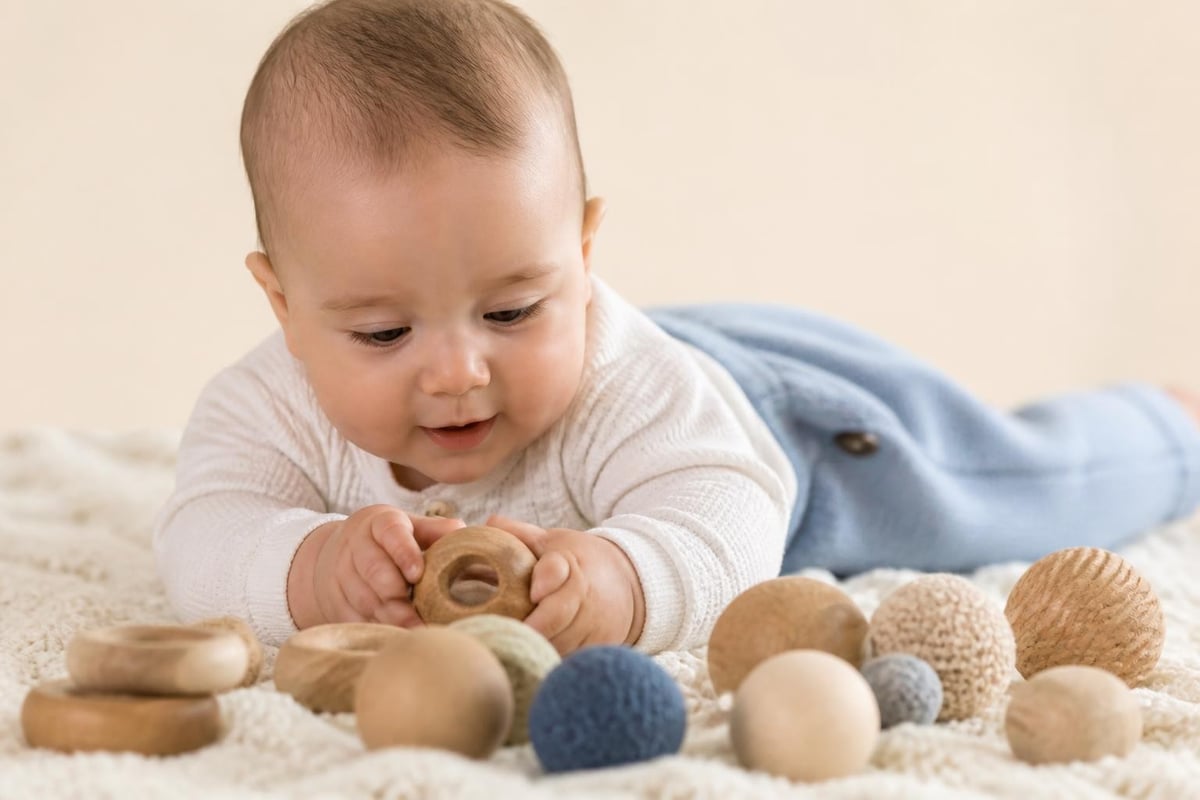
These toys help babies practice their developing fine motor skills. Look for options that fit comfortably in small hands and encourage reaching and transferring between hands.
| Toy Type | Developmental Benefit | Material Recommendation |
|---|---|---|
| Wooden rings | Grasping practice | Untreated hardwood |
| Textured balls | Sensory exploration | Natural rubber or fabric |
| Teething rings | Jaw development | Food-grade silicone or wood |
| Interlocking discs | Hand-eye coordination | Smooth wooden pieces |
Simple wooden rings on a dowel teach babies to grasp, pull, and stack. These activities strengthen hand muscles needed for future skills like writing and self-feeding.
Object Permanence Boxes
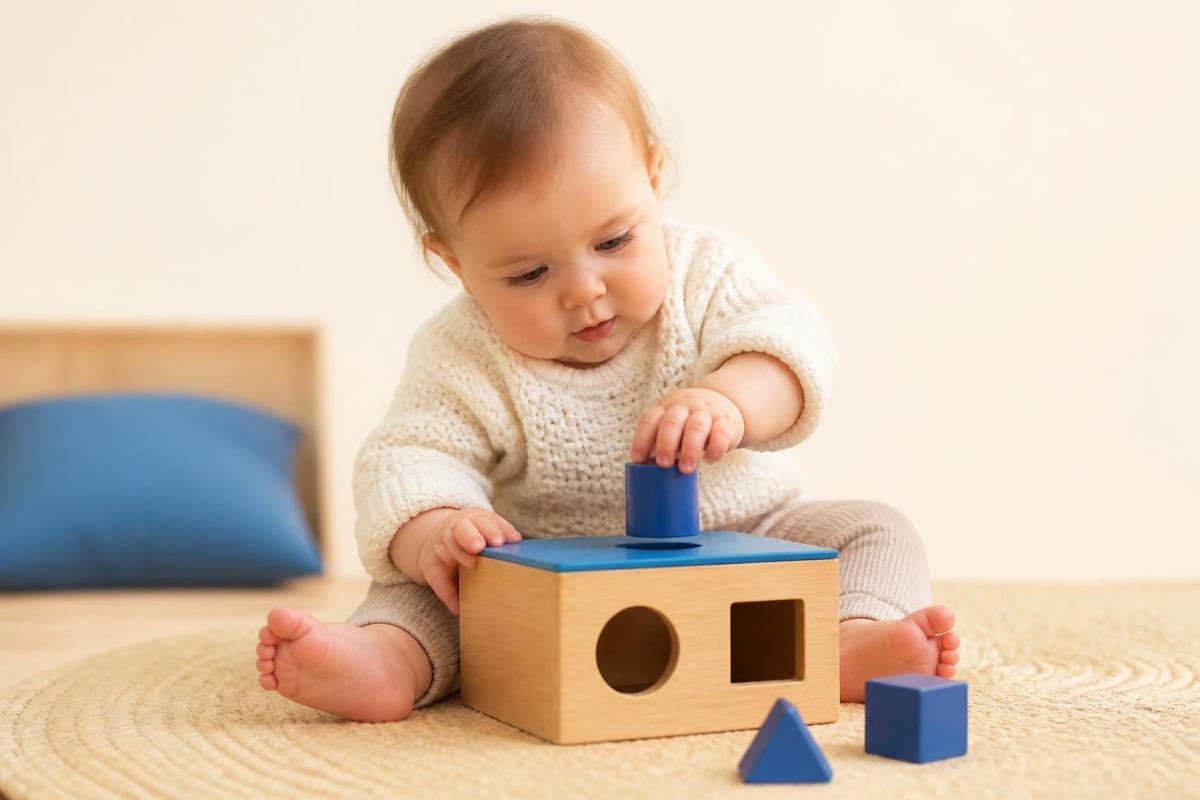
Object permanence boxes represent classic Montessori materials perfectly suited for six-month-olds who are just beginning to understand this concept.
A basic version features a box with a hole on top and an opening on the front. Your baby drops a ball through the hole, then it reappears at the bottom. This simple activity can captivate a six-month-old for extended periods.
The repetitive nature helps babies understand cause and effect while building concentration skills. Each time they drop the ball and retrieve it, they're practicing problem-solving and hand-eye coordination.
Sensory Exploration Materials
Six-month-olds learn through their senses. Providing toys with varied textures, weights, and sounds supports this natural learning style.
Consider these sensory-rich options:
- Fabric books with different textures on each page
- Wooden blocks of various shapes and sizes
- Soft balls with raised patterns
- Musical instruments like egg shakers
- Treasure baskets filled with safe household objects
Sensory toys designed for this age group should be large enough to prevent choking hazards but small enough for little hands to manipulate.
Essential Safety Considerations
Safety always comes first when selecting 6 month old Montessori toys. At this age, everything goes directly into the mouth, so careful selection is crucial.
Size and Choking Hazards
Any toy or toy part should be larger than a toilet paper roll. If it fits through, it's a choking hazard for babies under three years old.
Avoid toys with:
- Small detachable parts
- Loose strings longer than seven inches
- Sharp edges or points
- Pieces that could break off when chewed
Regularly inspect all toys for wear and tear. Wood can splinter, fabric can tear, and even sturdy toys may develop problems over time.
Material Safety Standards
Look for toys that meet US safety standards. Reputable sellers will clearly state compliance with Consumer Product Safety Commission (CPSC) regulations.
Natural wood toys should be:
- Made from hardwoods that resist splintering
- Finished with food-grade oils or left untreated
- Free from toxic stains or paints
- Smooth with no rough patches
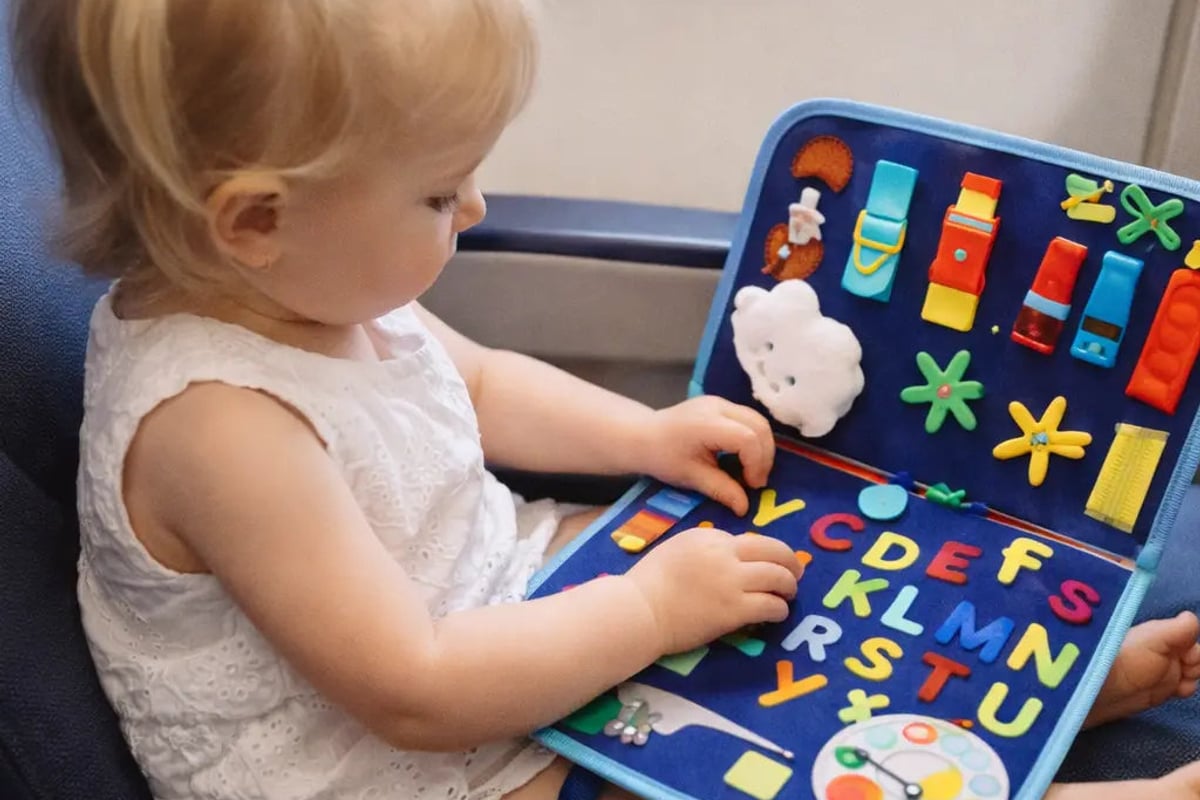
The Montessori Busy Board offers an excellent example of safe, engaging design for slightly older babies who are developing more advanced fine motor skills. While it's perfect for toddlers, the safety principles apply to six-month-old toys as well.
Best Practice Toys for Six-Month-Olds
Let's explore specific toy types that align with Montessori principles and support six-month-old development effectively.
Wooden Rattles and Graspers
Simple wooden rattles provide the perfect first toy. They're easy to grasp, make pleasant sounds, and introduce cause and effect.
Choose rattles with:
- Smooth, rounded edges
- Natural wood finish
- Simple ring or handle design
- Lightweight construction
Unlike plastic rattles with loud electronic sounds, wooden versions produce gentle, natural sounds that don't overstimulate. Your baby controls the sound through their own movements, teaching them about their ability to affect their environment.
Soft Fabric Books
Fabric books made from organic cotton or linen introduce babies to books early. Look for versions with high-contrast patterns or simple images of real objects.
Benefits of fabric books for six-month-olds:
- Safe for chewing and mouthing
- Washable and durable
- Promote visual tracking
- Introduce early literacy concepts
- Create bonding opportunities during shared reading
Pages with different textures, crinkly material, or attached ribbons add sensory variety that keeps babies engaged.
Natural Rubber Balls
A simple ball becomes a powerful learning tool for six-month-olds. Rolling a ball back and forth teaches turn-taking, tracking, and reaching.
Choose balls that:
- Fit comfortably in baby's hands
- Have textured surfaces for easy gripping
- Are made from natural rubber without chemicals
- Come in realistic colors
- Are large enough to prevent choking
As your baby grows, they'll use the same ball for rolling, throwing, and eventually kicking, making it a toy that grows with them.
Creating a Montessori Play Space
The environment matters as much as the toys themselves. A thoughtfully arranged play space supports independence and concentration.
The Importance of Order
Montessori emphasizes order and organization. For six-month-olds, this means having a few carefully selected toys available rather than overwhelming them with choices.
Rotate toys weekly to maintain interest. Keep out only 3-5 items at a time, storing others out of sight. This approach helps babies focus and engage more deeply with each toy.
Low Shelves and Accessible Storage
Even though six-month-olds can't walk yet, preparing for independence starts now. Use low shelves that display toys clearly once your baby begins crawling.
Setting up a Montessori play area:
- Place a comfortable mat on the floor for tummy time
- Use low shelves to display a few toys
- Ensure good natural lighting
- Keep the space clutter-free and calm
- Rotate toys to maintain interest
This organized approach respects your baby's developing sense of order and helps them learn to make choices.
Supporting Independent Exploration
Six-month-olds need floor time to develop motor skills. Create a safe space where your baby can reach for toys, roll over, and practice sitting without constant intervention.
Place toys slightly out of reach to encourage movement. This gentle challenge motivates babies to stretch, roll, and eventually crawl toward interesting objects.
Incorporating Everyday Objects
Montessori philosophy celebrates the learning potential in ordinary household items. For six-month-olds, everyday objects often prove more fascinating than expensive toys.
Treasure Basket Exploration
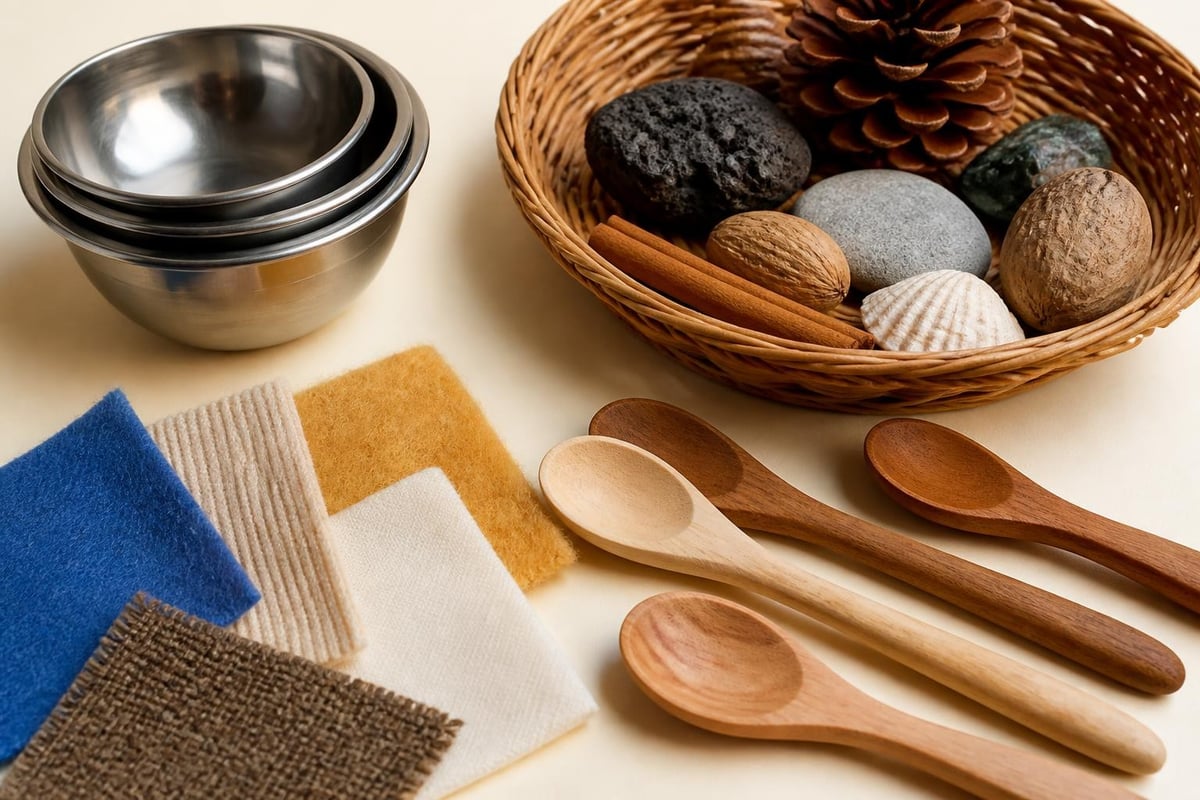
A treasure basket contains 10-15 safe household objects made from natural materials. Your baby sits supported and explores items independently.
Fill your basket with:
- Wooden spoons
- Metal measuring cups
- Natural sea sponges
- Fabric napkins with different textures
- Small woven baskets
- Wooden bowls
- Metal cookie cutters
- Leather key fobs
Supervise closely, but resist the urge to direct play. Watch as your baby discovers properties like weight, temperature, texture, and sound through independent exploration.
Kitchen Items as Learning Tools
Metal bowls, wooden spoons, and silicone spatulas provide rich sensory experiences. They're real tools that adults use, which makes them inherently interesting to babies.
These items teach:
- Cause and effect (banging makes noise)
- Material properties (metal feels cold, wood feels warm)
- Weight differences (some objects are heavier than others)
- Sound variations (different materials create different sounds)
Always ensure items are clean, too large to swallow, and free from sharp edges before offering them to your baby.
DIY Montessori Toys for Six-Month-Olds
Creating homemade toys connects you with Montessori principles while saving money. Many effective learning materials require minimal crafting skills.
Simple Fabric Sensory Book
Sew together squares of different fabrics to create a simple sensory book. Include corduroy, satin, fleece, burlap, and velvet. Ensure all edges are securely sewn.
Your baby will spend time touching, mouthing, and comparing the textures. This simple creation provides the same benefits as expensive sensory toys.
Wooden Ring Stacker
Purchase untreated wooden rings and a dowel from a craft store. Sand everything smooth, then finish with food-grade mineral oil. You've created a classic Montessori toy for a fraction of retail cost.
This stacker grows with your child. At six months, they'll grasp and mouth the rings. Later, they'll learn to stack them on the dowel.
Natural Dye Fabric Squares
Cut organic cotton into squares and dye them with natural materials like beet juice, turmeric, or blueberries. Once dried and washed, these colorful squares become perfect grasping toys.
Making natural dye squares:
- Cut cotton into 6-inch squares
- Prepare natural dye baths
- Soak fabric until desired color is reached
- Rinse and wash thoroughly
- Sew or serge edges to prevent fraying
Your baby learns about colors while you avoid synthetic dyes and chemicals.
Choosing Quality Over Quantity
The Montessori approach emphasizes fewer, higher-quality toys rather than rooms full of plastic gadgets. This principle particularly benefits six-month-olds, who can become overwhelmed by too many choices.
Investment Pieces That Last
Well-made wooden toys last through multiple children and often become family heirlooms. While they cost more initially, they provide better value over time.
Look for:
- Solid wood construction
- Sturdy joinery without glue
- Natural finishes
- Simple, timeless designs
- Versatile use across developmental stages
These toys maintain their value and can often be resold or passed to younger siblings when your child outgrows them.
The Problem with Overstimulation
Electronic toys with lights, sounds, and moving parts can actually hinder development. They do the "playing" for your baby, leaving little room for imagination or problem-solving.
Research on infant cognitive development shows that babies learn best through self-directed exploration with simple materials. Quiet toys that respond to your baby's actions teach more effectively than those that entertain passively.
When to Introduce New Toys
Timing matters when adding 6 month old Montessori toys to your baby's collection. Watch for signs of readiness and emerging skills.
Reading Your Baby's Cues
Your baby will show when they're ready for new challenges. Signs include:
- Mastering current toys quickly
- Losing interest in familiar objects
- Reaching for items slightly beyond their ability
- Showing frustration with toys that are too simple
- Demonstrating new physical skills
Introduce one new toy at a time. This allows your baby to focus on mastering it before adding another challenge.
Progression of Skills
As your baby approaches seven and eight months, they'll need toys that support emerging skills like crawling, pulling up, and more advanced manipulation.
| Age Range | Emerging Skills | Appropriate Toy Types |
|---|---|---|
| 6-7 months | Early sitting, improved reaching | Simple graspers, soft balls |
| 7-8 months | Sitting independently, transferring objects | Stacking rings, nested cups |
| 8-9 months | Beginning to crawl, pulling up | Push toys, ball drops |
Understanding this progression helps you plan purchases and avoid toys your baby won't use for months.
Budget-Friendly Montessori Options
Quality Montessori toys don't have to break the bank. Smart shopping and creative thinking stretch your budget without compromising on principles.
Second-Hand Shopping Tips
Wooden toys survive multiple children beautifully. Check local consignment shops, online marketplaces, and parent swap groups for gently used Montessori materials.
Before purchasing used toys:
- Inspect thoroughly for damage
- Clean with mild soap and water
- Check for recalls on manufacturer websites
- Ensure all parts are present
- Verify age-appropriateness
Many families sell high-quality toys their children have outgrown, providing excellent savings for budget-conscious parents.
Prioritizing Purchases
If budget is limited, invest in versatile toys that support multiple developmental areas. A simple set of wooden blocks serves babies through preschool years.
Priority purchase list for six-month-olds:
- Quality wooden rattles or graspers (support fine motor development)
- Natural rubber ball (encourages movement and tracking)
- Fabric books (introduce literacy and bonding)
- Treasure basket items (often free from your kitchen)
- Object permanence box (teaches key cognitive concept)
Build your collection gradually rather than purchasing everything at once. Explore curated educational toy options that align with Montessori principles while fitting various budgets.
Supporting Different Learning Styles
Even at six months, babies show individual preferences in how they explore and learn. Observing your baby helps you choose toys that match their unique style.
The Visual Learner
Some babies focus intently on watching objects move and studying patterns. They track movement with their eyes and seem fascinated by visual details.
For visual learners, choose:
- High-contrast fabric books
- Mobiles with simple shapes
- Balls in various colors
- Toys with distinct patterns
These babies benefit from toys placed where they can observe before touching, supporting their preferred learning approach.
The Tactile Explorer
Other babies immediately grab everything to feel, mouth, and manipulate. They learn primarily through touch and physical interaction.
Tactile learners need:
- Varied textures in toys
- Items safe for extensive mouthing
- Objects with different temperatures
- Materials with interesting surfaces
Provide plenty of supervised floor time where these babies can freely explore through touch.
The Auditory Focused Baby
Some six-month-olds respond strongly to sounds. They turn toward noises, enjoy musical toys, and react to different tones and volumes.
Support auditory learners with:
- Wooden rattles with pleasant sounds
- Fabric books with crinkly pages
- Simple musical instruments
- Toys that make gentle natural sounds
Sing to these babies during play and provide toys that respond to their actions with sound.
Common Mistakes to Avoid
Even well-intentioned parents sometimes make choices that undermine Montessori principles. Awareness of common pitfalls helps you stay on track.
Too Many Toys at Once
Overwhelming your baby with options prevents deep focus. Six-month-olds learn best when they can concentrate on one or two items without distraction.
Limit available toys to 3-5 items. Store others and rotate weekly. This practice maintains novelty while supporting concentration development.
Age-Inappropriate Selections
Toys designed for older children frustrate six-month-olds, while those for younger babies bore them. Match toys to your baby's current abilities with room for slight challenge.
Signs a toy is wrong for your baby's age:
- Your baby ignores it completely
- They show frustration trying to use it
- It's too easy and doesn't hold attention
- Safety features aren't appropriate for their development
- They can't manipulate it with current motor skills
When in doubt, consult age-appropriate Montessori toy guides for specific recommendations.
Intervening Too Quickly
Parents often jump in to "help" when babies struggle with toys. This prevents problem-solving and discovery learning.
Unless your baby is in danger or genuinely distressed, observe without interfering. Babies need time to figure things out independently. The concentration face your baby makes while working on a challenge is learning in action.
Integrating Montessori Toys Into Daily Routines
6 month old Montessori toys work best when integrated into daily life rather than reserved for special playtime.
Morning Exploration Time
After your baby wakes and eats, they're often alert and ready to explore. This is perfect for focused toy engagement.
Set out 2-3 toys on a mat and let your baby choose what interests them. Sit nearby, available but not directing. This morning ritual builds independence and sets a calm tone for the day.
Afternoon Tummy Time
Six-month-olds still benefit from tummy time, though many can sit now. Place interesting toys slightly out of reach during tummy time to encourage reaching and movement.
Good tummy time toys include:
- Wooden mirrors for self-discovery
- Textured balls to bat and chase
- Small fabric books to grab
- Rattles that make gentle sounds
- Natural rubber teethers
This practice strengthens core muscles needed for sitting, crawling, and eventually walking.
Quiet Evening Play
As evening approaches, choose calming toys that support winding down. Avoid anything too stimulating before bedtime.
Fabric books, soft balls, and simple wooden objects provide gentle engagement without overstimulation. This transition helps establish healthy sleep routines.
Documenting Development Through Play
Watching your baby interact with Montessori toys provides windows into their cognitive and physical development. Parents can learn much by observing quietly.
What to Notice
Pay attention to how your baby approaches toys. Do they examine visually first or grab immediately? Do they prefer certain textures or colors? How long can they focus on one item?
Observation points:
- Length of concentration
- Problem-solving approaches
- Preference for certain materials
- Fine motor skill development
- Emerging patterns in play
These observations help you understand your baby's unique personality and learning style.
Celebrating Milestones
Note when your baby masters new skills with toys. The first time they transfer a ring from one hand to another. When they figure out the object permanence box. These moments mark significant developmental progress.
Keep a simple journal or take occasional videos. You'll treasure these records as your baby grows, and they help you recognize patterns in development.
The Long-Term Impact of Montessori Play
Choosing Montessori toys for your six-month-old sets foundations that extend far beyond infancy. These early experiences shape how your child approaches learning throughout life.
Building Concentration Skills
Babies who regularly engage with simple, focused toys develop stronger concentration abilities. This skill transfers to future academic success and problem-solving.
The six-month-old who spends 10 minutes exploring a wooden rattle is building neural pathways for sustained attention. These early patterns influence school readiness and learning capacity.
Fostering Independence
Montessori toys teach babies they can discover and learn without constant adult intervention. This builds confidence and self-reliance from the earliest months.
Your six-month-old who figures out how to grasp a ring is learning that they're capable. This message, repeated hundreds of times through independent play, shapes their self-concept as a competent learner.
Developing Problem-Solving Abilities
Simple cause-and-effect toys teach babies that their actions have predictable results. This understanding forms the foundation for all future problem-solving and critical thinking.
When your baby drops a ball and watches it roll, they're conducting experiments. They're learning about gravity, motion, and their ability to make things happen. These early scientific explorations predict later STEM interest and ability.
Selecting the right 6 month old Montessori toys creates a foundation for lifelong learning, independence, and curiosity in your baby. By choosing simple, natural materials that respect your child's intelligence and emerging abilities, you support healthy development across physical, cognitive, and emotional domains. KIDZEEHUB offers carefully curated Montessori-inspired toys and educational materials that help families create meaningful, screen-free play experiences supporting every stage of early childhood development.


