


When parents first discover the Montessori approach, they're often surprised by the emphasis placed on simple objects like balls. Yet the ball montessori method represents something profound: a carefully designed approach to supporting infant and toddler development through purposeful, engaging play. These aren't just ordinary toys sitting in a basket. They're thoughtfully selected tools that align with how young children naturally learn, explore, and grow during their most formative years.
What Makes Ball Montessori Different from Regular Balls
The ball montessori approach focuses on intentional design choices that respect children's developmental needs. Unlike brightly colored plastic balls with flashing lights and sounds, Montessori balls emphasize natural materials, appropriate sizing, and developmental progression.
Traditional toy balls often overstimulate young senses with synthetic colors and electronic features. In contrast, authentic Montessori materials support focused exploration without distraction. This intentional simplicity helps children concentrate on the fundamental skills they're building.
Core Principles Behind Ball Montessori Design
Natural Materials: Montessori balls typically use cotton, wool, wood, or natural rubber rather than plastic. These materials provide authentic sensory feedback and connect children to the natural world.
Appropriate Weight: The weight distribution matters tremendously. Balls designed for infants are lighter for easier grasping, while toddler versions have more substantial weight to support throwing and catching practice.
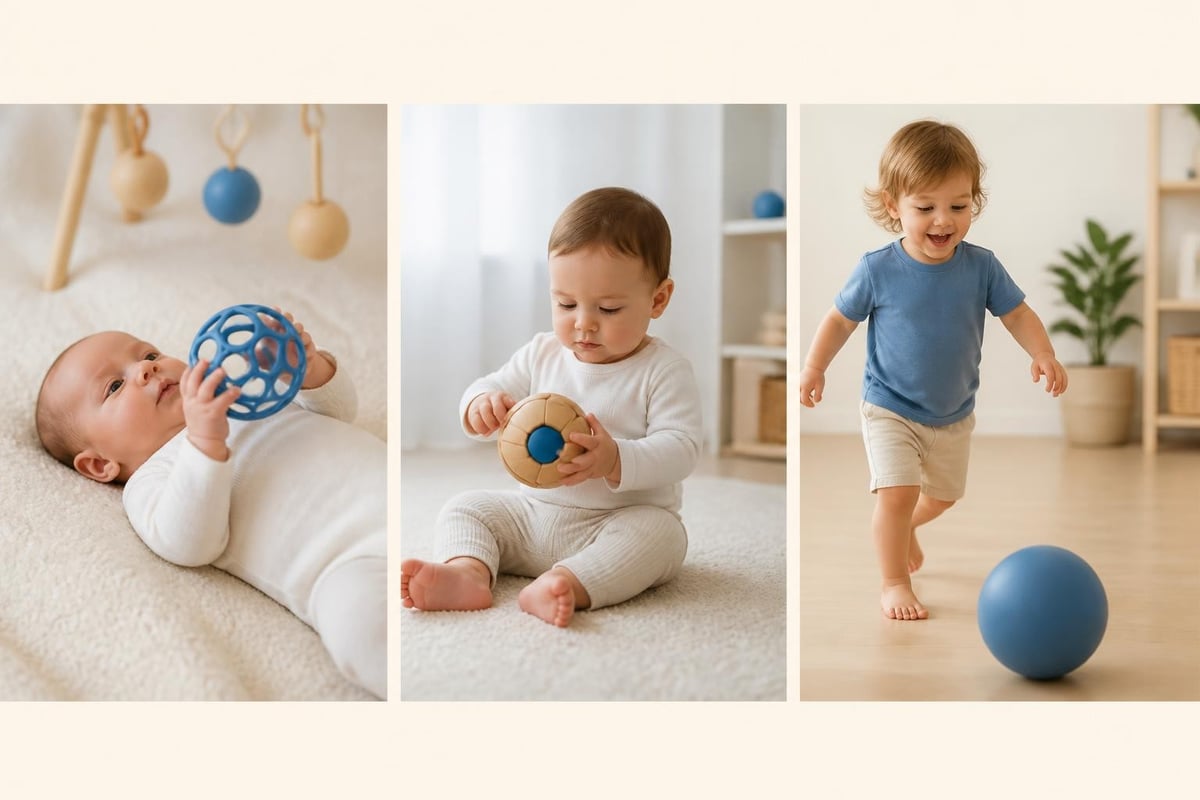
Graduated Difficulty: The ball montessori sequence progresses from soft clutch balls for newborns to puzzle balls for older infants, then to larger balls for walking toddlers.
Parents who embrace this approach notice their children engage more deeply with simple, well-designed balls compared to electronic alternatives. The research on Montessori effectiveness confirms that these intentional design choices support better developmental outcomes.
The Developmental Benefits of Ball Montessori Play
Ball montessori activities support multiple areas of child development simultaneously. When a six-month-old grasps a soft fabric ball, they're not just playing. They're building neural pathways that support future learning.
Motor Skill Development Through Ball Play
- Gross Motor Skills: Rolling, throwing, kicking, and chasing balls build large muscle groups and coordination
- Fine Motor Skills: Grasping, squeezing, and manipulating balls strengthen hand muscles needed for writing
- Hand-Eye Coordination: Tracking moving balls and attempting to catch them creates essential visual-motor connections
- Balance and Spatial Awareness: Following balls teaches children about space, distance, and body positioning
Recent research on ball-based interventions demonstrates significant improvements in motor competence among preschoolers who engage in structured ball play activities. The study confirms what Montessori educators have observed for decades.
Cognitive and Sensory Growth
Ball montessori play activates multiple senses simultaneously. Infants exploring a textured ball receive tactile feedback through their fingers, visual input through pattern recognition, and proprioceptive awareness through weight and resistance.
Problem-Solving Skills: When a ball rolls under furniture, children strategize retrieval methods. When it bounces unpredictably, they adjust their approach. These moments build critical thinking abilities.
Cause and Effect Understanding: Dropping a ball and watching it bounce teaches fundamental physics concepts. Pushing harder creates faster movement. These discoveries form the foundation for scientific thinking.
The cognitive benefits extend beyond immediate play. Children who regularly engage with open-ended materials like balls demonstrate stronger concentration and independence in other learning areas.
Choosing the Right Ball Montessori Materials by Age
Age-appropriate selection ensures children experience success rather than frustration. The ball montessori sequence carefully matches developmental readiness with appropriate challenges.
Birth to 6 Months: Clutch and Grasp Balls
Newborns benefit from soft, lightweight balls they can grip easily. The Montessori clutch ball features fabric segments that create natural finger holds. These balls typically measure 3-4 inches in diameter and weigh just a few ounces.
| Feature | Purpose | Example Materials |
|---|---|---|
| Soft texture | Safe for mouthing | Organic cotton, wool felt |
| Light weight | Easy grasping | Fabric with minimal filling |
| High contrast | Visual tracking | Black and white patterns |
| Grippable design | Developing grip strength | Segmented construction |
Parents can introduce these balls during tummy time, placing them just within reach to encourage reaching and grasping movements.
6 to 12 Months: Puzzle Balls and Textured Balls
As babies develop stronger hand control, puzzle balls become appropriate. These feature interlocking segments that babies can manipulate, providing cognitive challenges alongside motor practice. Many parents also enjoy exploring the variety of options available through Montessori toy collections that support this developmental stage.
Textured balls with different surface patterns stimulate sensory exploration. Bumpy, smooth, ribbed, and soft surfaces teach tactile discrimination. This sensory input supports brain development during a critical growth period.
12 to 24 Months: Rolling and Kicking Balls
Walking toddlers need larger balls for active play. Balls measuring 6-10 inches diameter support rolling games, gentle throwing, and early kicking attempts.
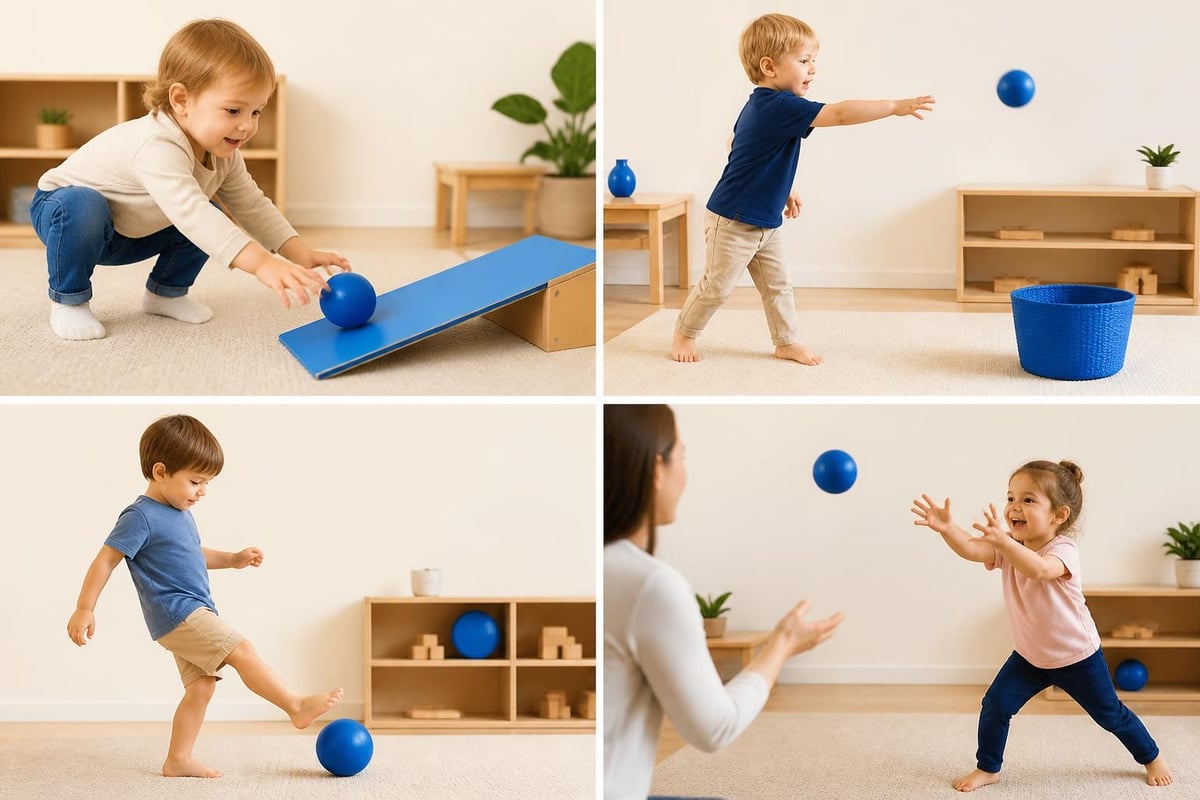
- Start with rolling balls back and forth while sitting
- Progress to standing rolls across short distances
- Introduce gentle underhand tosses
- Practice kicking stationary balls
- Graduate to moving targets
These activities build coordination while supporting social interaction when practiced with caregivers or siblings.
2 to 3 Years: Advanced Ball Skills
Preschoolers develop more refined ball skills. They can catch larger balls, throw with intention, and participate in simple ball games with rules.
Appropriate Activities:
- Catching bounced balls
- Throwing at targets
- Rolling balls through obstacle courses
- Simple ball games with turn-taking
The progression from simple grasping to complex ball games demonstrates the ball montessori principle of following the child's developmental timeline.
Setting Up Ball Montessori Activities at Home
Creating an effective ball montessori environment doesn't require elaborate equipment. Simple, thoughtful setups support maximum engagement and learning.
Creating a Ball Exploration Basket
Curate a basket containing 3-5 balls of varying sizes, textures, and weights. This variety encourages comparison and choice-making. Rotate balls periodically to maintain interest without overwhelming with options.
Basket Contents by Age:
- Infants: One clutch ball, one puzzle ball, one soft sensory ball
- Toddlers: One small throwing ball, one medium rolling ball, one textured ball
- Preschoolers: Variety of sizes for different activities, including a small catching ball
Store the basket on a low shelf where children can independently access it. This arrangement supports the Montessori principle of prepared environment and child-led exploration.
Ball Run and Ramp Activities
Ball runs teach cause and effect while building focus and patience. Start with simple two-piece ramps for toddlers, gradually introducing more complex systems for preschoolers.
Parents can create DIY ball runs using cardboard tubes, wooden planks, or purchase dedicated ball drop toys. The key is ensuring the ball moves slowly enough for children to track visually and predict outcomes.
Outdoor Ball Montessori Play
Outdoor environments expand ball play possibilities. Grass provides different resistance than indoor floors, teaching children to adjust throwing and kicking force. Hills introduce gravity concepts through rolling experiments.
- Roll balls down gentle slopes
- Practice throwing into large containers
- Create obstacle courses for ball rolling
- Kick balls toward targets marked with natural objects
Outdoor play also provides space for larger movements without furniture concerns, allowing children to fully develop gross motor skills.
Common Mistakes to Avoid with Ball Montessori
Even well-intentioned parents sometimes inadvertently limit ball montessori effectiveness. Understanding these pitfalls helps create better learning experiences.
Offering Too Many Choices Simultaneously
While variety matters, presenting twenty different balls overwhelms young children. The Montessori approach emphasizes careful curation over abundance. Three well-chosen balls teach more than a basket of random options.
This principle extends beyond balls to overall toy selection. Research on authentic Montessori materials demonstrates that removing non-essential items from learning environments improves outcomes.
Directing Play Too Heavily
Ball montessori thrives on child-led exploration. When adults constantly demonstrate "correct" ways to use balls, they interrupt natural discovery processes. Instead, observe what children do independently, intervening only for safety.
Better Approaches:
- Place balls in accessible locations and step back
- Observe what captures interest
- Expand on child-initiated activities rather than directing new ones
- Ask open questions: "What happens when you roll it harder?"
Choosing Developmentally Inappropriate Balls
A heavy basketball frustrates a toddler attempting their first throws. Conversely, a soft infant ball bores a preschooler ready for catching challenges. Matching ball characteristics to current abilities ensures engagement rather than discouragement.
Neglecting Safety Considerations
Ball size matters significantly for young children. Balls smaller than 1.75 inches pose choking hazards for children under three. Always select appropriately sized balls and supervise play with younger siblings present.
Integrating Ball Montessori with Other Learning Activities
Ball play naturally connects to broader Montessori learning areas. These connections create rich, multi-dimensional experiences.
Language Development Through Ball Play
Narrate ball activities to build vocabulary: "The red ball is rolling away. It's moving fast! Now it stopped." This commentary teaches action words, spatial concepts, and descriptive language.
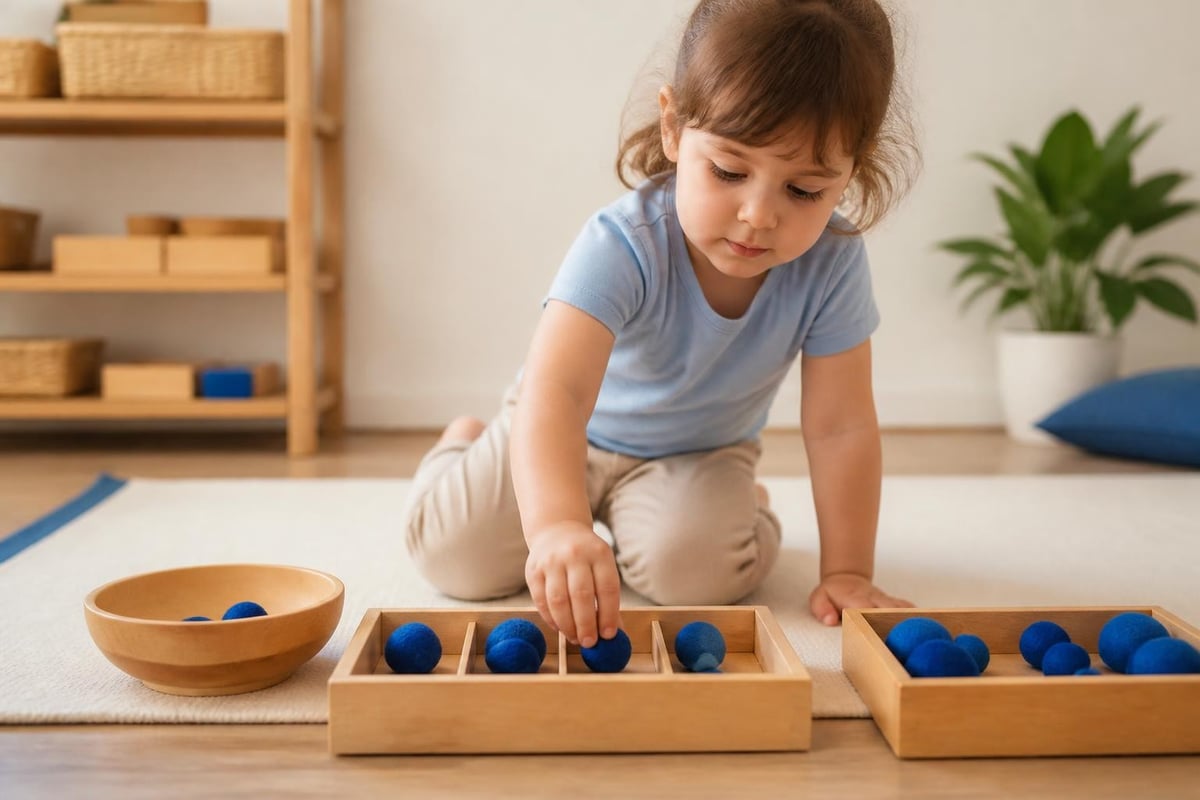
Older children enjoy counting balls, sorting by characteristics, and following multi-step directions involving balls. These activities integrate math and language skills into physical play.
Practical Life Skills
Ball care teaches responsibility. Children can help wash dirty balls, return them to designated storage, and notice when repairs are needed. These tasks build independence and environmental awareness.
Some families incorporate ball activities into daily routines. Rolling a ball back and forth becomes a calming bedtime ritual. Tossing balls into a basket teaches cleanup skills while maintaining playfulness.
Social-Emotional Learning
Ball games require turn-taking, patience, and cooperation. Rolling a ball to a sibling and waiting for its return teaches impulse control and social reciprocity. These skills transfer to other relationship contexts.
Sharing balls challenges toddlers emerging from egocentric thinking. With support, they learn that taking turns makes games more enjoyable for everyone. These early lessons in fairness and cooperation shape lifelong social competence.
Ball Montessori for Different Learning Environments
Whether homeschooling, supplementing traditional education, or choosing Montessori childcare, ball activities adapt to various settings.
Home Implementation
Home environments offer flexibility in ball montessori implementation. Parents can dedicate specific spaces to ball play, rotate materials freely, and integrate activities into daily rhythms.
Weekly Ball Activity Ideas:
- Monday: Texture exploration with different surface balls
- Tuesday: Rolling races down hallway
- Wednesday: Target practice with containers
- Thursday: Ball washing and care
- Friday: Free exploration with full ball collection
This structure provides consistency while maintaining variety. As families explore Montessori-inspired approaches at home, ball activities often become favorite routines.
Classroom Settings
Teachers implementing ball montessori in classroom environments consider group dynamics differently. Multiple children need access to similar materials, requiring larger inventories while maintaining the Montessori principle of order.
Designated ball play areas separate active movement from quiet concentration zones. Clear expectations about ball use in different classroom areas help children self-regulate behavior.
Therapy and Special Needs Applications
Ball montessori principles support children with various developmental needs. Weighted balls provide calming proprioceptive input for children seeking sensory regulation. Larger balls with minimal bounce offer success for children with motor planning challenges.
Occupational therapists often incorporate Montessori-style balls into treatment plans, appreciating their versatility and developmental appropriateness. The research on classroom interventions shows benefits for diverse learners.
Making Your Own Ball Montessori Materials
DIY ball montessori materials offer customization possibilities while reducing costs. Handmade balls also carry special meaning, especially when created with family involvement.
Fabric Ball Tutorial
Creating a basic Montessori clutch ball requires fabric scraps, stuffing, and basic sewing skills. Cut twelve pentagon shapes from contrasting fabrics. Sew them together, leaving a small opening for stuffing. Fill lightly for infants or more fully for toddlers. Close the opening securely.
Material Selection Tips:
- Use 100% cotton for easy washing
- Choose high-contrast patterns for young infants
- Ensure all seams are secure to prevent stuffing exposure
- Avoid buttons, beads, or small decorations that pose choking risks
Sensory Ball Variations
Enhance basic balls with different textures. Sew ribbons into seams for tactile interest. Use varied fabrics like corduroy, flannel, and satin on different segments. Fill sections with different materials (rice, beans, cotton) to create varied weights and sounds.
Always prioritize safety. Double-stitch all seams. Avoid small parts. Test durability before giving to children.
Wooden Ball Options
Parents comfortable with woodworking can create simple wooden balls or purchase unfinished wooden balls to customize. Sanding until perfectly smooth prevents splinters. Natural oil finishes are safest for items that will be mouthed.
Wooden balls work beautifully for ball runs and ramps. Their predictable rolling patterns help children understand cause and effect relationships.
Screen-Free Play Benefits of Ball Montessori
In our increasingly digital world, ball montessori offers valuable screen-free engagement that supports healthy development.
Physical Activity in a Digital Age
Children today spend less time in active play than previous generations. Ball activities naturally encourage movement, building strength, coordination, and cardiovascular health. Unlike sedentary screen time, ball play develops the whole child.
The physical benefits extend beyond obvious fitness improvements. Active play supports brain development, emotional regulation, and sleep quality. Children who regularly engage in ball activities often demonstrate better focus and behavior.
Building Real-World Skills
Digital games teach button-pushing and screen navigation. Ball play teaches spatial reasoning, force adjustment, and physical problem-solving. These real-world skills transfer to countless future situations, from sports participation to scientific experimentation.
Many families exploring screen-free play alternatives discover that ball activities satisfy children's need for engagement without electronic stimulation.
Natural Consequence Learning
When balls bounce unpredictably or roll away, children learn from immediate, tangible consequences. This direct feedback teaches more effectively than virtual rewards or penalties. Children develop intrinsic motivation through the satisfaction of successful catches and accurate throws.
Troubleshooting Common Ball Montessori Challenges
Even with careful implementation, parents encounter obstacles. These solutions address frequent concerns.
"My Child Only Throws Balls Indoors"
Throwing is a natural developmental milestone, but indoor throwing creates safety concerns. Rather than prohibiting all throwing, designate appropriate spaces and targets. Hang a laundry basket on a wall for throwing practice. Create outdoor throwing times when weather permits.
Offer alternative indoor activities that satisfy the throwing urge without damage risk: soft fabric balls at soft targets, beanbag tosses, or rolling variations.
"Balls Always Roll Under Furniture"
Strategic furniture arrangement minimizes frustration. Block gaps under couches with pool noodles or rolled towels. Create designated play areas away from furniture when possible. Teach retrieval tools use (reaching sticks, flashlights for spotting).
This challenge also offers learning opportunities. Children develop problem-solving skills figuring out retrieval strategies. They practice asking for help appropriately.
"My Child Loses Interest Quickly"
Ball rotation maintains novelty. Store some balls away, introducing them periodically as "new" discoveries. Combine balls with other materials: rolling them through tunnels, floating them in water, or incorporating them into dramatic play scenarios.
Follow your child's lead. If current balls don't engage, observe what does capture attention. Maybe your child prefers smaller balls, different textures, or ball activities combined with other interests.
"Balls Create Chaos with Multiple Children"
Establish clear expectations about ball play areas and times. Consider having "ball time" as a scheduled activity rather than constant availability. Teach turn-taking explicitly through games requiring cooperation.
Multiple ball sets prevent conflicts. Each child can have their own ball while participating in parallel play, gradually building toward cooperative games as social skills develop.
Ball Montessori and Modern Toy Trends
Understanding how ball montessori fits within broader toy trends helps parents make informed decisions about their children's play materials.
The Rise of Educational Toys
Parents increasingly seek toys that support learning alongside entertainment. Ball montessori naturally aligns with this trend, offering developmental benefits through enjoyable play. Unlike some educational toys requiring batteries or apps, balls provide pure, screen-free learning.
The educational toy market continues growing as families recognize the connection between early experiences and future success. Ball activities support this awareness while maintaining simplicity and affordability.
Sustainable and Natural Material Preferences
Environmental consciousness drives many 2026 toy purchasing decisions. Natural material balls align with sustainability values while offering superior sensory experiences. Wooden and fabric balls last longer than plastic alternatives, reducing waste.
The principles behind wooden Montessori toys extend to ball selection, emphasizing durability, beauty, and connection to nature.
Minimalist Parenting Movement
Minimalist families appreciate ball montessori's emphasis on quality over quantity. A few well-chosen balls provide more developmental value than baskets of random toys. This approach reduces clutter while increasing engagement depth.
Ball activities demonstrate that meaningful play doesn't require extensive toy collections. Simple materials used creatively offer richer experiences than elaborate electronic alternatives.
Extending Ball Montessori Beyond Early Childhood
While ball montessori primarily targets infants through preschoolers, the principles extend into elementary years and beyond.
Elementary Age Ball Activities
Older children enjoy more complex ball skills and games. Four-square, wall ball, and catch variations challenge developing abilities. These activities maintain the Montessori emphasis on coordination, focus, and social cooperation.
Introducing various ball sports exposes children to different cultural traditions and physical challenges. Basketball, soccer, volleyball, and tennis each develop unique skill sets while building overall athleticism.
Family Ball Games
Ball activities create opportunities for family bonding across age ranges. Multi-generational games adapt rules to include everyone. Grandparents rolling balls to toddlers while older siblings play catch nearby strengthens family connections.
Regular family ball time establishes healthy activity patterns and creates lasting memories. These shared experiences often become treasured family traditions.
Life Skills Through Ball Mastery
Learning to catch, throw, and kick balls builds confidence that transfers to other challenges. Children who master basic ball skills often approach new physical activities with greater enthusiasm and less fear.
The persistence required to develop ball skills teaches valuable lessons about practice, patience, and gradual improvement. These metacognitive lessons support academic and social learning throughout life.
Professional Perspectives on Ball Montessori
Educators, therapists, and child development experts increasingly recognize ball montessori value.
Occupational Therapy Applications
Occupational therapists use balls extensively in pediatric treatment. The sensory input, motor planning, and coordination requirements make balls ideal therapeutic tools. Montessori-style balls offer advantages over clinical therapy balls through their accessibility for home practice.
Families can continue therapeutic activities at home using the same ball montessori principles their children's therapists employ in clinical settings.
Early Childhood Education Integration
Progressive preschools and childcare centers incorporate ball montessori activities into daily schedules. Understanding the comprehensive guide to Montessori toys helps educators select appropriate materials and design effective activities.
Teacher training programs increasingly include Montessori principles, exposing future educators to ball montessori benefits and implementation strategies.
Pediatric Developmental Monitoring
Pediatricians often ask about ball skills during well-child visits. These milestones indicate broader developmental progress. Children who struggle with age-appropriate ball activities may need additional support in motor or visual-spatial areas.
Ball montessori play at home provides natural opportunities for parents to observe development and identify potential concerns early when interventions are most effective.
Ball montessori represents more than just playing with simple toys. It's a thoughtful approach to supporting children's development through materials that respect their natural learning processes while building essential skills. From the first clutch ball a newborn grasps to the complex catching games preschoolers master, ball activities create foundations for lifelong learning, physical competence, and joyful movement. Ready to bring these powerful learning tools into your home? KIDZEEHUB offers carefully curated Montessori-inspired toys and educational materials designed to support your child's development through meaningful, screen-free play that makes learning natural and fun.


