


Every parent wants to give their child the best start in life. One of the most important areas of development during the early years involves the small muscles in the hands and fingers. Fine motor skills toys help children build the coordination, strength, and control needed for everything from buttoning a shirt to writing their name. These specialized toys turn everyday play into powerful learning opportunities that prepare kids for school and life. At KIDZEEHUB, we believe that the right toys can make learning feel like pure fun while building essential developmental skills that last a lifetime.
Why Fine Motor Skills Matter for Your Child's Development
Fine motor skills involve the coordination of small muscles in the hands, fingers, and wrists. These abilities allow children to perform precise movements needed for daily tasks. According to the Illinois Early Learning Project, children develop these skills gradually through everyday activities and purposeful play.
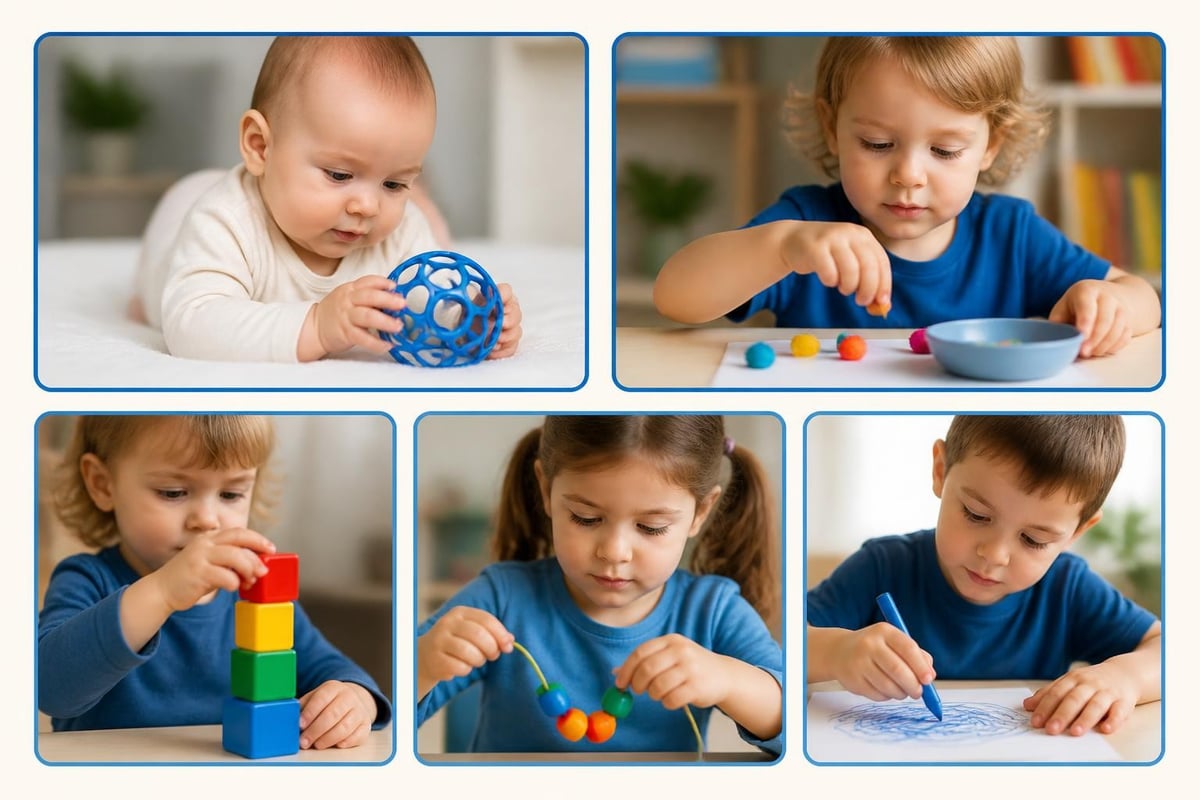
During the first five years of life, children move from simple grasping reflexes to complex hand movements. This progression happens naturally when kids have access to appropriate toys and activities. Fine motor skills toys provide the perfect practice ground for these developing abilities.
The Connection Between Hand Skills and Brain Development
When children manipulate objects with their hands, they create important neural pathways in the brain. Each time a toddler picks up a small block or threads a bead onto a string, they strengthen the connection between their brain and their fingers. This coordination becomes the foundation for writing, drawing, using scissors, and countless other skills they will need throughout life.
The ECE Resource Hub explains how infants and toddlers build these abilities through play and daily routines. Parents can support this natural development by choosing toys that challenge without frustrating their children.
Types of Fine Motor Skills Toys and Their Benefits
Different toys target different aspects of fine motor development. Understanding these categories helps parents select toys that match their child's current abilities and next developmental steps.
Grasping and Pinching Toys
- Pegboards with Large Pegs - Perfect for toddlers learning to grip and place objects with intention
- Chunky Puzzles - Help children practice picking up pieces and fitting them into correct spaces
- Shape Sorters - Build hand-eye coordination while teaching shapes and colors
- Bead Mazes - Strengthen finger muscles as children move beads along curved wires
These toys help children develop the pincer grasp, which involves using the thumb and forefinger together. This skill becomes essential for holding pencils, using utensils, and picking up small objects safely.
Threading and Lacing Activities
Threading toys offer excellent practice for precision and patience. When children thread beads onto a string or lace cards, they practice bilateral coordination, which means using both hands together for different tasks.
| Toy Type | Age Range | Key Skills Developed |
|---|---|---|
| Large Wooden Beads | 2-4 years | Pincer grasp, hand-eye coordination |
| Lacing Cards | 3-5 years | Bilateral coordination, concentration |
| Threading Sets | 4-6 years | Fine precision, pattern recognition |
The Montessori wooden beads sequencing toy set at KIDZEEHUB provides children with colorful beads and sturdy strings designed for little hands just learning these important skills.
Building and Construction Toys
Building blocks remain one of the most effective fine motor skills toys available. They require children to grasp, stack, balance, and manipulate pieces with increasing precision.
- Large Foam Blocks - Safe for younger toddlers developing basic stacking skills
- Wooden Building Blocks - Classic toys that grow with children through preschool years
- Magnetic Tiles - Connect easily while building spatial awareness and creativity
- Interlocking Bricks - Strengthen finger muscles through pressing pieces together and pulling them apart
Construction play naturally increases in complexity as children grow. A two-year-old might stack three blocks, while a five-year-old creates elaborate structures requiring planning and precise placement.
Age-Appropriate Fine Motor Skills Toys
Choosing toys that match your child's developmental stage ensures they feel challenged but not frustrated. Here is how to select the right fine motor skills toys for different ages.
For Infants (Birth to 12 Months)
Babies begin developing fine motor skills from their first days of life. Simple toys support this early development:
- Soft rattles that fit comfortably in tiny hands
- Textured balls that encourage grasping and releasing
- Simple activity gyms with hanging toys to reach and bat
- Board books with thick pages for practicing turning pages
Infants learn through repetition and sensory exploration. The best toys for this age offer different textures, sounds, and visual interest without overwhelming their developing senses.
For Toddlers (1 to 3 Years)
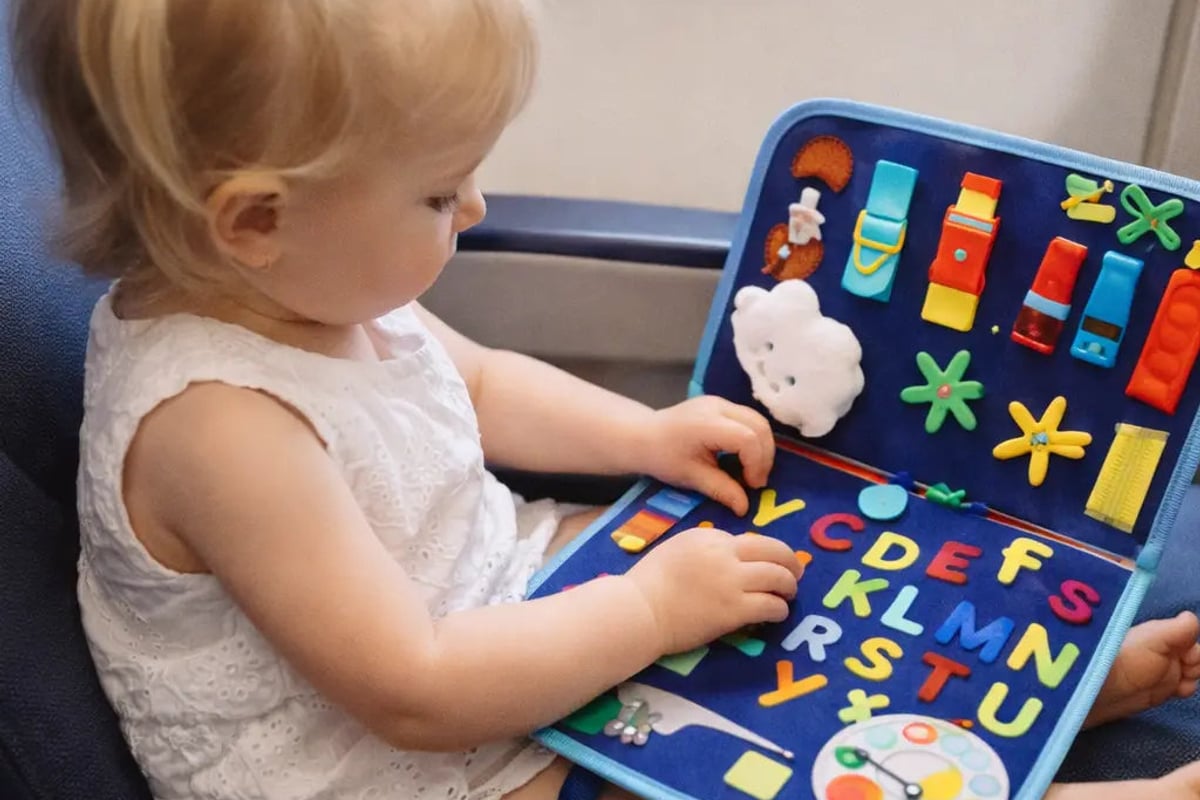
Toddlers experience rapid fine motor development. They transition from basic grasping to more controlled movements. The Montessori Busy Board perfectly captures this developmental stage with switches, buttons, zippers, and buckles that mirror real-life tasks. This hands-on toy keeps toddlers engaged while building practical skills they will use every day.
Other excellent choices for toddlers include:
- Chunky crayons and washable markers for early drawing experiences
- Play dough and modeling clay for squeezing, rolling, and shaping
- Simple puzzles with knobs or handles for easy grasping
- Nesting cups and stacking rings that teach size relationships
For Preschoolers (3 to 5 Years)
Preschoolers refine their fine motor abilities dramatically. They can now handle smaller pieces and more complex tasks. According to Franciscan Missionaries of Our Lady Health System, toys like Play-Doh sets and beginner building sets promote hand strength and dexterity during these crucial years.
Recommended fine motor skills toys for preschoolers:
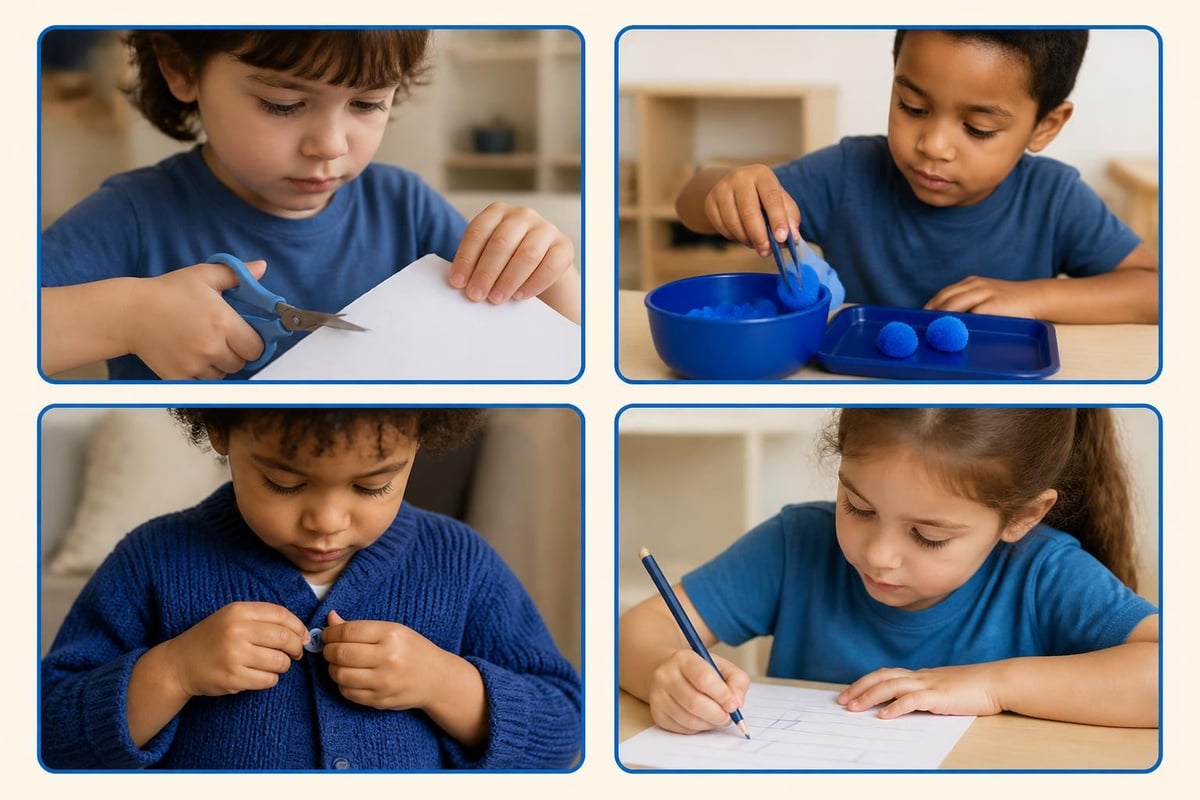
- Scissors designed for children with safety features and proper sizing
- Advanced building sets with smaller pieces requiring precision
- Art supplies including paintbrushes, stamp sets, and stickers
- Board games with small pieces to pick up and place
The building blocks training toys available at KIDZEEHUB offer various difficulty levels that grow with your child's improving coordination and problem-solving abilities.
Montessori-Inspired Toys for Fine Motor Development
The Montessori approach emphasizes hands-on learning through purposeful activities. Montessori fine motor skills toys often resemble real-life tools and tasks, which helps children see the practical application of their developing abilities.
Practical Life Activities
Montessori education includes "practical life" activities that build fine motor skills while teaching independence. These activities use real or realistic tools that allow children to practice everyday tasks.
Examples of practical life toys and activities:
- Dressing frames with buttons, snaps, zippers, and buckles
- Pouring sets with small pitchers and containers
- Tweezer activities for transferring small objects between bowls
- Lock and key sets that develop wrist rotation and hand strength
The Montessori felt busy book combines multiple practical life activities in one portable package. Children practice snapping, buttoning, tying, and other essential self-care skills through engaging felt pages.
Sensory-Based Learning Tools
Montessori philosophy recognizes that children learn best through their senses. Sensory toys that require manipulation with the hands provide excellent fine motor practice while engaging multiple learning pathways.
| Sensory Toy Category | Fine Motor Benefits | Additional Learning |
|---|---|---|
| Textured Puzzles | Pincer grasp, problem-solving | Tactile discrimination |
| Sand and Water Play | Pouring, scooping, measuring | Science concepts, creativity |
| Sensory Bins | Sorting, picking, transferring | Classification, focus |
| Playdough Accessories | Squeezing, rolling, cutting | Creativity, strength building |
The Montessori magnetic color and number maze combines sensory engagement with fine motor practice as children use a magnetic wand to guide colorful beads through pathways. This activity strengthens the muscles needed for pencil control while teaching colors and counting.
STEM Toys That Build Fine Motor Skills
Science, technology, engineering, and math learning often requires precise hand movements. Many STEM toys naturally develop fine motor abilities while teaching problem-solving and critical thinking.
Engineering and Building Challenges
STEM-focused construction toys require children to connect, balance, and manipulate pieces with increasing precision. These toys teach spatial reasoning while strengthening small hand muscles.
- Gear sets that connect and turn together
- Marble runs requiring careful placement of tracks and supports
- Robot building kits with screws, connectors, and moving parts
- Circuit sets with components to snap together
As children work on these projects, they naturally repeat movements that build muscle memory and coordination. The concentration required for STEM activities also helps develop focus and patience.
Science Tools Designed for Small Hands
Scientific exploration tools sized appropriately for children provide authentic learning experiences while developing dexterity. Tweezers, magnifying glasses, and droppers all require controlled hand movements.
Science tools that strengthen fine motor skills:
- Child-sized tweezers for sorting and examining small objects
- Safety goggles and magnifying glasses that children can adjust and handle
- Measuring tools including scoops, cups, and simple scales
- Exploration kits with multiple components to manipulate
The human body anatomy display set from KIDZEEHUB allows children to assemble body parts and organs, combining science education with the fine motor practice of fitting pieces together precisely.
Creative Arts and Crafts for Hand Development
Artistic activities provide some of the best opportunities for fine motor practice. Drawing, painting, cutting, and crafting all require controlled hand movements that strengthen developing muscles.
Drawing and Writing Tools
The progression from scribbling to writing involves significant fine motor development. Providing appropriate tools at each stage supports this natural progression.
Age-appropriate drawing tools:
- Thick crayons and markers for toddlers developing their grip (ages 18 months to 3 years)
- Triangular crayons that encourage proper finger placement (ages 3-4 years)
- Colored pencils and fine markers for detailed work (ages 5 and up)
- Paintbrushes of various sizes for different techniques and hand positions
According to The OT Toolbox, providing diverse art materials helps children develop different aspects of fine motor control while expressing creativity.
Cutting and Pasting Activities
Learning to use scissors represents a major fine motor milestone. This skill requires bilateral coordination, hand strength, and precision working together.
Progression for scissor skills:
- Start with play dough and child-safe scissors to practice the cutting motion
- Move to cutting playdough snakes and simple strips of paper
- Progress to cutting along straight lines drawn on paper
- Advance to curved lines and eventually complex shapes
Safety scissors designed for children make this learning process safer and more successful. Look for scissors with rounded tips, comfortable grips, and blades appropriate for your child's hand size.
Everyday Objects That Work as Fine Motor Skills Toys
You do not need to buy specialized toys to support fine motor development. Many household items provide excellent practice opportunities when used safely under adult supervision.
Kitchen and Household Items
Common household objects can become powerful learning tools:
- Clothespins for clipping to container edges (builds pincer strength)
- Dry pasta shapes for sorting and threading (develops precision)
- Ice cube trays for sorting small objects into compartments
- Egg cartons for color sorting and counting activities
- Spray bottles filled with water for outdoor play (strengthens hand muscles)
These everyday items cost little or nothing while providing authentic practice for skills children will use throughout life. The childhood development of fine motor skills naturally progresses through both structured play and everyday activities.
Nature-Based Fine Motor Activities
Natural materials offer wonderful textures and varying sizes for fine motor practice:
- Pinecones, acorns, and shells for sorting and examining
- Sticks of different sizes for building and creating
- Leaves and flowers for arranging and pressing
- Rocks and pebbles for stacking and balancing
- Sand and dirt for scooping, pouring, and molding
Outdoor play naturally incorporates fine motor practice while connecting children with nature and encouraging creative exploration.
How to Choose Quality Fine Motor Skills Toys
Not all toys labeled for fine motor development deliver equal benefits. Understanding what makes a toy truly effective helps parents make wise purchasing decisions.
Safety Considerations
Safety always comes first when selecting toys for young children. Check for these important safety features:
- Age-appropriate sizing to prevent choking hazards
- Non-toxic materials including paints, finishes, and plastics
- Sturdy construction that withstands rough play without breaking into dangerous pieces
- Smooth edges without sharp corners or rough surfaces
- Certifications from recognized safety organizations
At KIDZEEHUB, every toy undergoes careful review to ensure it meets strict safety standards for American families. We understand that parents need confidence in the toys they bring into their homes.
Educational Value and Longevity
The best fine motor skills toys grow with your child and offer multiple ways to play. Look for toys that:
- Support multiple skill levels so children can use them for several years
- Encourage open-ended play rather than having only one correct way to use them
- Build multiple skills simultaneously, such as combining fine motor practice with color recognition
- Maintain child interest through engaging design and meaningful challenge
- Support independent play so children can practice skills on their own
| Quality Indicator | Why It Matters | What to Look For |
|---|---|---|
| Durability | Withstands repeated use | Solid wood, quality plastics, reinforced connections |
| Versatility | Grows with child | Multiple difficulty levels, open-ended design |
| Engagement | Keeps child interested | Bright colors, satisfying feedback, achievable challenges |
| Educational Design | Targets specific skills | Based on child development research, Montessori principles |
Creating a Fine Motor Skills Play Area at Home
Setting up a dedicated space for fine motor activities encourages regular practice and makes materials easily accessible. You do not need a large area, just thoughtful organization.
Organizing Materials by Skill Level
Arrange toys and materials so children can independently choose activities appropriate for their current abilities:
- Lower shelves for current skill level toys children can access freely
- Higher shelves for more advanced toys to rotate in as skills develop
- Clear containers so children see what is inside without dumping everything
- Labels with pictures to help children return items to proper places
- Rotating selection to maintain interest without overwhelming choices
This organization system follows Montessori principles of creating an environment that supports independence and learning.
Combining Fine Motor Practice with Daily Routines
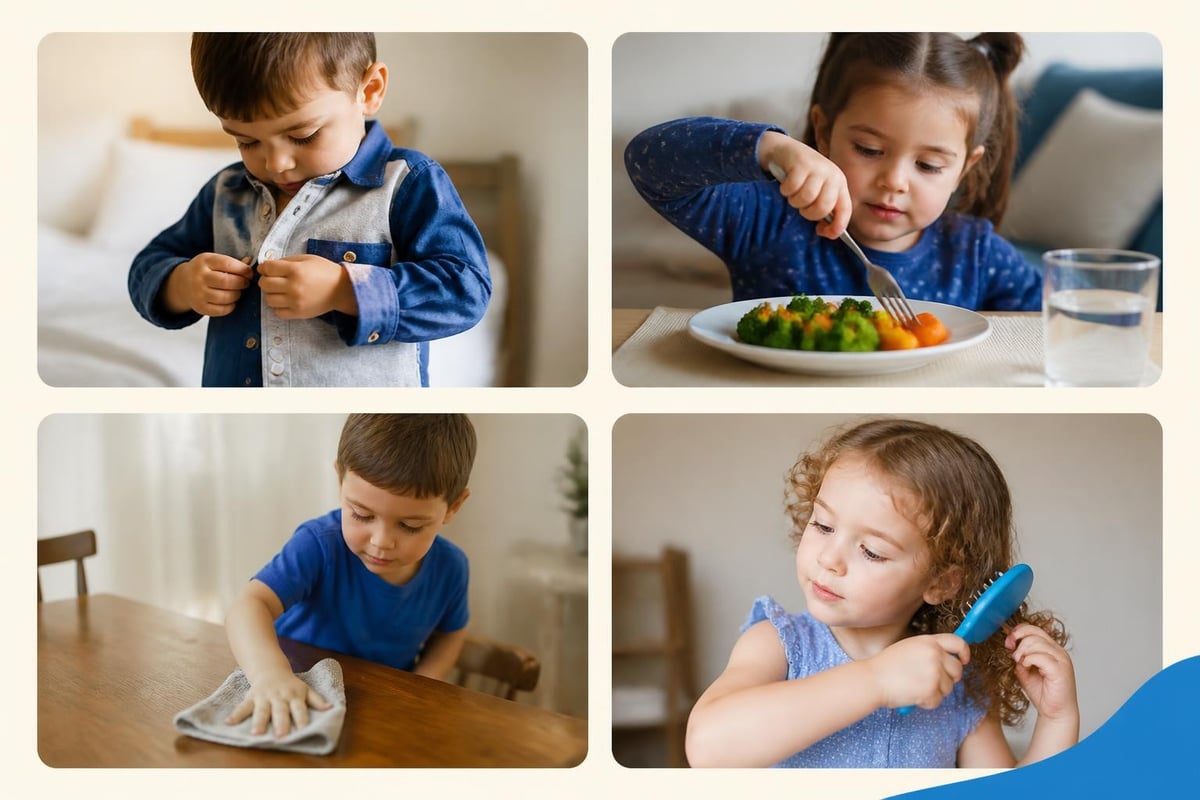
The most effective fine motor development happens through consistent practice woven into daily life. Look for opportunities throughout your regular routines:
Morning routine opportunities:
- Buttoning shirts or pants
- Zipping jackets
- Brushing teeth
- Combing or brushing hair
Mealtime activities:
- Using utensils appropriately for age
- Pouring from small pitchers
- Opening containers
- Spreading soft foods with a knife
Helping with household tasks:
- Sorting laundry by color
- Matching socks
- Helping prepare simple foods
- Watering plants with a small watering can
These authentic activities give children a sense of accomplishment while building essential skills they will use every day.
Supporting Your Child's Fine Motor Journey
Every child develops at their own pace. Some children naturally show advanced fine motor skills early, while others need more time and practice. Both patterns represent normal development.
Recognizing Developmental Milestones
Understanding typical milestones helps parents know what to expect and when extra support might be helpful. According to research on advanced methods for improving fine motor abilities, consistent practice significantly impacts skill development.
Typical fine motor milestones by age:
- 12 months - Picks up small objects with thumb and forefinger, turns pages in board books
- 18 months - Stacks 2-3 blocks, scribbles with crayons, removes loose clothing
- 2 years - Builds towers of 6+ blocks, turns doorknobs, unscrews lids
- 3 years - Copies simple shapes, uses scissors, draws simple figures
- 4 years - Buttons large buttons, copies letters, uses fork skillfully
- 5 years - Ties shoes, writes letters and numbers, uses scissors with control
If your child seems significantly behind these milestones, consult your pediatrician. Early intervention can make a tremendous difference.
When to Seek Professional Guidance
Most children develop fine motor skills naturally through play and daily activities. However, some children benefit from occupational therapy support. Consider consulting a professional if your child:
- Shows significant frustration with age-appropriate fine motor tasks
- Avoids activities requiring hand use
- Demonstrates unusual hand positions or grips
- Falls far behind developmental milestones
- Has difficulty with multiple fine motor skills across different activities
The OT Toolbox guide to occupational therapy toys offers additional resources for parents seeking specialized support for their children's development.
Making Fine Motor Practice Fun and Engaging
Children learn best when they are having fun. The secret to effective fine motor development lies in making practice feel like play rather than work.
Following Your Child's Interests
Pay attention to what naturally captures your child's attention. If they love animals, choose fine motor skills toys with animal themes. If they enjoy music, select instruments that require finger manipulation.
Interest-based fine motor activities:
- For dinosaur fans - Excavation kits requiring careful digging and brushing
- For aspiring artists - Diverse art supplies and creative materials
- For builders - Construction sets with increasing complexity
- For nature lovers - Gardening tools sized for small hands
When children pursue activities they genuinely enjoy, they practice longer and with greater focus, leading to faster skill development.
Celebrating Progress Without Pressure
Young children need encouragement, not criticism, as they develop new abilities. Focus on effort and improvement rather than perfection:
- Notice specific improvements - "You threaded three beads today! Yesterday you did two."
- Celebrate attempts - "You worked really hard on that puzzle!"
- Avoid comparisons - Each child develops at their own perfect pace
- Offer choices - Let children select activities that interest them
- Keep practice short - Young children have limited attention spans
This positive approach builds confidence alongside skills, creating children who feel capable and eager to keep learning.
Screen-Free Play and Fine Motor Development
In 2026, screens dominate much of modern childhood. However, touchscreens do not provide the same fine motor benefits as hands-on play with physical objects.
Why Physical Toys Matter More Than Ever
Swiping a screen uses different muscles and movements than manipulating three-dimensional objects. Physical fine motor skills toys offer irreplaceable benefits:
- Tactile feedback that helps children understand cause and effect
- Resistance that builds actual hand strength
- Three-dimensional problem solving that develops spatial reasoning
- Real-world applications that transfer directly to daily tasks
- Sensory-rich experiences that engage multiple learning pathways simultaneously
The hands-on toys available at KIDZEEHUB provide children with meaningful alternatives to screen time while building skills they truly need.
Creating Screen-Free Zones and Times
Establishing clear boundaries around screen use helps ensure children get adequate hands-on play time:
- Screen-free mornings to start the day with active, creative play
- Device-free mealtimes that encourage conversation and utensil use
- Toy rotation schedule that keeps physical toys fresh and interesting
- Outdoor time requirements before any screen access
- Parent modeling of choosing hands-on activities over screens
These boundaries support not just fine motor development but overall health, creativity, and family connection.
FAQs About Fine Motor Skills Toys
What age should children start using fine motor skills toys?
Babies can start with simple rattles and soft toys from birth. As they grow, gradually introduce more complex toys matching their developmental stage. Most targeted fine motor toys work best for children ages 1-6 years when these skills develop most rapidly.
How long should children play with fine motor toys each day?
Quality matters more than quantity. Even 15-20 minutes of focused fine motor play daily makes a difference. Follow your child's interest and attention span rather than forcing extended sessions. Multiple short play periods often work better than one long session.
Can too much screen time delay fine motor development?
Yes, excessive screen time can limit opportunities for hands-on play that builds fine motor skills. The American Academy of Pediatrics recommends limiting screen time and ensuring children get plenty of active, hands-on play with physical toys and materials.
What if my child resists fine motor activities?
Make activities more appealing by connecting them to your child's interests, keeping sessions short, and celebrating small successes. If resistance continues or seems related to genuine difficulty, consult your pediatrician about whether occupational therapy evaluation might be helpful.
Are expensive toys better for fine motor development?
Not necessarily. Simple items like blocks, crayons, play dough, and even household objects can provide excellent fine motor practice. Focus on toys that engage your child and offer appropriate challenge rather than price tags. Quality construction matters more than cost.
How do I know if my child's fine motor skills are developing normally?
Compare your child's abilities to developmental milestone charts, but remember that normal development includes a wide range. If your child seems happy, engaged, and making gradual progress, they are likely developing well. Consult your pediatrician if you have specific concerns.
Supporting your child's fine motor development does not require expensive programs or complicated schedules. Simple, engaging toys combined with everyday activities naturally build the hand skills children need for school and life. The key is providing regular opportunities for hands-on practice through play that feels fun rather than forced. At KIDZEEHUB, we carefully select educational toys that make fine motor skill development enjoyable and effective. Explore our collection of Montessori-inspired, STEM-focused, and creativity-building toys designed to help your child develop strong, capable hands while having the time of their lives.


