


Choosing the right toys for your child involves more than just picking something colorful and fun. When selecting toys for small hands, you need to consider how those tiny fingers and developing muscles will grip, manipulate, and explore. Toys designed specifically for little learners help build essential fine motor skills while keeping playtime engaging and educational. The best toys for small hands fit comfortably in developing palms, feature easy-to-grasp shapes, and encourage children to practice the movements they need for writing, self-care, and everyday tasks.
Why Toys for Small Hands Matter in Early Development
Young children experience the world primarily through touch and manipulation. Their hands are learning tools that help them understand size, texture, weight, and spatial relationships. Toys designed for small hands do more than entertain-they support crucial developmental milestones that form the foundation for later learning.
Understanding Fine Motor Development
Fine motor skills involve the coordination of small muscles in the hands and fingers. These skills develop gradually from infancy through early childhood. According to developmental experts at Healthline, children progress through predictable stages as their hand strength and coordination improve.
Newborns start with reflexive grasping. By six months, most babies can reach for and hold objects. Around nine to twelve months, the pincer grasp emerges, allowing babies to pick up small items between thumb and forefinger. This milestone opens up new possibilities for exploration and learning.
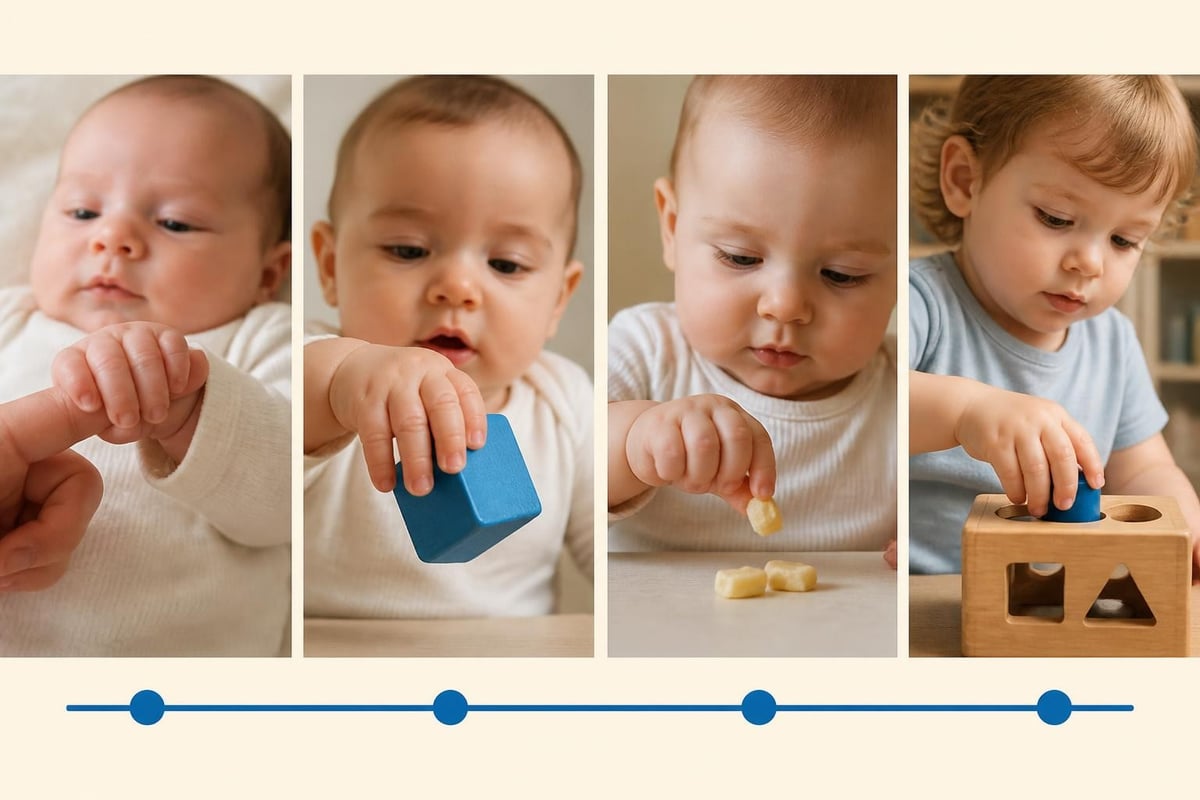
Toddlers between 12 and 24 months refine their grip and begin stacking, sorting, and manipulating objects with greater precision. Preschoolers develop even more control, eventually mastering tasks like buttoning, zipping, and using scissors. Each stage builds on the previous one, making age-appropriate toys for small hands essential for proper development.
The Connection Between Hand Skills and Brain Development
When children manipulate toys designed for small hands, they're not just exercising their fingers. They're building neural pathways that connect sensory input with motor output. This hand-brain connection supports cognitive development, problem-solving abilities, and spatial awareness.
The California Department of Education emphasizes that fine motor activities directly influence a child's readiness for academic tasks. Children who develop strong hand coordination tend to have easier transitions into writing, drawing, and classroom activities.
Choosing Age-Appropriate Toys for Small Hands
Not all toys suit every age group. What works perfectly for a one-year-old might frustrate a newborn or bore a preschooler. Understanding developmental stages helps you select toys that challenge without overwhelming.
Birth to Six Months
During these early months, babies develop basic grasping reflexes. The best toys for small hands at this stage include:
- Soft textured balls that fit comfortably in tiny palms
- Lightweight rattles with easy-grip handles
- Crinkle toys that provide sensory feedback
- Teething rings designed for small mouths and hands
- Simple cloth books with varied textures
These toys should be lightweight, washable, and free from small parts. Babies at this age bring everything to their mouths, so safety is paramount.
Six to Twelve Months
As babies gain better hand control, they need toys that encourage reaching, grasping, and transferring objects between hands. Ideal choices include:
- Stacking cups that nest inside each other
- Large wooden blocks perfect for little hands
- Pop-up toys that respond to pushing and pressing
- Simple shape sorters with large pieces
- Musical instruments like maracas or drums
This stage focuses on cause-and-effect learning. Toys for small hands should provide immediate, satisfying responses to a child's actions.
Twelve to Twenty-Four Months
Toddlers in this range develop the pincer grasp and improved hand-eye coordination. They benefit from toys that require more precision:
- Chunky puzzles with large knobs
- Large crayons designed for small hands
- Simple building blocks that connect easily
- Play dough and molding tools
- Push-and-pull toys with sturdy handles
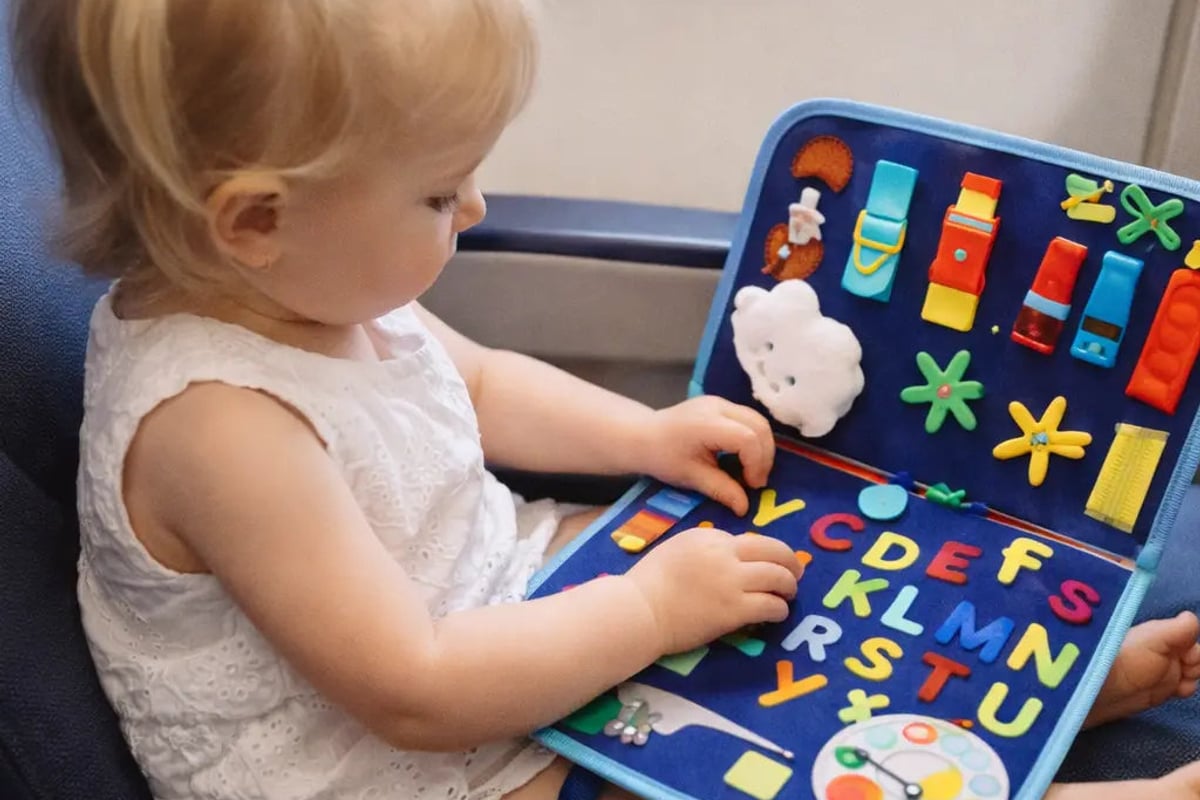
The Montessori Busy Board offers an excellent example of hands-on learning for this age. It features switches, buttons, zippers, and buckles that help toddlers practice real-life skills while developing finger strength and coordination. This type of interactive toy keeps children engaged while building independence and problem-solving abilities.
Two to Three Years
Preschoolers need toys that challenge their growing dexterity while supporting creative play. Look for:
- Smaller building blocks and construction sets
- Lacing cards and beads for threading
- Simple art supplies like markers and paint brushes
- Pretend play items with buttons and snaps
- Puzzles with interlocking pieces
Children this age can handle more complex manipulations. Toys for small hands should encourage both fine motor practice and imaginative thinking.
Features That Make Toys Perfect for Small Hands
Certain design elements make toys particularly suitable for developing hands. Understanding these features helps parents make informed choices.
Size and Weight Considerations
Toys need to fit comfortably in small palms without being so light they're difficult to control or so heavy they tire little arms quickly. The ideal toy for small hands should:
- Measure between 2 and 4 inches for toddlers
- Weigh less than 8 ounces for easy manipulation
- Feature rounded edges that don't dig into palms
- Provide adequate gripping surface
Texture and Material Selection
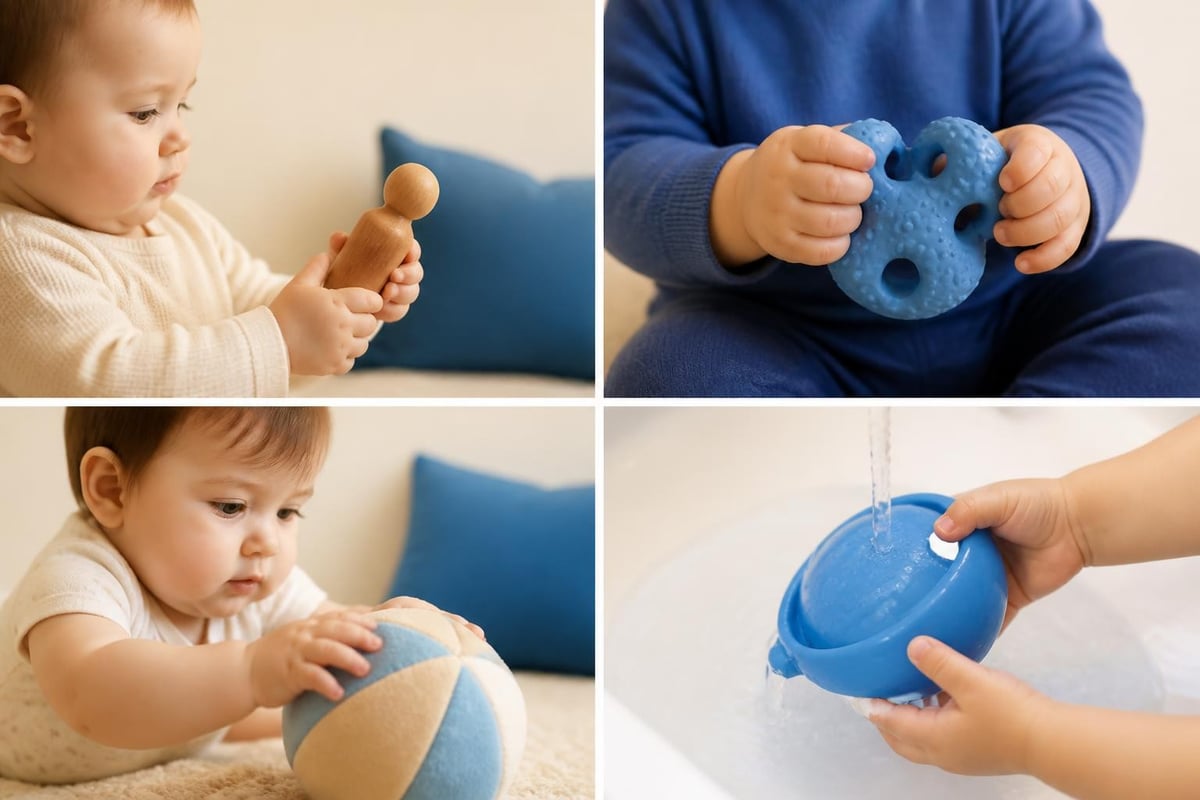
Different textures help children develop tactile discrimination. Quality toys for small hands incorporate:
- Smooth wooden surfaces for easy sliding and stacking
- Rubberized grips that prevent slipping
- Soft fabrics for comfort and safety
- Bumpy or ridged areas that provide sensory feedback
- Temperature-neutral materials that feel pleasant to touch
Natural materials like wood often work better than hard plastics. They're easier to grip and provide better sensory information.
Interactive Elements That Build Skills
The best toys for small hands include features that respond to a child's actions. Boys Town National Research Hospital recommends toys with buttons, switches, dials, and moving parts that require different types of hand movements.
| Feature Type | Skill Developed | Age Range |
|---|---|---|
| Push buttons | Index finger isolation | 12+ months |
| Turning knobs | Wrist rotation | 18+ months |
| Sliding switches | Finger coordination | 15+ months |
| Squeezing triggers | Grip strength | 24+ months |
| Threading holes | Pincer grasp | 30+ months |
Montessori-Inspired Toys for Small Hands
Montessori education emphasizes child-led learning through hands-on exploration. Montessori toys typically feature natural materials, simple designs, and real-world applications that perfectly suit small hands.
Self-Correcting Design Principles
Montessori toys often include built-in feedback mechanisms. A shape sorter only accepts correctly oriented shapes. Stacking rings only fit in order from largest to smallest. These design elements help children learn through trial and error without adult intervention.
This approach builds confidence and independence. Children develop problem-solving skills as they figure out how toys work through their own experimentation.
Practical Life Activities
Many Montessori toys mirror real-world tasks. Buttoning frames, zipper boards, and lacing cards help children master self-care skills. These toys for small hands prepare children for everyday independence while strengthening finger muscles and coordination.
The Weissman Children's Foundation notes that practical life activities provide natural, meaningful contexts for developing fine motor control.
Natural Material Benefits
Montessori philosophy favors wood, metal, and fabric over plastic. These materials offer several advantages for small hands:
- Weight that provides good sensory feedback
- Natural textures that enhance tactile learning
- Temperature variations that engage more senses
- Durability that withstands repeated use
- Aesthetic appeal that encourages careful handling
You can explore educational toy options at KIDZEEHUB that incorporate these Montessori principles while supporting fine motor development.
STEM Toys Designed for Little Learners
Science, technology, engineering, and math concepts become accessible when toys for small hands make learning tangible and interactive. STEM toys build cognitive skills alongside physical coordination.
Building and Construction Sets
Block sets and construction toys develop spatial reasoning while strengthening hands. Look for sets with pieces sized appropriately for developing grip strength:
- Large wooden blocks for toddlers
- Magnetic tiles with easy-connect edges
- Oversized LEGO-compatible blocks
- Simple gear sets with chunky pieces
- Stacking and balancing toys
These toys teach cause-and-effect relationships, engineering basics, and creative problem-solving while children practice grasping, releasing, and precise placement.
Early Coding and Sequencing Toys
Even young children can grasp basic programming concepts through hands-on toys. Options designed for small hands include:
- Chunky coding robots with large buttons
- Sequence boards with movable picture cards
- Directional games using physical markers
- Pattern-matching activities with tactile pieces
These toys build logical thinking and planning skills while requiring careful finger manipulation.
Sorting and Categorizing Activities
Sorting toys help children understand classification while practicing the pincer grasp. The best options for small hands feature:
- Oversized tweezers or tongs for transferring objects
- Color-coded sorting bowls or bins
- Counting bears or other manipulatives
- Shape recognition games with 3D objects
- Size-sequencing activities
According to School Readiness, these activities prepare children for mathematical thinking while developing the hand strength needed for writing.
Safety Considerations for Toys and Small Hands
Safety must always come first when selecting toys for young children. Small hands explore through touching, squeezing, and often tasting, so toys need to withstand this intensive investigation.
Choking Hazard Awareness
The U.S. Consumer Product Safety Commission requires toys for children under three to have no parts smaller than 1.25 inches in diameter. However, individual children develop at different rates. Consider your specific child's development when evaluating size appropriateness.
Check toys regularly for wear. Parts that seemed secure when new can loosen with use, creating hazards.
Material Safety Standards
Quality toys for small hands should meet or exceed safety standards. Look for:
- Non-toxic paints and finishes
- BPA-free plastics
- Smooth surfaces without splinters or sharp edges
- Secure construction that won't break apart
- Washable materials for hygiene
Certifications from ASTM International or the Consumer Product Safety Commission indicate toys have undergone safety testing.
Age Label Accuracy
Manufacturers include age recommendations based on safety testing and developmental appropriateness. These labels reflect both physical safety and skill level considerations. Toys for small hands should match your child's current abilities, not what you hope they'll grow into.
Supporting Fine Motor Development Through Play
Beyond choosing appropriate toys, how you engage with your child during play influences developmental outcomes. Child Development Authority suggests several strategies for maximizing learning.
Creating Rotation Systems
Too many toys at once overwhelms children and limits deep engagement. Instead of constant access to everything, rotate toys for small hands every few weeks. This approach:
- Maintains novelty and interest
- Encourages thorough exploration of each toy
- Reduces clutter and overwhelm
- Helps you observe which toys truly engage your child
- Makes old toys feel new again
Store unused toys out of sight, then swap them back in after a few weeks. You'll often see renewed enthusiasm for forgotten favorites.
Encouraging Independent Exploration
While playing together is valuable, children also need time to explore toys for small hands without adult direction. Independent play builds:
- Problem-solving confidence
- Sustained attention spans
- Self-directed learning habits
- Frustration tolerance
- Creative thinking
Set up inviting play spaces where children can safely explore toys on their own. Observe without immediately jumping in to help unless your child becomes genuinely frustrated.
Combining Multiple Skill Areas
The most effective play experiences integrate fine motor practice with other developmental areas. For example:
| Activity | Fine Motor Skill | Additional Learning |
|---|---|---|
| Stacking blocks | Grip and release | Spatial awareness, balance |
| Shape sorting | Pincer grasp | Geometry, problem-solving |
| Play dough sculpting | Hand strengthening | Creativity, planning |
| Threading beads | Bilateral coordination | Patterns, sequencing |
| Puzzle completion | Finger isolation | Visual discrimination, persistence |
Screen-Free Alternatives That Engage Small Hands
In 2026, screens dominate many children's lives. Intentionally choosing hands-on toys provides essential breaks from digital stimulation while supporting development in ways screens cannot replicate.
Sensory Play Materials
Sensory experiences engage small hands while calming nervous systems. Options include:
- Kinetic sand that holds shapes
- Water beads for scooping and pouring
- Rice or bean sensory bins with hidden treasures
- Finger paints and art supplies
- Textured fabric books and toys
These materials provide rich tactile input that touchscreens simply cannot match. The BSA Child Development Center emphasizes that hands-on sensory exploration forms the foundation for later abstract thinking.
Music and Movement Toys
Musical instruments designed for small hands combine auditory learning with physical coordination. Consider:
- Rhythm sticks and shakers
- Small xylophones with chunky mallets
- Hand drums with easy-grip edges
- Simple wind instruments for preschoolers
- Musical activity centers with multiple elements
These toys develop rhythm, listening skills, and cause-and-effect understanding while strengthening hands and fingers.
Nature-Based Open-Ended Play
The simplest toys for small hands often come from nature. Collecting sticks, stones, pinecones, and leaves provides endless opportunities for sorting, building, and creative play. Natural materials offer:
- Infinite variety in size, shape, and texture
- No "right way" to play, encouraging creativity
- Connection to the outdoor world
- Zero cost and unlimited availability
- Opportunities for classification and comparison
Combine natural materials with containers, tools, and play surfaces to extend learning possibilities.
Building a Balanced Toy Collection
A well-curated toy collection includes variety without overwhelming your child or your home. When building a collection of toys for small hands, aim for balance across several categories.
Essential Categories to Include
| Category | Purpose | Examples |
|---|---|---|
| Construction | Spatial reasoning, planning | Blocks, magnetic tiles, stacking toys |
| Fine Motor Practice | Hand strength, coordination | Puzzles, lacing cards, threading toys |
| Creative Expression | Imagination, planning | Art supplies, play dough, building sets |
| Pretend Play | Social skills, language | Dress-up, kitchen sets, tool sets |
| STEM Learning | Problem-solving, logic | Sorting toys, simple coding games, science kits |
Each category supports different aspects of development while giving children varied ways to practice hand skills.
Quality Over Quantity
Ten thoughtfully chosen toys for small hands provide more value than fifty random items. Quality toys share these characteristics:
- Durability for years of use
- Open-ended play possibilities
- Age-appropriate challenge levels
- Safety and non-toxic materials
- Educational value beyond entertainment
Invest in fewer, better toys rather than accumulating cheap items that break quickly or don't engage your child meaningfully.
Selecting appropriate toys for small hands sets the foundation for your child's physical development, academic readiness, and lifelong learning abilities. By choosing age-appropriate, well-designed educational toys that encourage hands-on exploration, you're supporting essential fine motor skills while making playtime meaningful and fun. KIDZEEHUB specializes in Montessori-inspired, STEM-focused, and developmentally appropriate toys that help children build strong hands, curious minds, and a love for learning through engaging, screen-free play.


