


Choosing the right play surface for your child makes a bigger difference than you might think. Montessori play mats create a dedicated space where babies and toddlers can explore, learn, and develop essential skills safely on the floor. These specialized mats follow Montessori principles by encouraging independent movement, sensory experiences, and self-directed discovery. Unlike traditional play mats with bright cartoon characters and electronic features, montessori play mats emphasize simplicity, natural materials, and purposeful design. Parents across the United States are discovering how these thoughtfully designed floor surfaces support everything from tummy time to early walking, all while keeping little ones safe and engaged.
Understanding Montessori Play Mats and Their Purpose
Montessori play mats serve as more than just cushioned floor covering. They create a prepared environment where children can move freely and explore their surroundings without overstimulation. The Montessori method values child-led learning, and these mats provide the foundation for that independence.
What Makes a Play Mat "Montessori"
A true montessori play mat follows specific principles that align with Maria Montessori's educational philosophy. These mats typically feature neutral colors, simple patterns, or natural textures rather than busy designs with licensed characters. The goal is to create a calm environment that doesn't overwhelm developing senses.
Key characteristics include:
- Minimalist aesthetic with earth tones or solid colors
- Safe, non-toxic materials free from harmful chemicals
- Firm yet cushioned surface that supports movement
- Easy-to-clean construction for maintaining hygiene
- Adequate thickness for safety without being too soft
The design choices matter because they directly impact how children interact with their play space. When choosing safe play mat materials, parents should prioritize options that won't expose little ones to potentially harmful substances during this critical developmental period.
How These Mats Support Child Development
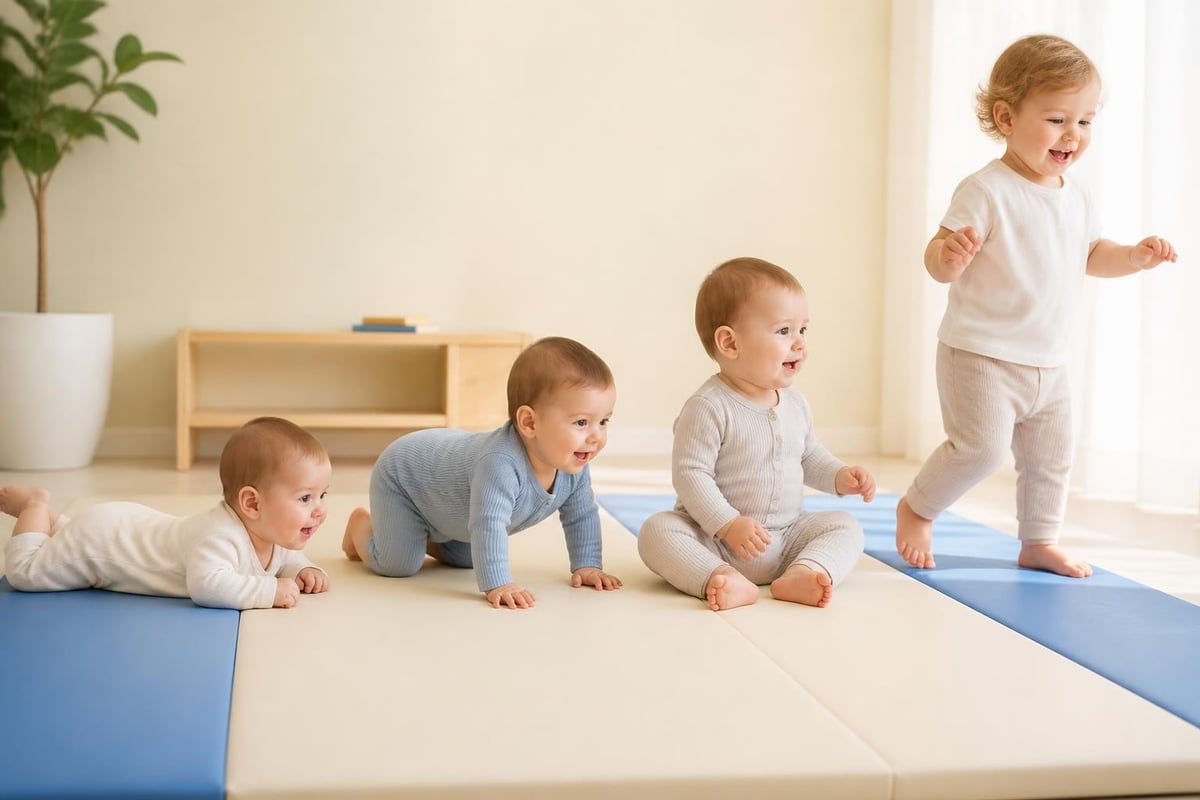
Floor time on montessori play mats builds crucial physical and cognitive skills. Babies strengthen neck and shoulder muscles during tummy time, preparing for rolling and crawling. Toddlers practice balance, coordination, and spatial awareness as they move across the surface.
The firm-but-forgiving surface encourages natural movement patterns without restricting mobility. Children learn to trust their bodies and develop confidence in their physical abilities. This foundation supports everything from gross motor development to fine motor precision later on.
Choosing Safe Materials for Your Montessori Play Mat
Material selection directly affects your child's health and safety. Not all play mats are created equal, and understanding the differences helps you make informed decisions.
Common Materials and Their Safety Profiles
| Material Type | Safety Level | Durability | Cleaning Ease | Environmental Impact |
|---|---|---|---|---|
| Silicone | Excellent | High | Very Easy | Moderate |
| Cotton | Good | Moderate | Moderate | Low |
| Natural Rubber | Good | High | Easy | Low |
| PVC Foam | Poor | High | Easy | High |
| TPU | Excellent | Moderate | Easy | Moderate |
Silicone play mats have gained popularity for good reason. They're completely free from phthalates, BPA, and other concerning chemicals. The material resists bacteria growth naturally and wipes clean with simple soap and water. Many parents appreciate that silicone doesn't absorb spills or harbor odors.
Cotton mats offer breathability and natural texture. They work well for families who prefer organic materials, though they require more frequent washing. Look for mats with non-toxic backing to prevent slipping.
Avoiding harmful materials is crucial. Traditional PVC foam mats may contain flame retardants, formaldehyde, and phthalates. These chemicals can off-gas into your home's air and potentially affect your child's health. The comparison of foam, PVC, and silicone materials reveals significant safety differences worth considering.
Certifications and Testing Standards
Third-party certifications provide peace of mind when selecting montessori play mats. Look for these important safety markers:
- CertiPUR-US certification for foam materials
- GREENGUARD Gold certification for low chemical emissions
- OEKO-TEX Standard 100 for textile products
- CPSIA compliance for children's products
- ASTM safety standards for play surfaces
Reputable manufacturers willingly share testing results and certification documents. If a company can't provide this information, consider that a red flag. Your child spends significant time on this surface, so verification matters.
Size, Thickness, and Practical Considerations
Finding the right dimensions ensures your montessori play mat serves your family well as your child grows.
Determining the Right Size for Your Space
Room size, furniture placement, and your child's age all influence the ideal mat dimensions. Smaller mats (3x4 feet) work for dedicated play corners in compact apartments. Larger mats (5x7 feet or bigger) accommodate multiple children or provide generous exploration space.
Consider where the mat will live. Will it stay in one room, or do you need portability? Some families use smaller mats that roll up for travel or visiting grandparents. Others invest in larger permanent installations that define the play area.
Measuring your space beforehand prevents frustrating returns. Account for furniture clearance and door swing patterns. The guide to choosing play mat size and purpose offers helpful formulas for calculating optimal dimensions.
Thickness Guidelines by Age and Activity
Mat thickness balances safety cushioning with developmental appropriateness:
- Newborns to 6 months: 0.4 to 0.6 inches for tummy time
- 6 to 12 months: 0.5 to 0.8 inches for rolling and sitting
- Toddlers 12+ months: 0.6 to 1 inch for walking practice
- Active play (all ages): 1 to 1.5 inches for tumbling and jumping
Thicker isn't always better. Very soft surfaces actually make learning to walk harder because they're unstable. Montessori philosophy emphasizes natural challenge, so a moderately firm surface helps children develop strength and balance more effectively.
Benefits of Montessori Play Mats for Different Age Groups
These versatile surfaces adapt to changing developmental needs throughout early childhood.
Supporting Infants (0-12 Months)
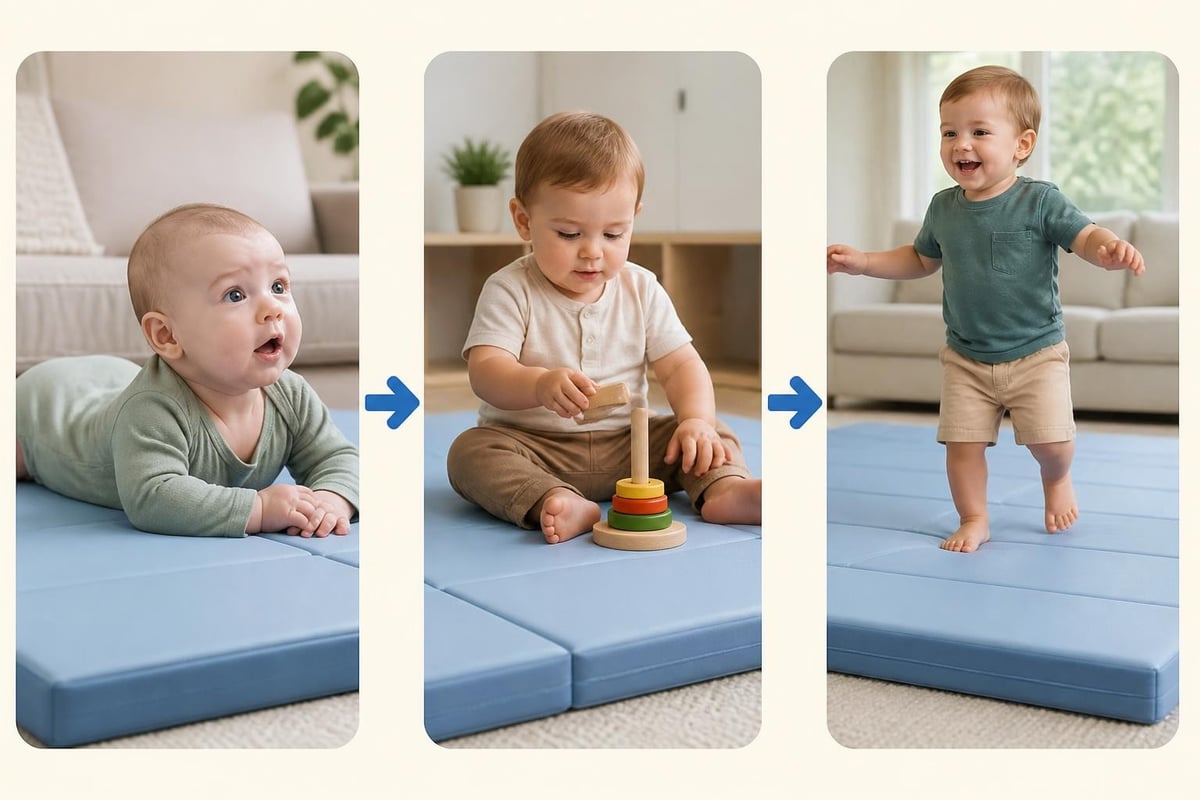
Newborns need safe, clean floor space from day one. Montessori play mats provide the perfect tummy time surface, crucial for preventing flat spots on the head and building upper body strength. The firm surface encourages babies to push up, turn their heads, and eventually roll over.
As babies reach 4-6 months, they begin exploring objects around them. A neutral-colored mat lets you rotate age-appropriate toys without visual competition from busy mat patterns. This supports focus and concentration, key Montessori values.
By 9-12 months, most babies are mobile. The cushioned surface protects knees during crawling and bottoms during sitting practice. Unlike carpeting, which can harbor allergens and dust, quality montessori play mats stay cleaner and healthier for exploring mouths and hands.
Fostering Toddler Independence (1-3 Years)
Toddlers use play mats as their personal workspace. They practice stacking blocks, completing puzzles, and engaging with open-ended toys. The defined space helps them understand boundaries and develop spatial awareness.
Montessori play mats encourage:
- Self-directed activity without constant adult intervention
- Responsibility for keeping their space organized
- Confidence in physical abilities like standing and squatting
- Focus on activities without distracting background patterns
- Respect for personal and shared spaces
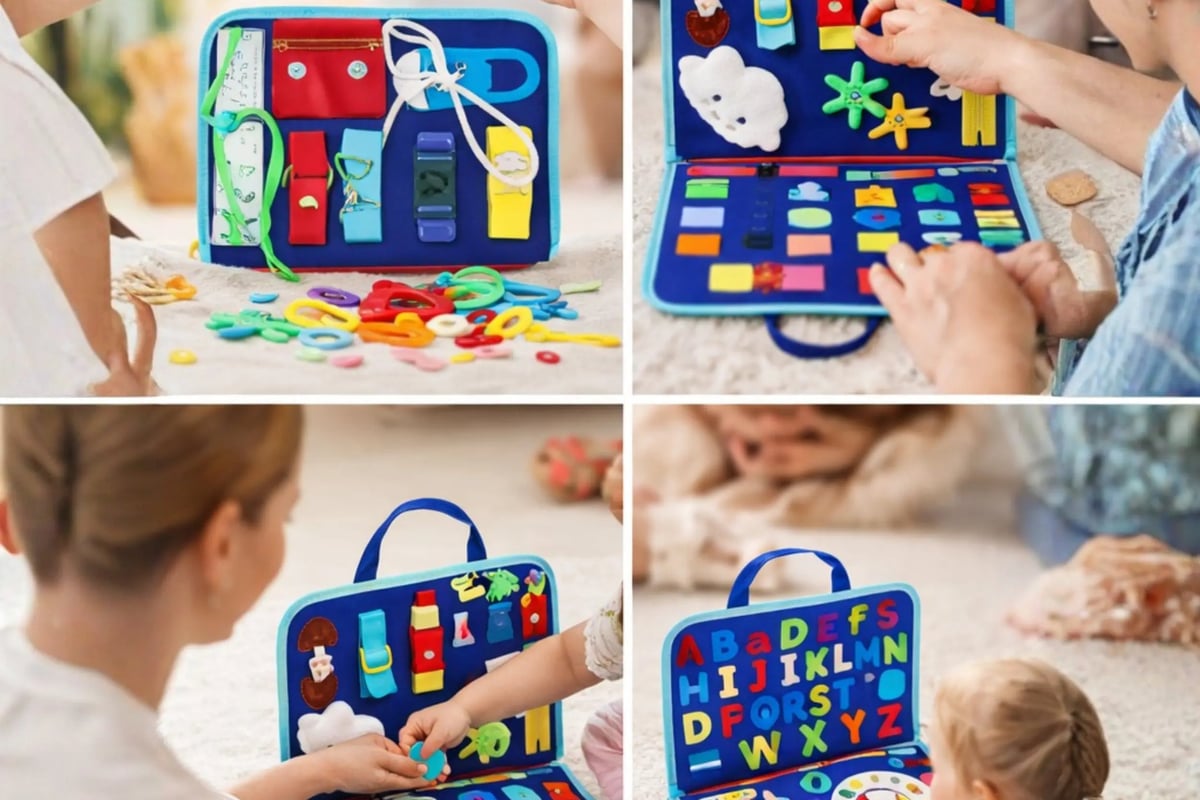
The mat becomes a trusted place where toddlers know they're safe to experiment, make mistakes, and try again. This builds the resilience and problem-solving skills that serve them throughout life. Parents looking for complementary learning tools often pair these mats with hands-on Montessori activities that further develop fine motor skills and independent exploration.
For families seeking tools that grow with their children, the Montessori Busy Board offers tactile learning experiences that perfectly complement floor play. This engaging board helps toddlers develop problem-solving abilities and hand-eye coordination while they enjoy screen-free discovery time on their play mat.
Preschool and Beyond (3-5 Years)
Older children continue benefiting from dedicated floor play space. They use montessori play mats for imaginative play, building elaborate block structures, practicing yoga or movement activities, and quiet reading time.
The mat still provides physical protection during active play while maintaining its role as a calm, organized environment. Many families find these mats serve well into the elementary years for homework, crafts, or sibling play sessions.
Maintenance and Cleaning Best Practices
Proper care extends your mat's lifespan and maintains a healthy play environment.
Daily and Weekly Cleaning Routines
Daily maintenance includes:
- Wiping up spills immediately with damp cloth
- Removing toys and debris before storing
- Spot-cleaning stains with mild soap solution
- Airing out the mat to prevent moisture buildup
- Checking for wear or damage that needs attention
Weekly deep cleaning depends on your mat material. Silicone mats tolerate thorough washing with soap and water, then air drying. Cotton mats may require machine washing according to manufacturer instructions.
The comprehensive guide to non-toxic play mat care emphasizes using gentle, fragrance-free cleaners that won't leave chemical residues. Harsh cleaners defeat the purpose of buying a non-toxic mat in the first place.
Storage and Longevity Tips
Proper storage protects your investment when the mat isn't in use:
- Roll rather than fold to prevent crease damage
- Store in cool, dry location away from direct sunlight
- Use breathable storage bags, not plastic
- Keep away from sharp objects or rough surfaces
- Rotate mat position to distribute wear evenly
Quality montessori play mats last for years, often serving multiple children. Some families even pass them down to friends or donate them once their children outgrow floor play. This longevity makes higher-quality mats worthwhile investments despite increased upfront costs.
Integrating Play Mats into Your Montessori Home Environment
Creating an effective prepared environment involves more than just purchasing a mat.
Room Setup and Play Zone Design
Position your montessori play mat in an area with natural light when possible. Place low shelves nearby with carefully curated, age-appropriate toys that children can access independently. Keep the selection small (6-8 items) to prevent overwhelm and encourage deep engagement.
Consider these placement factors:
- Distance from high-traffic walkways
- Visibility from common areas for supervision
- Temperature consistency (avoid cold floors or heating vents)
- Noise levels from appliances or street traffic
- Access to natural elements like windows or plants
The goal is creating a peaceful, inviting space where children choose to spend time. The importance of safe play surfaces in child development extends beyond physical safety to psychological comfort and learning readiness.
Rotating Activities and Materials
Montessori principles emphasize environmental changes that match children's evolving interests and abilities. Every few weeks, rotate the toys and materials available near the play mat. This keeps engagement high without purchasing endless new items.
Store rotated materials out of sight so they feel fresh when reintroduced. Observe which activities your child gravitates toward and which they ignore. This guides future selections and helps you understand their developmental focus.
Seasonal changes offer natural rotation opportunities. Summer might bring sensory bins with sand or water play, while winter focuses on fine motor activities and puzzles. The mat remains constant while contents adapt to growth and interest.
Comparing Montessori Play Mats to Traditional Options
Understanding differences helps you make the right choice for your family's needs and values.
Visual Design Philosophy
Traditional play mats often feature bright primary colors, alphabet letters, cartoon characters, and busy patterns. Manufacturers design them to catch parental attention in stores, not necessarily to support child development. The visual noise can actually overstimulate young nervous systems.
Montessori play mats embrace simplicity. Neutral tones, natural textures, or subtle geometric patterns create calm rather than chaos. This intentional restraint helps children focus on their activities rather than the mat itself.
Some parents worry neutral mats look boring. In practice, the toys and materials children use provide plenty of color and interest. The mat serves as a canvas, not the main attraction.
Functional Differences and Learning Outcomes
Built-in toys, electronic features, and attached activities characterize many traditional mats. While these seem educational, they actually limit open-ended exploration. Children interact with predetermined functions rather than creating their own play narratives.
Montessori approach advantages:
- Encourages creativity without prescribed play patterns
- Allows toy rotation without buying new mats
- Grows with child without becoming too babyish
- Supports concentration on chosen activities
- Teaches respect for shared calm spaces
Research on physical-digital play technologies suggests that simpler environments often yield better developmental outcomes than high-tech alternatives. Children need space to develop imagination, not constant external stimulation.
Budget Considerations and Value Assessment
Montessori play mats span wide price ranges, from affordable basic options to premium luxury choices.
Price Ranges and What They Include
| Price Range | Typical Features | Best For |
|---|---|---|
| $30-$60 | Basic foam or thin cotton, smaller sizes | Budget-conscious families, trying Montessori approach |
| $60-$120 | Quality silicone or thick cotton, medium sizes | Committed Montessori families, growing children |
| $120-$200 | Premium materials, large sizes, extra durability | Multiple children, long-term investment |
| $200+ | Designer options, custom sizes, luxury materials | Design-focused families, show spaces |
Higher prices don't always mean better developmental outcomes. A simple, safe $75 mat serves children just as well as a $250 designer version. Focus on material safety, appropriate size, and adequate thickness rather than brand prestige.
Cost-Per-Use Analysis
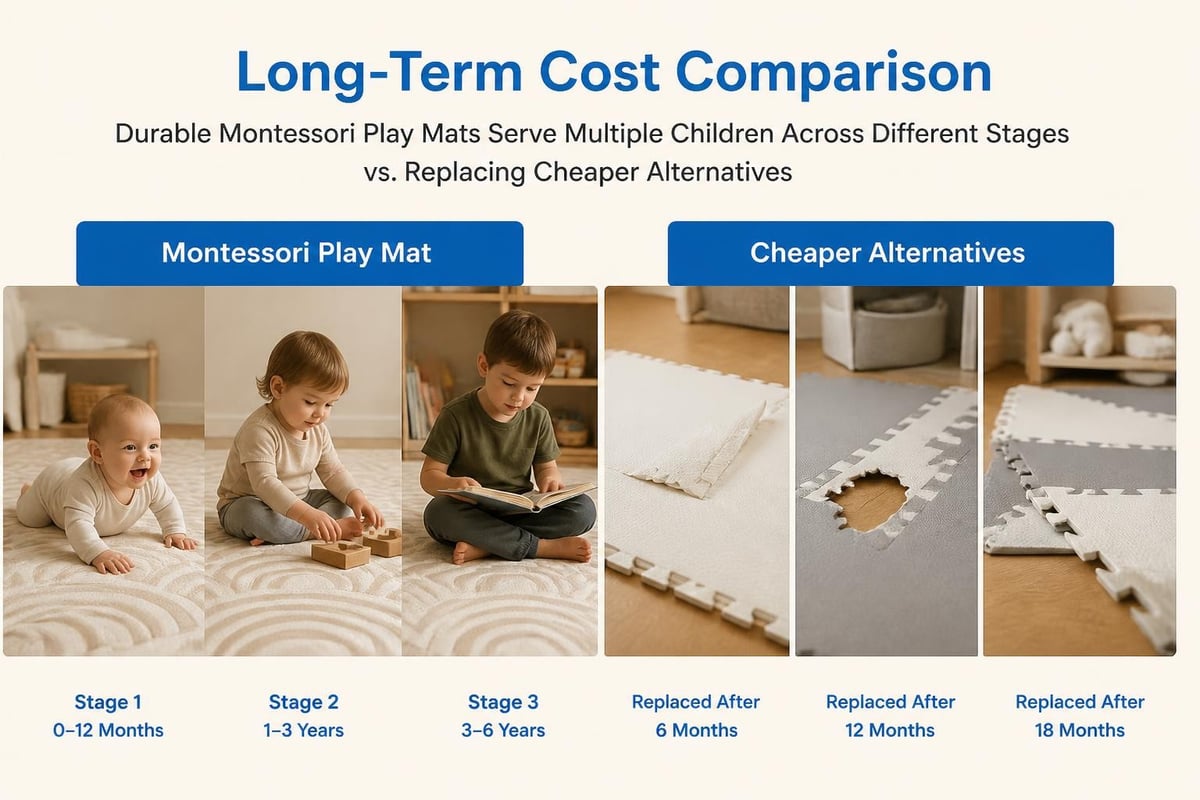
Calculate value by considering how long you'll use the mat. A $150 mat used daily for four years costs roughly 10 cents per day. Compare that to constantly replacing cheaper mats that wear out or contain concerning materials.
Factor in potential sibling use. Quality mats withstand multiple children, making them even more economical for growing families. Many parents report their montessori play mats lasting 5-7 years with proper care.
Creating a Complete Montessori Floor Play Experience
The mat is just one element of successful floor-based learning.
Complementary Furniture and Accessories
Low shelves at child height let little ones independently select and return materials. Floor mirrors encourage self-awareness and body exploration for infants. Cushions or floor chairs provide comfortable seating for older toddlers during focused activities.
Essential companion pieces include:
- Wooden toy shelves (12-18 inches high)
- Safe floor mirror for infant exploration
- Natural fiber basket for toy storage
- Low table for seated activities
- Soft cushions for reading corner
Keep furniture proportional to your child's size. Montessori environments adapt to the child rather than forcing children to adapt to adult-sized spaces. This builds confidence and true independence.
At KIDZEEHUB, we offer carefully selected Montessori-inspired items that complement floor play beautifully. From educational toys to movement tools, each product supports screen-free learning and natural development.
Toy Selection Guidelines
Choose open-ended materials over single-purpose toys. Wooden blocks, simple puzzles, stacking rings, and sensory materials offer unlimited possibilities. Avoid battery-operated items that do the playing for the child.
Natural materials like wood, cotton, and metal feel better to developing senses than plastic alternatives. They also tend to be more durable and aesthetically pleasing in your home environment.
Limit quantities. Five well-chosen toys generate more engagement than twenty mediocre options. Children develop deeper concentration when they're not overwhelmed by choices. Visit our collection of Montessori toys for toddlers to discover curated options that promote meaningful play.
Addressing Common Concerns and Questions
Parents frequently have specific worries when considering montessori play mats.
Safety on Hard Floors
Many families worry about injuries during falls or tumbles. Quality montessori play mats provide adequate cushioning for normal play activities while maintaining the firmness needed for proper development.
For active toddlers who climb, consider slightly thicker options (closer to 1 inch) without going so soft that walking becomes difficult. The mat should compress slightly under weight but bounce back immediately.
Remember that minor bumps are part of learning. Children develop spatial awareness and physical caution through experience. Overly protective padding can actually delay these important lessons.
Cleaning Challenges with Different Materials
Parents ask whether cloth mats stay hygienic or if silicone harbors bacteria. Properly maintained mats of any quality material remain safe and clean.
Silicone naturally resists bacterial growth and wipes clean easily, making it ideal for messy eaters or frequent spills. Cotton requires more effort but offers breathability some families prefer. The silicone play mat buyer's guide provides detailed cleaning protocols for various situations.
Neither material is inherently superior for all families. Consider your lifestyle, cleaning preferences, and specific needs when choosing.
Transitioning from Traditional Mats
Switching from colorful character mats to neutral montessori options sometimes meets resistance from toddlers. Make the transition gradual if needed.
Start by placing the new mat in a different location, creating a fresh space rather than replacing a familiar one. Let your child help choose where it goes. Over several weeks, phase out the old mat naturally.
Most children adapt quickly, especially when engaging toys appear in the new space. The simplicity often helps them focus better, even if they don't recognize this consciously.
Making Your Final Selection
With so many options available, narrowing down choices requires thoughtful consideration.
Essential Questions to Ask Before Buying
Evaluate these factors systematically:
- What size area can you dedicate to floor play?
- Does your child have material sensitivities or allergies?
- How important is portability for your lifestyle?
- What's your realistic cleaning commitment level?
- How many children will use this mat?
- Does your home have temperature variations affecting material choice?
- What's your honest budget including long-term value?
- Do you prefer natural or synthetic materials philosophically?
Answering these questions honestly prevents buyer's remorse. The "best" mat varies completely based on individual family circumstances.
Where to Purchase Quality Options
Reputable specialty retailers focusing on Montessori materials typically offer better selections than mass-market stores. Online shopping provides access to brands unavailable locally, though you sacrifice the ability to feel materials firsthand.
Read verified customer reviews carefully, focusing on long-term durability and material quality rather than just aesthetic preferences. Look for detailed photos showing mats after months of use, not just pristine product shots.
Consider return policies before purchasing. Reputable sellers stand behind their products and allow reasonable return windows. This protects you if the mat doesn't meet expectations or doesn't fit your space properly. When you're ready to create a complete learning environment, explore our full collection at KIDZEEHUB where we carefully select products that truly support child development.
Environmental Impact and Sustainability
Conscious parents increasingly consider ecological factors in purchasing decisions.
Eco-Friendly Material Options
Natural rubber, organic cotton, and sustainably harvested wood bases offer environmental advantages over petroleum-based foams. These materials break down more readily at end-of-life and typically involve less toxic manufacturing processes.
Silicone occupies a middle ground. While synthetic, it's extremely durable and doesn't leach chemicals. One silicone mat lasting seven years has less environmental impact than replacing foam mats every 18 months.
Certifications like GOTS (Global Organic Textile Standard) for cotton or FSC (Forest Stewardship Council) for wood components indicate genuine environmental commitment. Greenwashing is common in children's products, so verify claims through third-party certifications.
End-of-Life Considerations
Even the best mat eventually wears out or gets outgrown. Some manufacturers offer recycling programs for their products. Natural materials may be compostable depending on treatments and coatings.
Before discarding, consider alternative uses. Old play mats work well as garage workshop padding, pet bed liners, or garden kneeling pads. Donation to daycares, preschools, or family shelters extends useful life.
Choosing durable options from the start reduces waste significantly. The most sustainable product is the one you don't need to replace.
Real-World Success Stories
Hearing from other parents helps visualize how montessori play mats function in daily life.
Infant Development Milestones
Parents consistently report that dedicated floor time on quality mats accelerates physical development. Babies given generous tummy time from birth often roll earlier, crawl sooner, and develop stronger core muscles than those spending more time in containers like bouncers or swings.
One family shared how their daughter began sitting independently at five months after daily mat play, earlier than her pediatrician typically sees. The firm surface provided the feedback she needed to develop balance and muscle control.
Toddler Focus and Independence
Multiple parents describe how the simple mat environment helps active toddlers concentrate longer on chosen activities. Without competing visual stimulation, children engage more deeply with puzzles, blocks, and other open-ended materials.
A mother of twins found that separate mats (even in the same room) reduced conflict and encouraged parallel play. Each child had their own defined space, teaching respect for boundaries while allowing social interaction.
Sibling Sharing and Family Use
Families with multiple children appreciate how montessori play mats serve different ages simultaneously. A baby can practice tummy time on one section while a three-year-old builds with blocks nearby.
The neutral design never looks babyish, so older siblings don't reject it as "for babies." This longevity helps justify the investment for budget-conscious families.
Montessori play mats offer so much more than cushioned floor coverage. They create intentional spaces where your child builds physical strength, develops concentration, and explores the world safely on their own terms. By choosing non-toxic materials, appropriate sizes, and designs that support rather than overstimulate, you're investing in your child's healthy development. At KIDZEEHUB, we're committed to helping families discover educational toys and learning tools that make playtime meaningful and screen-free. Explore our carefully curated collection of Montessori-inspired products designed to grow with your child and support their natural curiosity every step of the way.


