


Parents today are looking for toys that do more than just entertain. They want learning tools that help children develop real skills while having fun. A montessori screwdriver board is one of those special learning materials that combines practical life skills with hands-on learning. These simple yet powerful tools help young children practice real-world tasks while building coordination, concentration, and independence. If you're wondering whether a montessori screwdriver board is right for your child, you're in the right place. Let's explore how this Montessori classic can support your child's development.
What Is a Montessori Screwdriver Board
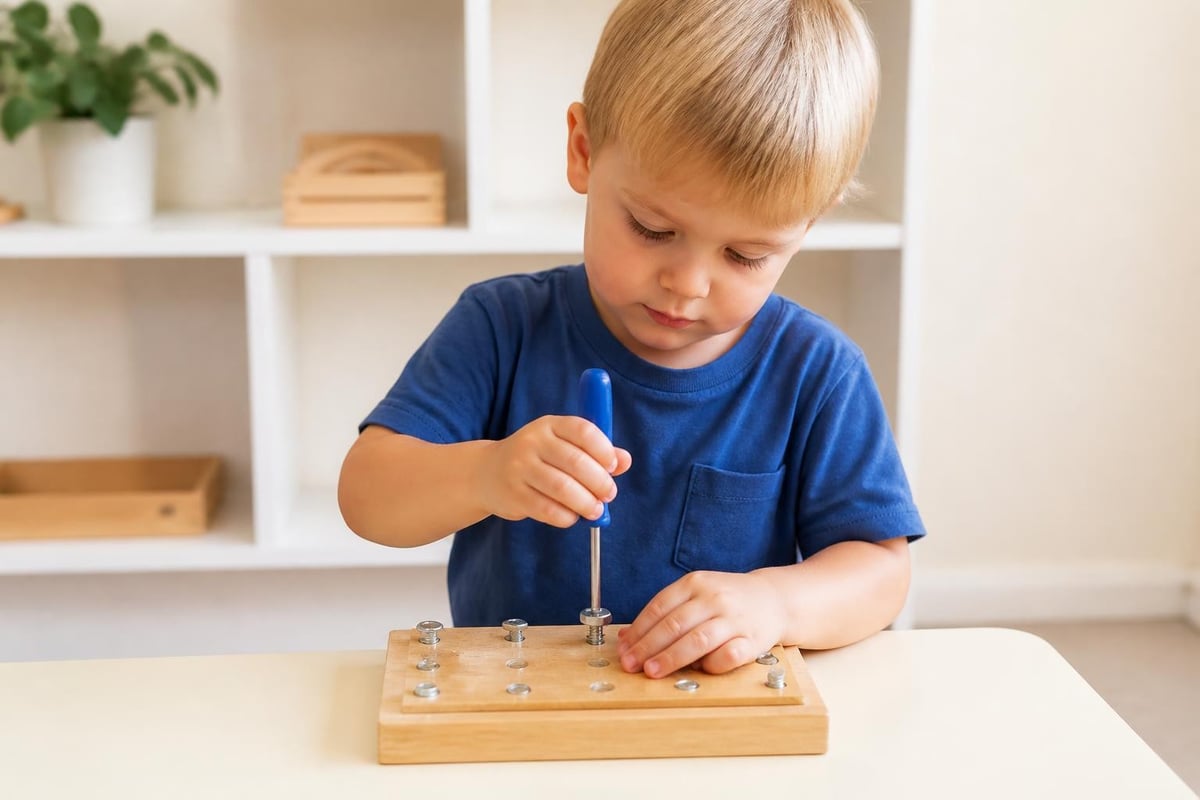
A montessori screwdriver board is a hands-on learning tool designed to help children practice screwing and unscrewing bolts and screws. The board typically features various sizes of bolts, nuts, and screws attached to a sturdy wooden base. Children use a real or child-sized screwdriver to remove and replace the hardware pieces.
This practical life activity comes straight from Montessori Practical Life curriculum, which focuses on teaching children everyday skills. The board allows kids to practice tool use in a safe, controlled environment. Unlike toy screwdrivers that don't actually work, a montessori screwdriver board uses functional tools that give children authentic experiences.
Why Practical Life Activities Matter
Montessori education recognizes that children learn best through purposeful activity. Practical Life activities help children develop independence, coordination, and concentration. These skills form the foundation for all future learning.
When your child uses a montessori screwdriver board, they're not just playing. They're developing hand-eye coordination, strengthening finger muscles, and learning how tools work. These are the same skills they'll need for writing, self-care tasks, and problem-solving later in life.
Developmental Benefits of a Montessori Screwdriver Board
The montessori screwdriver board offers multiple developmental benefits that support your child's growth across different areas.
Fine Motor Skill Development
- Grip strength: Turning a screwdriver requires sustained hand strength that develops naturally through practice
- Pincer grasp: Holding small screws and bolts refines the precise finger movements needed for writing
- Wrist rotation: The circular motion strengthens wrist muscles and improves range of motion
- Bilateral coordination: Using one hand to hold while the other turns teaches both sides of the body to work together
These skills transfer directly to everyday tasks like buttoning shirts, tying shoes, and using utensils. The Montessori approach to practical life emphasizes real work that prepares children for independence.
Cognitive Development
A montessori screwdriver board teaches more than just physical skills. Children learn important thinking skills including:
- Cause and effect: Understanding that turning right tightens while turning left loosens
- Sequential thinking: Following the steps needed to complete the task
- Problem-solving: Figuring out which screwdriver fits which screw
- Spatial awareness: Understanding how pieces fit together and come apart
| Cognitive Skill | How the Board Teaches It | Real-World Application |
|---|---|---|
| Problem-Solving | Matching tools to hardware | Choosing appropriate tools for tasks |
| Sequential Thinking | Following steps to complete task | Following recipes or instructions |
| Cause and Effect | Understanding turning motions | Using household items safely |
| Spatial Reasoning | Aligning screws with holes | Building and constructing |
Building Concentration and Focus
One of the most valuable benefits of a montessori screwdriver board is how it helps children develop sustained concentration. The task requires focus and attention to detail. Children naturally slow down and concentrate when working with real tools.
This deep focus is what Maria Montessori called "purposeful work." When children engage in activities that challenge them at just the right level, they enter a state of concentration that supports all learning. Parents often notice their children spending 20-30 minutes working independently with the board.
Choosing the Right Montessori Screwdriver Board
Not all screwdriver boards are created equal. Here's what to look for when selecting one for your child.
Safety Features
- Smooth edges: All wood should be sanded smooth without splinters
- Secure hardware: Bolts and screws should be firmly attached to prevent choking hazards
- Non-toxic finish: Look for child-safe paints and finishes
- Appropriate size: Tools should fit small hands comfortably
- Sturdy construction: The board should withstand repeated use without breaking
Safety always comes first with any Montessori material. While children use real tools, adult supervision is important, especially when first introducing the activity.
Age-Appropriate Design
The best montessori screwdriver board matches your child's developmental stage:
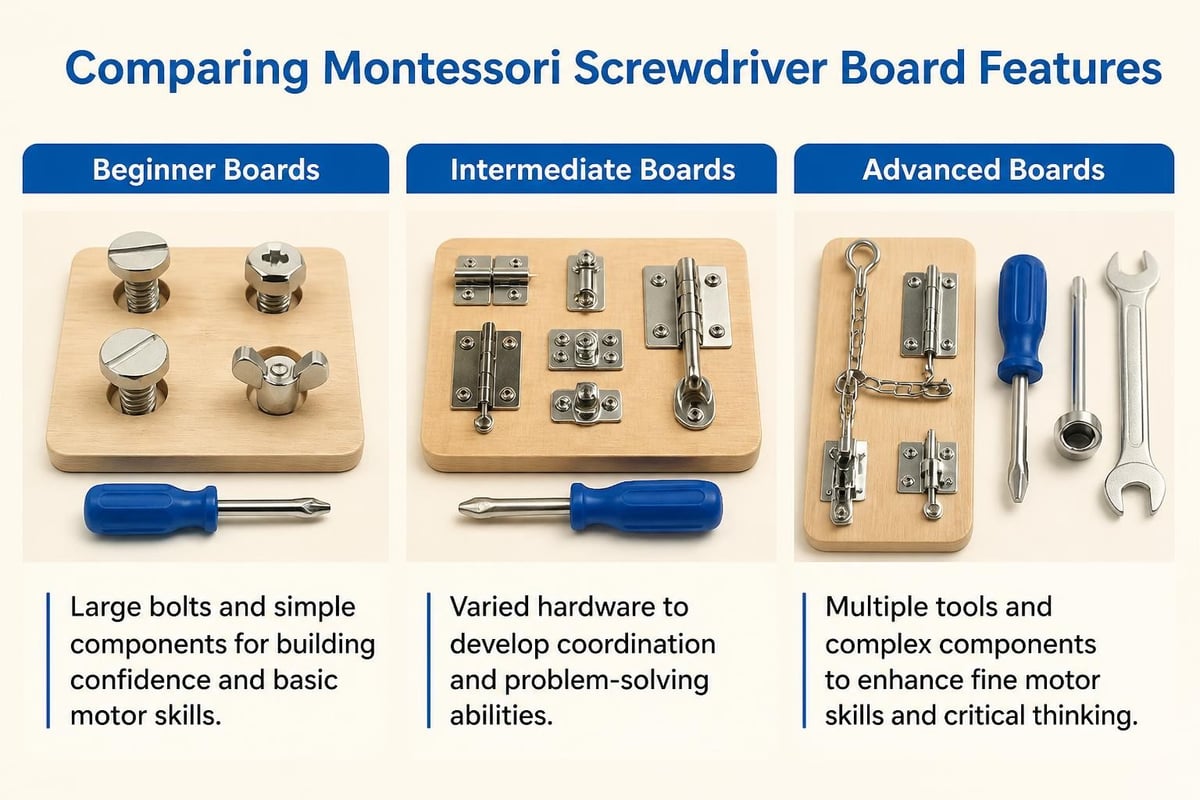
Ages 2.5-3 years: Start with larger bolts and simpler designs with 3-5 pieces. Big nuts and bolts are easier for little hands to manipulate.
Ages 3-4 years: Introduce varied sizes with 5-8 different screws and bolts. Children can handle more complexity at this age.
Ages 4-6 years: Advanced boards with 10+ pieces, different screw types, and multiple tools challenge older children.
Material Quality
Look for boards made from solid wood rather than particle board or plastic. Quality materials last longer and provide a better sensory experience. The weight and texture of real wood help children understand the permanence of real objects.
Many families appreciate boards with multiple types of hardware. Phillips head screws, flat head screws, wing nuts, and regular nuts each provide different learning experiences. For parents looking for comprehensive Montessori learning tools, KIDZEEHUB offers educational toys that support multiple developmental areas.
How to Introduce the Montessori Screwdriver Board
Proper introduction makes all the difference in how your child engages with this learning tool.
The Montessori Presentation
The Montessori method uses specific presentations to introduce new materials. Here's how to present a montessori screwdriver board:
- Invite the child: "Would you like to see how this works?"
- Show the board: Let them observe all the pieces before starting
- Demonstrate slowly: Remove one screw using deliberate, clear movements
- Emphasize the motion: Show the turning motion clearly without talking too much
- Replace the screw: Demonstrate putting it back using the same careful movements
- Invite participation: "Now you try"
- Step back: Allow independent practice without hovering
Remember that Montessori presentations are meant to be calm and focused. Speak minimally and let your actions do the teaching.
Creating the Right Environment
Set up a dedicated workspace where your child can work independently:
- Stable table: Use a low table at child height
- Good lighting: Natural light works best
- Organized materials: Keep all tools in a small basket or tray
- Quiet space: Minimize distractions from screens or noise
- Accessible storage: Store the board where your child can retrieve it independently
The environment should say "this is important work" rather than "this is a toy." This mindset shift helps children take their work seriously.
Supporting Independent Practice
After the initial presentation, let your child explore the board independently. Resist the urge to correct or assist unless asked. Mistakes are part of learning, and children develop problem-solving skills by working through challenges.
If your child struggles, you might ask: "Would you like me to show you again?" Rather than taking over, offer another demonstration. This preserves their independence while providing needed support.
Extending Learning with the Screwdriver Board
Once your child masters basic screwing and unscrewing, you can extend the activity in creative ways.
Progressive Challenges
- Timed practice: How quickly can they remove all the pieces?
- Pattern work: Create patterns with different colored nuts or screws
- Sorting activity: Remove all pieces and sort by size or type
- Tool matching: Match each screw type with its appropriate tool
- Memory work: Remove pieces with eyes closed using only touch
These extensions keep the material fresh and challenging as your child's skills grow.
Real-World Applications
Help your child connect board skills to real life:
- Furniture assembly: Let them help tighten visible screws on furniture
- Toy repair: Work together to fix toys with loose screws
- Garden projects: Build simple garden markers or birdhouses together
- Home maintenance: Assist with age-appropriate household tasks
- Art projects: Create sculptures using nuts, bolts, and wood pieces
These real applications show children that their practice has genuine purpose. Similar to how busy boards teach practical skills, the screwdriver board prepares children for meaningful participation in daily life.
Integration with Other Montessori Materials
The montessori screwdriver board works beautifully alongside other practical life activities. Consider pairing it with:
| Activity | Skills Practiced | Combined Benefits |
|---|---|---|
| Locks and latches board | Hand strength, problem-solving | Multiple mechanisms, varied challenges |
| Pouring activities | Hand-eye coordination, control | Fine motor development, concentration |
| Buttons and zippers | Bilateral coordination | Self-care skill building |
| Sorting trays | Visual discrimination | Organization, categorization |
Common Questions Parents Ask
How Long Will My Child Use This Board
Most children actively use a montessori screwdriver board between ages 2.5 and 6. Younger children may need help initially, while older children often move to real projects. The board remains valuable as long as it challenges your child appropriately.
Is Adult Supervision Required
Yes, especially for younger children or when first introducing the board. While the tools are child-sized, they are functional and require respectful handling. As your child demonstrates responsible use, you can gradually allow more independence.
What If My Child Loses Interest Quickly
This usually means the activity is too easy, too hard, or wasn't properly introduced. Try re-presenting the material with fresh enthusiasm. Sometimes putting the board away for a few weeks and reintroducing it later sparks new interest.
Can I Make My Own Montessori Screwdriver Board
Absolutely! Many parents enjoy creating DIY versions. You'll need:
- A sturdy wooden board (12x12 inches works well)
- Various sizes of bolts, nuts, and screws from the hardware store
- Child-safe screwdrivers
- Sandpaper for smoothing edges
- Non-toxic wood finish
Ensure all pieces are securely fastened and appropriate for your child's age. There are helpful video tutorials available online showing the process.
Tips for Success with Your Montessori Screwdriver Board
Maintenance and Care
Keep your montessori screwdriver board in excellent condition:
- Check hardware regularly: Tighten any loose pieces before they fall off
- Clean gently: Wipe with a damp cloth, avoiding harsh chemicals
- Inspect tools: Replace worn or damaged screwdrivers
- Store properly: Keep in a dry place away from moisture
- Rotate materials: Put the board away occasionally to maintain novelty
Encouraging Persistence
Children sometimes become frustrated when learning new skills. Support their persistence by:
- Acknowledging effort: "You're working so carefully"
- Describing observations: "I notice you switched to the bigger screwdriver"
- Offering breaks: "Would you like to try again after snack?"
- Celebrating progress: "Last week this was tricky, and now you can do it!"
Avoid praise like "good job" that focuses on your approval. Instead, help children recognize their own accomplishment and growth.
Using the Board in Different Settings
A montessori screwdriver board works in various environments:
At home: Part of a Montessori-inspired play area with other practical life materials
In classrooms: A popular choice during work time in Montessori schools
While traveling: Smaller boards work well for car trips or hotel stays
At grandparents' houses: Perfect for focused activity during visits
In waiting rooms: Keeps children engaged in medical or professional offices
The portable nature of most boards makes them versatile learning tools.
The Long-Term Impact of Practical Life Work
The benefits of a montessori screwdriver board extend far beyond the preschool years. Children who engage regularly with practical life activities develop:
Executive function skills: Planning, organizing, and completing tasks independently
Growth mindset: Understanding that practice leads to mastery
Problem-solving abilities: Approaching challenges with confidence and creativity
Focus and concentration: Sustained attention spans that support academic learning
Real-world competence: Practical skills for daily life and future careers
These foundational skills prepare children for success in school and beyond. The confidence gained from mastering real tools translates to confidence tackling new challenges.
Building Independent Learners
Perhaps the greatest gift of the montessori screwdriver board is the independence it fosters. When children learn they can operate tools, solve problems, and complete meaningful work, they develop an internal sense of capability.
This self-assurance becomes the foundation for lifelong learning. Children who believe "I can figure this out" approach reading, math, science, and social challenges with resilience and determination.
A montessori screwdriver board offers your child far more than entertainment. It builds essential skills through purposeful, engaging work that respects your child's capabilities. Whether you choose a ready-made board or create your own, this simple tool can support your child's development in meaningful ways. KIDZEEHUB provides carefully selected Montessori-inspired toys and educational materials that help families create rich learning environments where children develop confidence, creativity, and independence through screen-free play. Explore our collection to find the perfect tools for your child's learning journey.


