


Watching your baby grow during those magical months between six and twelve is incredible. Every day brings new discoveries, from sitting up independently to those first attempts at crawling. This period marks some of the most significant developmental leaps in your little one's life. Choosing the right montessori toys 6 12 months can make a huge difference in supporting these milestones while keeping playtime engaging and meaningful. Unlike flashy electronic toys that overwhelm the senses, Montessori-inspired toys focus on simple, purposeful play that builds real skills your baby will use for years to come.
Understanding Baby Development from 6 to 12 Months
Your baby transforms dramatically during this half-year period. Understanding what's happening developmentally helps you choose montessori toys 6 12 months that truly support growth.
Physical Milestones Matter
Between six and twelve months, babies master incredible physical skills. They progress from wobbly sitting to confident crawling, and many even take their first steps before their first birthday.
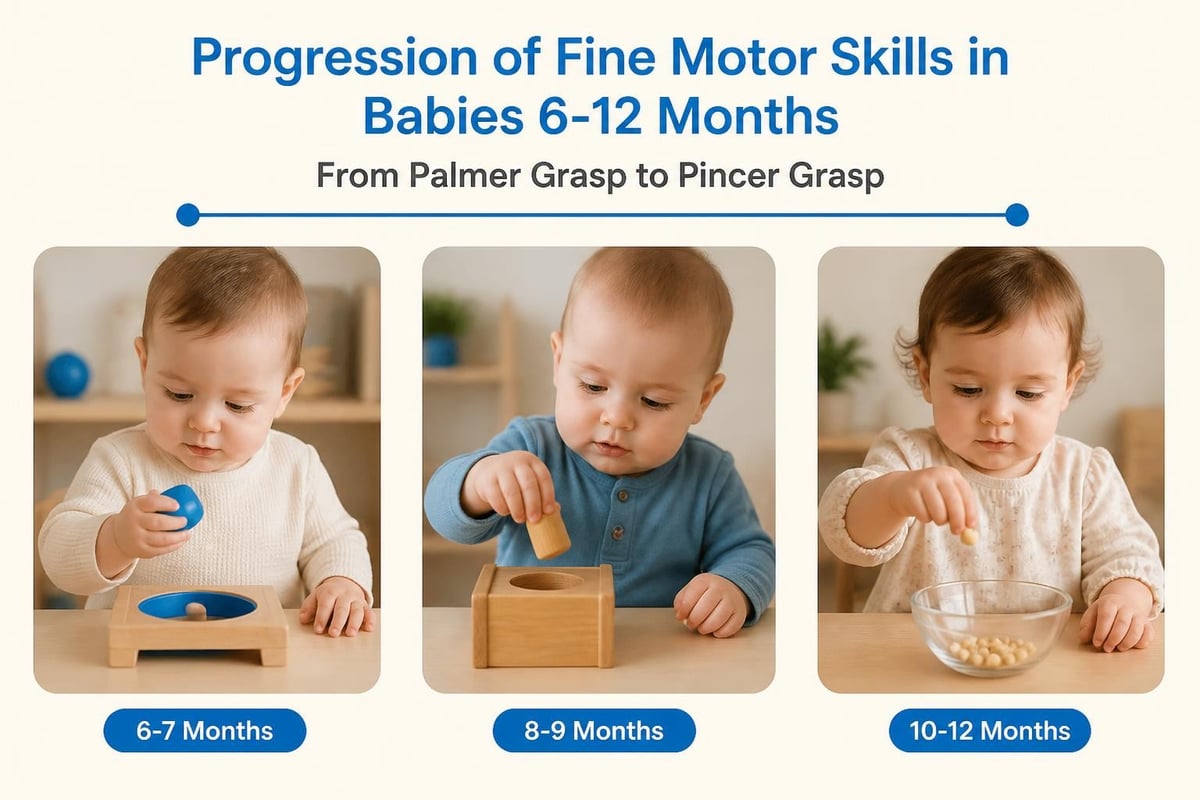
Fine motor development takes center stage during this time. Your baby learns to:
- Use a pincer grasp to pick up small objects
- Transfer items from one hand to another
- Bang objects together intentionally
- Point at things that interest them
- Drop and throw objects to explore cause and effect
Gross motor skills explode during these months. Most babies learn to roll both ways, sit without support, and begin moving across the floor through crawling, scooting, or shuffling.
The Montessori approach for infants aged 6-12 months emphasizes creating safe spaces where babies can practice these movements freely without constant restrictions.
Cognitive Growth Accelerates
This age brings fascinating cognitive developments. Object permanence emerges, meaning your baby finally understands that things still exist even when hidden from view. This explains why peek-a-boo becomes endlessly entertaining around eight or nine months.
Problem-solving skills begin developing as babies figure out how to reach desired toys, open containers, or navigate around obstacles. Montessori materials designed for this age specifically target these emerging abilities.
Core Principles of Montessori Toys for Infants
Not every toy marketed as "Montessori" truly follows these principles. Understanding what makes montessori toys 6 12 months authentic helps you make better choices.
Simplicity Over Stimulation
Real Montessori toys avoid overwhelming babies with lights, sounds, and multiple functions. Instead, they focus on one skill or concept at a time.
A simple wooden rattle teaches cause and effect better than a plastic toy that plays ten different songs. Your baby learns that shaking creates sound through their own action, not by pressing a button.
Natural Materials Support Sensory Learning
Montessori education values natural materials like wood, metal, cloth, and rubber. These materials offer varied textures, weights, and temperatures that plastic cannot replicate.
When babies mouth wooden toys (which they absolutely will), they experience different sensations than with plastic. Natural materials also tend to be safer and more environmentally friendly.
Independence and Self-Correction
The best montessori toys 6 12 months allow babies to learn through exploration without adult intervention. Toys that self-correct teach problem-solving naturally.
For example, stacking rings only fit one way on the post. Your baby figures this out through trial and error, building confidence and persistence without you needing to constantly guide them.
Best Types of Montessori Toys 6 12 Months
Let's explore specific toy categories that align perfectly with infant development during this crucial period.
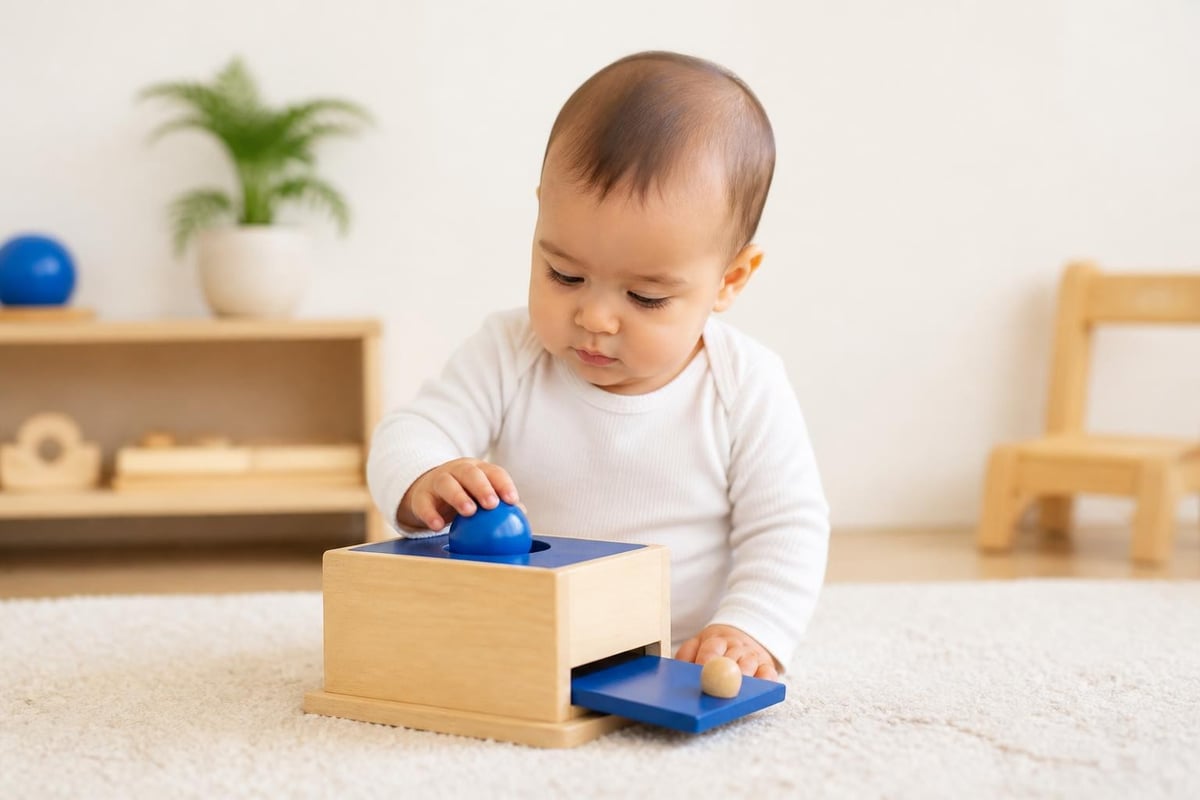
Object Permanence Boxes and Balls
These classic Montessori materials directly support cognitive development around eight to ten months.
How they work: Your baby drops a ball into a box through a hole, and it rolls out an opening at the bottom or side. This teaches object permanence and hand-eye coordination simultaneously.
Benefits include:
- Understanding that objects continue to exist when out of sight
- Practicing precise hand movements to align the ball with the hole
- Predicting where the ball will reappear
- Experiencing cause and effect relationships
These toys grow with your baby. Younger infants watch you demonstrate, while older babies work independently for extended periods.
Ring Stackers and Nesting Toys
Ring stackers and nesting bowls rank among the most valuable montessori toys 6 12 months for several reasons.
| Toy Type | Primary Skill | Secondary Benefits | Best Starting Age |
|---|---|---|---|
| Ring Stacker | Size discrimination | Hand-eye coordination, problem-solving | 8 months |
| Nesting Cups | Spatial awareness | Stacking, sorting, bath play | 7 months |
| Nesting Bowls | Visual perception | Color recognition, fine motor skills | 9 months |
Ring stackers teach size sequencing naturally. Babies quickly discover through experience that larger rings don't fit over smaller ones already on the post.
Nesting toys work multiple ways. Babies stack them, nest them inside each other, use them as containers, or simply bang them together to make noise.
Wooden Balls and Simple Puzzles
Balls designed for infant hands support numerous developmental goals. Choose balls with:
- Varied textures for sensory exploration
- Easy-to-grasp designs for small hands
- Appropriate weight for building strength
- Natural wood construction without toxic finishes
Single-shape puzzles work beautifully around ten to twelve months. These feature one large piece that fits into a matching space on a board. Your baby practices:
- Visual discrimination to match shapes
- Hand-eye coordination to place pieces correctly
- Problem-solving when the piece doesn't fit
- Fine motor control to grasp and release intentionally
Push and Pull Toys for Cruising Babies
As babies approach their first birthday and begin pulling to stand, push and pull toys support emerging mobility.
Push toys should be stable and heavy enough that they won't tip when babies lean on them for support. Avoid toys that roll too quickly, as these can cause falls.
Pull toys fascinate babies who crawl or walk. They love looking back to see the toy following them. This also teaches cause and effect at a more complex level.
Creating a Montessori Play Environment at Home
The right toys matter, but so does the environment where your baby plays with them. Creating a Montessori environment for babies involves thoughtful setup.
Low Shelves for Independent Access
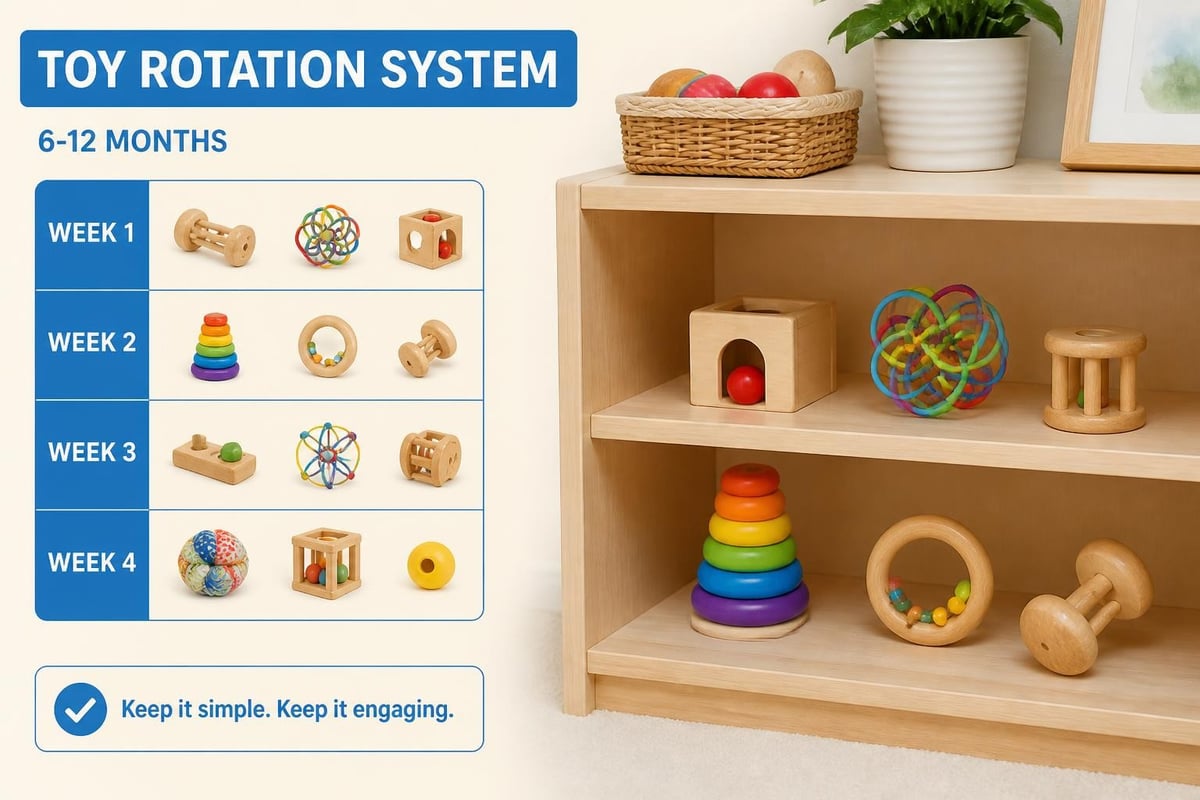
Instead of toy boxes where everything gets jumbled, use low shelves where you display a limited number of toys. This setup allows your baby to:
- See all available options clearly
- Make independent choices about what to play with
- Develop decision-making skills early
- Learn to return toys to their places (eventually)
Rotation keeps interest high. Store most toys and rotate them weekly or biweekly. This makes old toys feel new again and prevents overwhelm.
Safe Movement Areas
Babies this age need floor space to practice rolling, sitting, crawling, and cruising. Create a safe, baby-proofed area with:
- Firm surfaces for tummy time and movement practice
- Mirrors mounted low and securely for self-discovery
- Interesting items placed just out of reach to encourage movement
- Minimal furniture to bump into while learning to navigate space
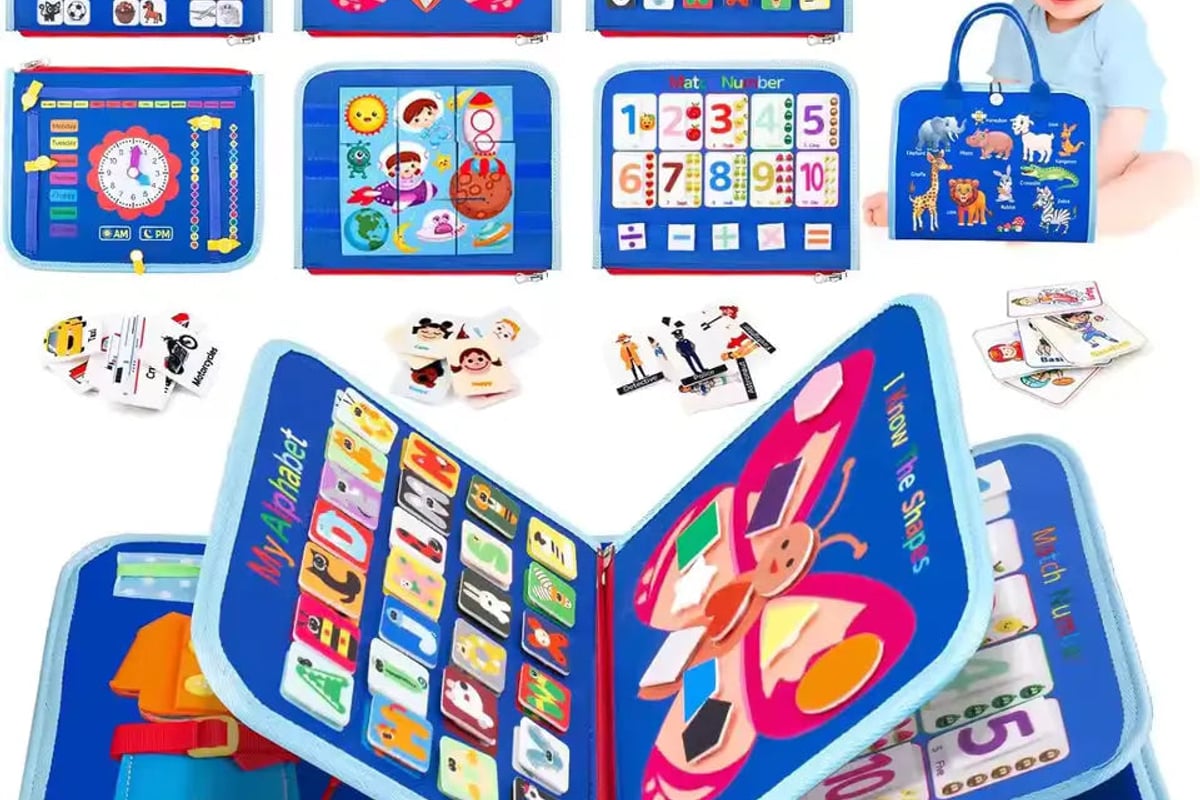
The Montessori Busy Board offers another excellent option for developing fine motor skills in a safe, contained activity panel. With switches, buttons, zippers, and buckles, it keeps older infants engaged while building practical life skills that support independence.
Establishing Predictable Routines
Babies thrive on routine. Consistent daily patterns help them feel secure and understand what comes next.
Play routines might include:
- Morning floor time after breakfast
- Outdoor exploration mid-morning
- Quiet toy play before nap
- Interactive parent-child play in the afternoon
During independent play periods, resist the urge to constantly entertain. Babies need practice playing alone to build concentration and independence.
Safety Considerations for Infant Toys
Safety always comes first when selecting montessori toys 6 12 months for your little one.
Size and Choking Hazards
Use the toilet paper roll test. Any object or detachable part that fits through a standard toilet paper tube (about 1.75 inches in diameter) poses a choking risk.
Avoid toys with:
- Small parts that can detach
- Strings longer than seven inches
- Loose buttons, eyes, or decorations
- Sharp edges or points
- Unstable stacking that could topple and cause injury
Material Safety Standards
Choose toys that meet or exceed US safety standards. Look for:
- ASTM (American Society for Testing and Materials) certification
- CPSC (Consumer Product Safety Commission) compliance
- Non-toxic finishes and paints
- Smooth, splinter-free wood surfaces
- BPA-free and phthalate-free plastics when plastic is necessary
Natural materials like untreated wood, organic cotton, and food-grade silicone make the safest choices for babies who explore everything through mouthing.
Regular Inspection and Cleaning
Inspect toys weekly for damage. Wood can crack, fabric can tear, and small pieces can loosen. Discard or repair damaged toys immediately.
Clean toys regularly using baby-safe methods:
- Wooden toys: Wipe with damp cloth and dry thoroughly
- Fabric toys: Machine wash in hot water and dry completely
- Silicone toys: Dishwasher safe or hand wash with hot soapy water
- Metal toys: Wipe clean and ensure no rust develops
What to Avoid in Baby Toys
Understanding what doesn't support development helps you make smarter choices about montessori toys 6 12 months.
Electronic Toys and Screens
The American Academy of Pediatrics recommends zero screen time for babies under 18 months (except video chatting). Electronic toys often:
- Overwhelm developing sensory systems
- Discourage active exploration
- Provide passive entertainment instead of active learning
- Create dependency on external stimulation
Research on children's interactions with AI-enabled toys suggests that even "educational" electronics may not provide the benefits manufacturers claim for this age group.
Toys That Do Everything
If a toy lights up, sings songs, moves on its own, and teaches letters, it's trying to do too much. Your baby learns best from toys that require their participation to function.
The best montessori toys 6 12 months:
- Respond to your baby's actions
- Require physical manipulation
- Offer simple, clear purposes
- Allow open-ended exploration
Overstimulating Color Schemes
While babies can see colors from birth, toys with neon colors and busy patterns can overwhelm. Montessori materials typically feature:
- Natural wood tones
- Solid, primary colors
- Simple patterns or no patterns
- Matte finishes instead of shiny plastics
This simplicity helps babies focus on the toy's function rather than getting distracted by visual noise.
Age-Specific Recommendations Within 6-12 Months
Not all montessori toys 6 12 months work equally well throughout this entire period. Here's how to match toys to specific developmental windows.
6 to 8 Months: Sitting and Grasping
| Toy Type | Developmental Goal | How to Use |
|---|---|---|
| Soft fabric balls | Tactile exploration, passing hand to hand | Roll toward baby during tummy time |
| Rattles and shakers | Cause and effect, auditory development | Offer during supervised play |
| Board books | Language exposure, visual tracking | Read together daily |
| Teething rings | Oral exploration, pain relief | Keep clean and cold for sore gums |
At this stage, babies perfect sitting independently and develop the pincer grasp. Choose toys that encourage reaching, grasping, and transferring objects between hands.
8 to 10 Months: Crawling and Exploration
Babies become mobile during these months. Developmental guides for selecting toys suggest focusing on items that encourage movement and problem-solving.
Top picks include:
- Balls that roll away (encouraging crawling)
- Object permanence boxes (supporting cognitive leaps)
- Small containers with lids (building problem-solving skills)
- Cloth books with flaps (developing fine motor control)
- Musical instruments (exploring cause and effect through sound)
10 to 12 Months: Standing and First Steps
As babies pull to stand and cruise along furniture, their play interests shift.
Support this stage with:
- Push toys for walking practice
- Simple shape sorters for cognitive development
- Stacking toys for spatial awareness
- Climbing structures for gross motor challenges
Many parents exploring Montessori toys for this age group appreciate how these simple materials support multiple developmental areas simultaneously.
Building a Starter Collection on Any Budget
You don't need dozens of expensive toys to create a rich Montessori environment for your baby.
Essential Items for Every Home
Start with these foundational montessori toys 6 12 months:
- One quality wooden rattle (supports cause and effect understanding)
- A set of nesting cups (grows with your baby for years)
- Two or three soft balls in different textures
- A simple object permanence box (can be homemade)
- A small basket of safe household items for treasure basket play
This minimal collection covers sensory exploration, fine motor development, gross motor practice, and cognitive growth.
DIY Montessori Options
Many effective montessori toys 6 12 months can be made at home or assembled from household items:
Treasure baskets cost almost nothing. Fill a shallow basket with safe household objects like wooden spoons, metal measuring cups, fabric scraps, and natural sponges. Babies explore different textures, weights, and materials through this simple activity.
Sensory bottles use clear plastic bottles filled with items like dried beans, water with food coloring, or small bells. Secure lids with strong glue to prevent spills.
DIY object permanence boxes can be constructed from cardboard boxes and toilet paper tubes for babies to drop balls through.
Investing in Quality Over Quantity
One well-made wooden toy often costs more than several plastic alternatives, but it lasts through multiple children and provides better developmental value.
Consider quality indicators:
- Smooth, splinter-free finishes
- Non-toxic materials and paints
- Sturdy construction that withstands chewing and dropping
- Timeless designs without licensed characters
- Warranty or satisfaction guarantee
At KIDZEEHUB, you'll find carefully curated options that meet these standards while supporting authentic Montessori principles.
Supporting Language Development Through Play
While montessori toys 6 12 months primarily focus on physical and cognitive skills, they also support language acquisition when parents engage thoughtfully.
Narrating Play Activities
Talk about what your baby is doing during play. Use simple, clear language:
- "You're shaking the rattle. Listen to the sound!"
- "The ball rolled away. Can you crawl to get it?"
- "You put the ring on the stacker. Good work!"
This narration builds vocabulary and helps babies connect words with actions and objects.
Reading and Books as Toys
Board books with simple images belong in every baby's toy collection. Choose books with:
- Real photographs or simple illustrations
- One image per page
- Minimal or no text
- Sturdy construction for rough handling
Let your baby explore books independently as toys. They'll chew them, bang them, and turn pages randomly. This builds comfort with books before they understand the concept of reading.
Music and Movement
Simple musical instruments count among valuable montessori toys 6 12 months. Shakers, drums, and bells allow babies to create sounds through their own actions.
Sing songs during routine activities like diaper changes and mealtimes. Babies learn language patterns through repetitive melodies and rhymes.
The Role of Observation in Toy Selection
The best way to choose montessori toys 6 12 months for your specific baby is through careful observation.
Watching for Interest and Readiness
Every baby develops at their own pace. Your seven-month-old might not care about object permanence boxes yet, while your friend's baby of the same age finds them fascinating.
Watch for signs of readiness:
- Does your baby sit independently? Time for toys that require two hands
- Has crawling started? Introduce toys that encourage movement
- Is your baby pulling to stand? Add push toys for support
- Do they use pincer grasp? Offer smaller objects to manipulate
Following Your Baby's Lead
If your baby ignores a toy, put it away and try again in a few weeks. Forcing interest in developmentally inappropriate toys creates frustration.
Conversely, when you notice intense focus on a particular toy or activity, provide more opportunities for that type of play.
Recognizing the Work of Play
Babies learn through repetition. When your ten-month-old drops objects from the high chair fifty times in a row, they're not being naughty. They're conducting scientific experiments about gravity, cause and effect, and your reactions.
Understanding play as your baby's "work" helps you appreciate why simple, open-ended montessori toys 6 12 months provide such rich learning experiences.
Common Questions from Parents
How many toys should a 6-12 month old have out at once?
Limit options to 5-8 toys displayed on low shelves. Too many choices overwhelm babies and prevent deep engagement with any single toy. Rotate toys weekly to maintain interest.
Can montessori toys 6 12 months be used for older children?
Absolutely. Quality Montessori materials grow with children. Nesting cups become pretend play dishes. Stacking toys become building materials. Simple puzzles become sorting games. This longevity makes them excellent investments.
Are plastic toys ever acceptable in Montessori?
While natural materials are preferred, some high-quality plastic toys (especially those made from safe materials like food-grade silicone) can fit Montessori principles if they're simple, purposeful, and support independent exploration.
What if my baby only wants to mouth toys?
Oral exploration is completely normal and important for babies this age. Choose toys that are safe to mouth, keep them clean, and understand this phase will pass. Teething rings and wooden toys work beautifully for this developmental need.
How do I know if a toy is truly Montessori-aligned?
Ask these questions: Does it isolate one concept? Is it made from natural materials? Does it require the child's action to function? Does it allow independent exploration? Can the child self-correct? If yes to most of these, it likely follows Montessori principles.
Should I play with my baby or let them play alone?
Both matter. Babies need some independent play time to build concentration and problem-solving skills. They also need interactive play with you for language development and emotional connection. Aim for balance rather than constant entertainment.
Choosing the right montessori toys 6 12 months sets your baby up for confident, independent exploration during this crucial developmental period. Simple, purposeful toys made from natural materials support the skills your little one is working so hard to master. Whether you're building a collection from scratch or refining what you already have, focus on quality over quantity and follow your baby's interests. KIDZEEHUB offers thoughtfully curated Montessori-inspired toys designed to make playtime meaningful, educational, and screen-free for families across the USA. Explore our collection today to find the perfect tools for your baby's developmental journey.


