


Parents today are searching for educational tools that keep toddlers engaged without relying on tablets or smartphones. Talking flashcards have emerged as a powerful solution, blending traditional learning methods with interactive audio technology. These hands-on learning tools help children develop vocabulary, pronunciation, and listening skills while maintaining the benefits of screen-free play. Whether you're teaching first words, building bilingual skills, or strengthening memory, talking flashcards offer a versatile approach to early childhood education that fits naturally into daily routines.
What Are Talking Flashcards and How Do They Work
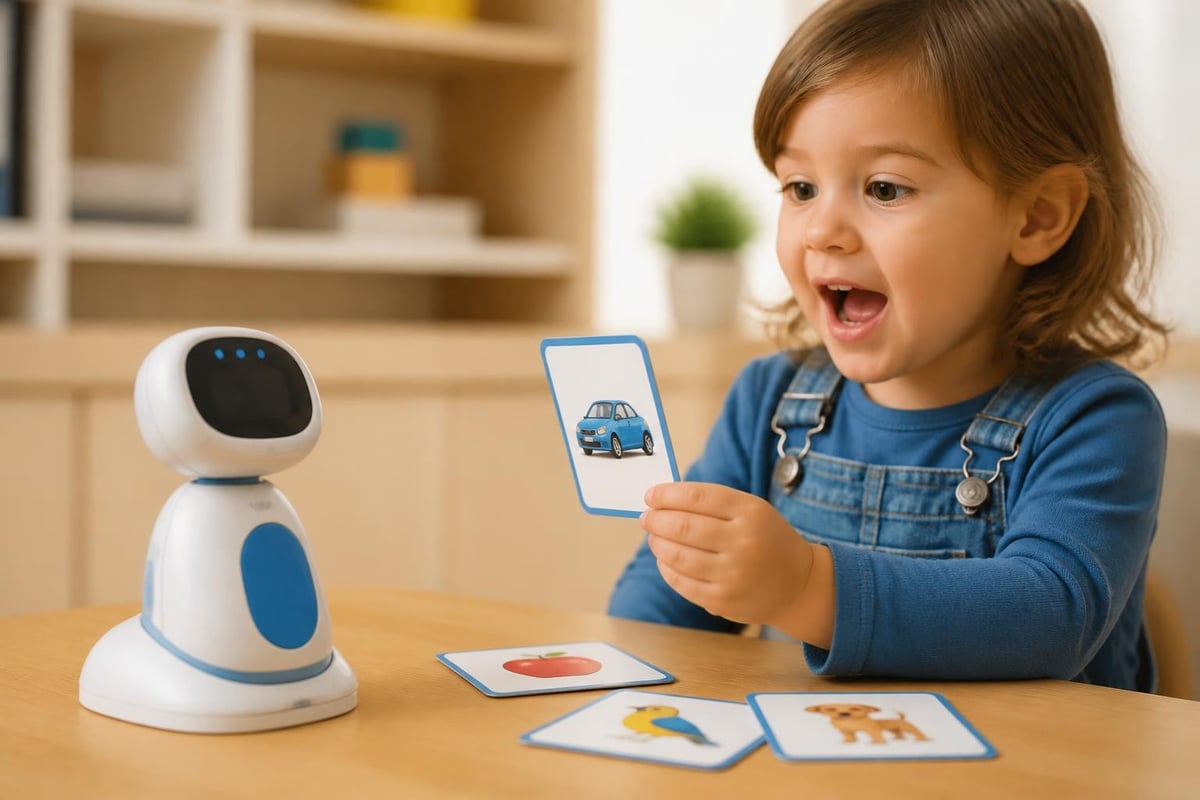
Talking flashcards are interactive learning cards that combine visual images with spoken audio to teach vocabulary, pronunciation, and language skills. Unlike traditional flashcards, these educational tools feature built-in speakers or work with electronic reading devices that pronounce words when children touch or scan the cards.
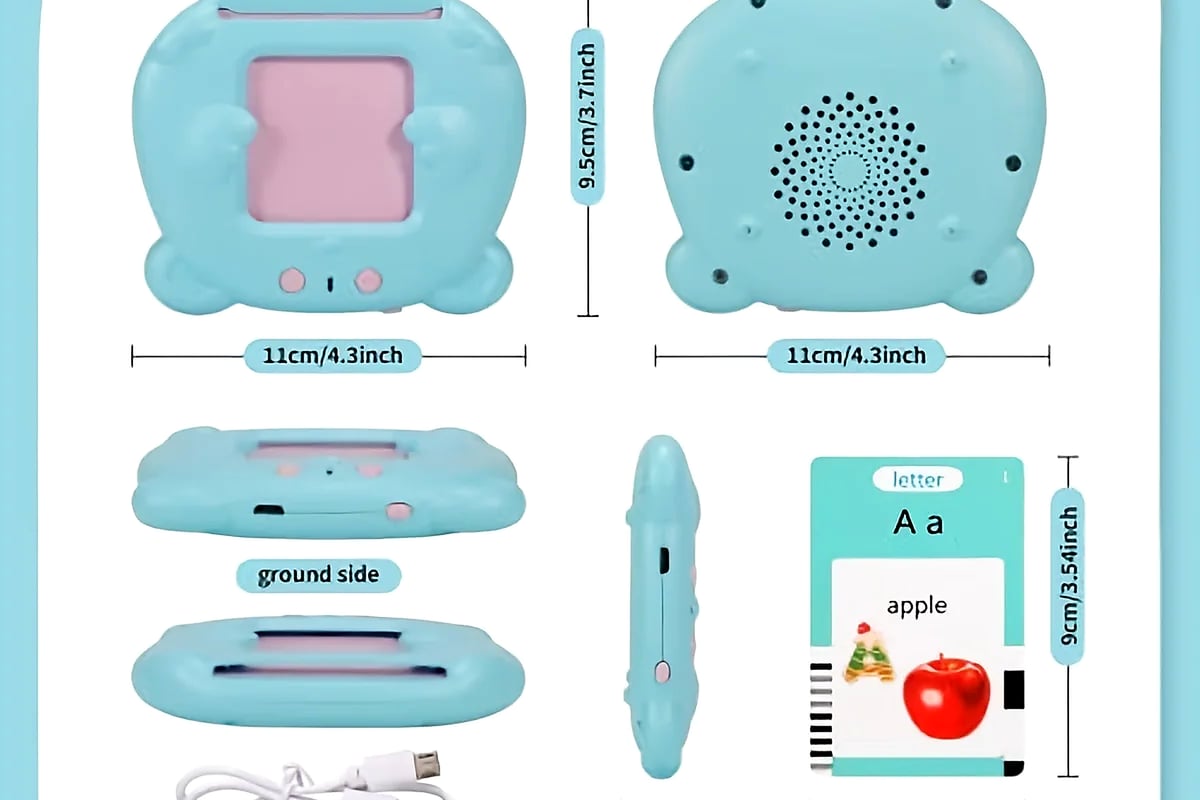
The basic design includes colorful images on sturdy cards paired with a card reader or smart device. When a child inserts or taps a card, the device plays the corresponding word, sound effect, or short phrase. This multisensory approach engages visual, auditory, and tactile learning simultaneously.
The Technology Behind Interactive Learning Cards
Most talking flashcard systems use one of three technologies:
- Optical scanning where a reader device scans printed codes on each card
- RFID chips embedded in cards that communicate with a base unit wirelessly
- App-connected systems that use smartphone cameras to recognize card images
The audio component typically includes clear pronunciation, sound effects that match the image, and sometimes simple sentences using the vocabulary word. Research shows that combining visual and auditory elements significantly enhances vocabulary retention in young learners.
Key Benefits of Talking Flashcards for Early Childhood Development
Talking flashcards offer unique advantages that support multiple areas of child development. These tools go beyond simple memorization to build foundational skills that serve children throughout their educational journey.
Language and Vocabulary Building
One of the primary benefits is accelerated vocabulary acquisition. Children hear correct pronunciation repeatedly, which helps them learn proper speech patterns from the start. The audio feedback creates a self-paced learning environment where toddlers can practice independently without constant adult supervision.
The combination of seeing an image and hearing the word creates stronger neural connections than visual learning alone. This dual-coding effect helps children remember words longer and recall them more easily in conversation.
Pronunciation and Listening Skills Development
Young children are developing their ability to distinguish between similar sounds and produce them correctly. Talking flashcards provide consistent, clear pronunciation models that help refine these skills. Children can listen to the same word multiple times, comparing their own pronunciation to the audio model.
Educational research confirms that auditory elements in flashcard applications significantly improve language learning outcomes, particularly for pronunciation accuracy and phonemic awareness.
Independence and Self-Directed Learning
Talking flashcards empower children to learn at their own pace without constant adult intervention. This independence builds confidence and encourages a love of learning. Toddlers can explore the cards during quiet time, in the car, or while siblings do homework.
The immediate audio feedback creates a reward loop that motivates continued engagement. When children successfully identify a card and hear the word, they experience a sense of accomplishment that drives further exploration.
| Developmental Area | How Talking Flashcards Help | Age Range |
|---|---|---|
| Vocabulary | Introduces 100-300+ new words | 18 months - 5 years |
| Pronunciation | Models correct speech patterns | 2 - 6 years |
| Listening Skills | Develops auditory discrimination | 18 months - 4 years |
| Memory | Strengthens recall through repetition | 2 - 5 years |
| Independence | Enables self-paced learning | 2 - 6 years |
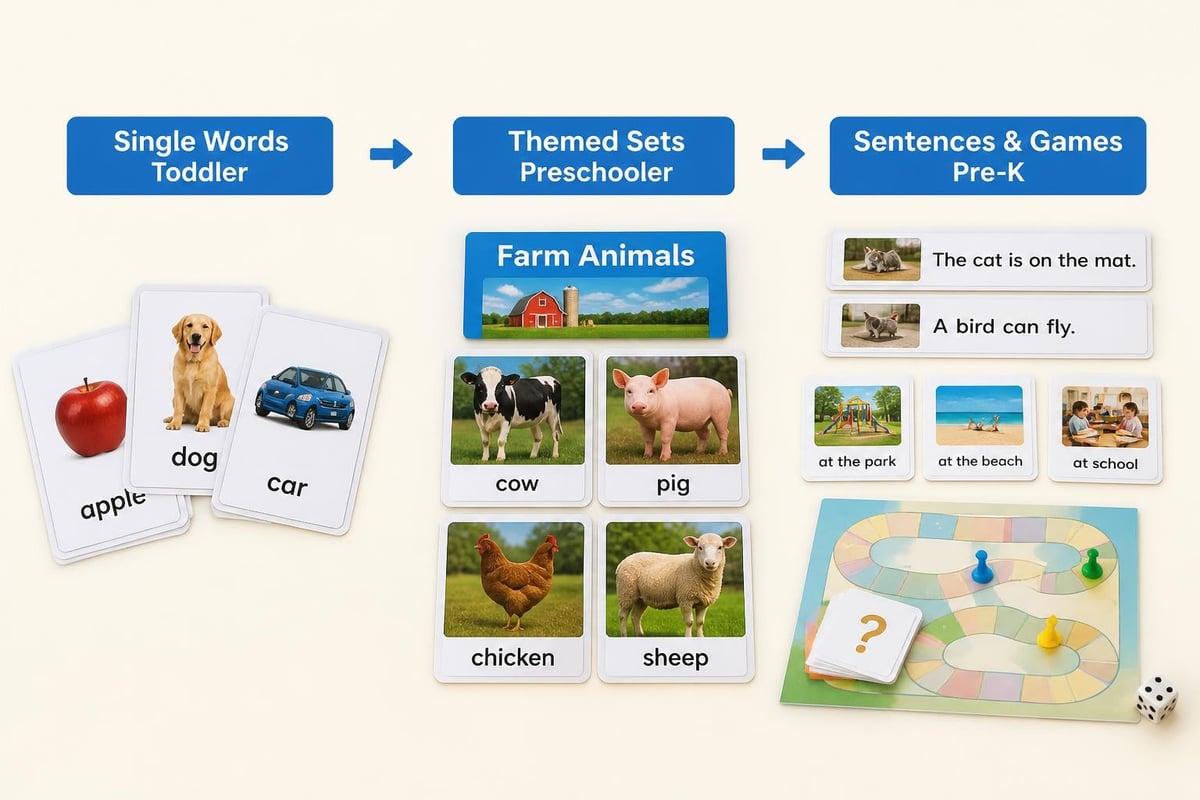
Choosing the Right Talking Flashcards for Different Ages
Not all talking flashcards suit every age group. Understanding your child's developmental stage helps you select the most appropriate learning tool.
Best Options for Toddlers (18 Months to 3 Years)
For the youngest learners, choose talking flashcards with:
- Large, durable cards that withstand rough handling and mouthing
- Simple, clear images showing one object per card without distracting backgrounds
- Basic vocabulary focusing on everyday objects, animals, and foods
- Short, clear audio with single-word pronunciation and related sounds
- Volume control to protect sensitive hearing
At this age, children benefit most from cards featuring familiar objects from their daily lives. Cards showing items like "ball," "cup," "dog," and "apple" create connections between the learning tool and their real-world experiences.
Preschool and Kindergarten (3 to 5 Years)
Older preschoolers are ready for more complex talking flashcard systems that include:
- Themed card sets covering topics like colors, shapes, numbers, and letters
- Bilingual options introducing a second language naturally
- Question modes that test recognition and comprehension
- Simple sentences that use vocabulary words in context
- Interactive games that make learning feel like play
These children can handle multiple card categories and enjoy the challenge of matching games or quiz modes that many talking flashcard systems offer.
Popular Categories and Themes in Talking Flashcard Sets
Talking flashcards come in countless themes designed to match children's interests and educational needs. Selecting the right categories keeps learning fresh and engaging.
Essential Vocabulary Categories
Animals and Nature: These remain perennial favorites, featuring farm animals, wild animals, pets, insects, and ocean creatures. The audio often includes animal sounds alongside the spoken word, adding an extra layer of engagement.
Everyday Objects: Cards showing household items, toys, clothing, and foods help children build practical vocabulary they use daily. This category creates the strongest real-world connections.
Numbers and Counting: Numerical literacy starts early with talking flashcards that combine number symbols with quantity representations and counting audio.
Letters and Phonics: Alphabet cards that pronounce letter names and sounds lay the foundation for reading readiness. Some advanced sets include simple word examples for each letter.
Specialized Learning Themes
Bilingual Language Learning: Sets teaching Spanish, Mandarin, French, or other languages give children early exposure to multilingual communication. The audio pronunciation becomes especially valuable when parents don't speak the second language fluently.
STEM Concepts: More advanced talking flashcards introduce shapes, colors, patterns, and simple science concepts. These align well with Montessori and STEM educational approaches that emphasize hands-on discovery.
Social and Emotional Learning: Newer flashcard sets teach feelings, actions, and social situations, helping children develop emotional intelligence and communication skills.
How Talking Flashcards Compare to Traditional Learning Methods
Understanding the differences between talking flashcards and other educational approaches helps parents make informed decisions about learning tools.
Talking Flashcards vs. Traditional Paper Flashcards
Traditional flashcards require an adult to read and pronounce words, which ensures interaction but limits independent practice. Talking flashcards provide consistent pronunciation but reduce parent-child interaction time. The balance between technology and human interaction remains important in early childhood education.
| Feature | Talking Flashcards | Traditional Flashcards |
|---|---|---|
| Adult supervision needed | Minimal | Constant |
| Pronunciation consistency | Perfect | Varies by reader |
| Cost | Higher initial investment | Lower cost |
| Portability | Requires device | Easy to carry anywhere |
| Parent-child bonding | Less interactive | More interactive |
Digital Apps vs. Physical Talking Flashcards
Smartphone apps offer customizable content and track progress, but they introduce screen time. Digital flashcard apps provide advantages like spaced repetition algorithms, but physical talking flashcards offer tactile engagement without screens.
Physical talking flashcards give children something to hold, sort, and manipulate. This hands-on element supports fine motor development and spatial awareness in ways that swiping a screen cannot replicate.
Integrating Talking Flashcards into Daily Routines
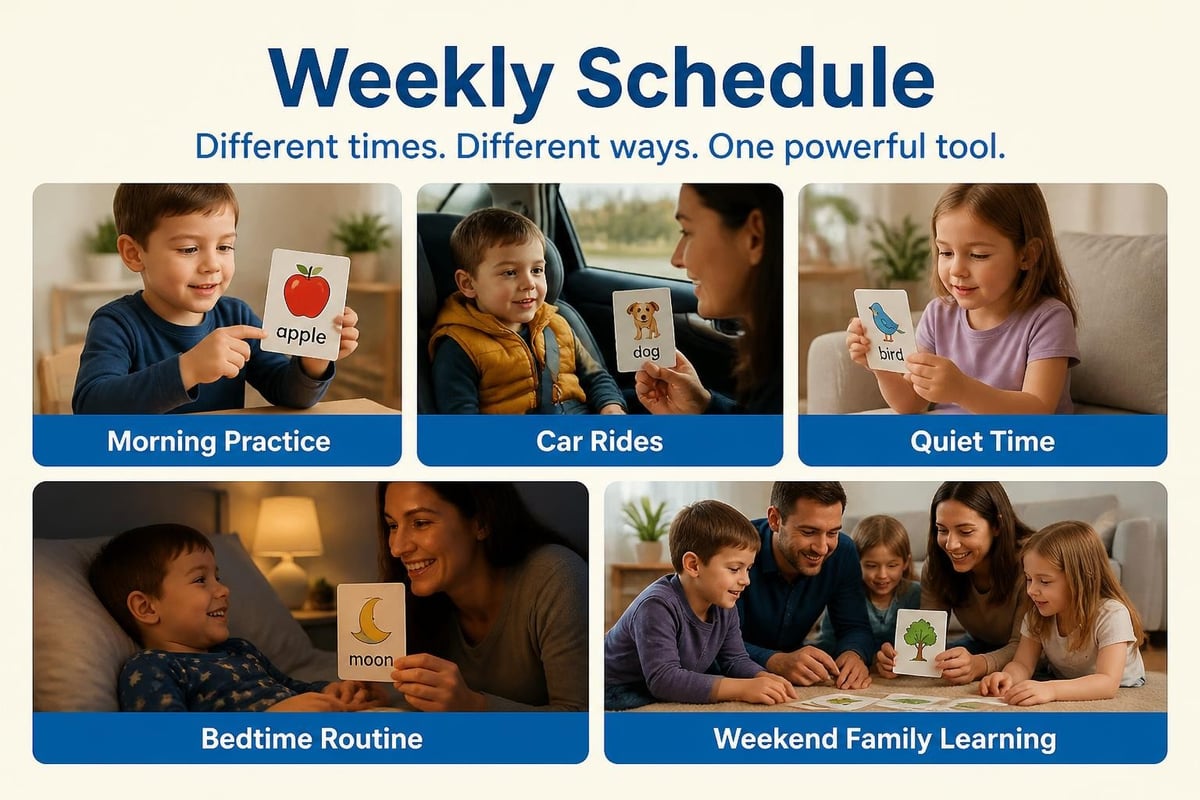
The most effective learning happens through consistent, natural integration into everyday life. Here's how to maximize the educational value of talking flashcards.
Creating Structured Learning Time
- Morning vocabulary practice: Spend 5-10 minutes with flashcards during breakfast or after waking
- Pre-bedtime routine: Review cards as a calm, educational wind-down activity
- Afternoon learning sessions: Use flashcards during the post-nap quiet time when children are alert but calm
- Weekend exploration: Introduce new card sets on Saturdays or Sundays when there's more family time
Making Learning Playful and Engaging
Turn talking flashcard practice into games that hold attention longer:
Scavenger Hunt: After learning a card, have children find the real object in your home. If they learn "spoon," race to the kitchen to find one.
Memory Matching: Use multiple sets to create matching games where children find pairs while hearing the pronunciation.
Story Building: Arrange cards in sequence and create simple stories using the vocabulary words.
Sound Guessing: Play just the audio without showing the card and let children guess which image matches.
For families looking for even more hands-on learning experiences, consider pairing talking flashcards with other Montessori-inspired tools. The Talking Flash Cards for Toddlers at KIDZEEHUB combine audio learning with durable, child-safe materials designed specifically for little hands and developing minds.
Safety Considerations and Quality Standards
When selecting talking flashcards, safety should be your top priority alongside educational value.
Material Safety and Durability
Look for talking flashcards made from non-toxic materials that meet US safety standards. Cards should have:
- Rounded corners to prevent scratches and pokes
- Thick cardstock that resists tearing and bending
- Water-resistant coating for easy cleaning after sticky fingers touch them
- BPA-free plastic components in readers and devices
- Secure battery compartments that young children cannot open
Sound Quality and Volume Control
Audio quality matters significantly for language learning. Choose systems with:
- Clear, distortion-free speakers that don't crackle at higher volumes
- Adjustable volume settings to protect developing ears
- Professional voice recordings rather than computer-generated speech
- Appropriate volume limits that cap maximum sound at safe levels for toddlers
The American Academy of Pediatrics recommends keeping toy sounds below 85 decibels to protect children's hearing.
Maximizing Learning Outcomes with Talking Flashcards
Getting the most educational value from talking flashcards requires strategic use and understanding of how young children learn best.
The Power of Repetition and Spaced Practice
Children need multiple exposures to new words before they stick in long-term memory. Research on active recall and spaced repetition shows these techniques significantly improve retention.
Rotate through card sets on a schedule:
- Day 1-3: Introduce 5-10 new cards with frequent repetition
- Day 4-7: Review those cards once daily while adding 5 new ones
- Week 2: Review original cards 2-3 times during the week
- Week 3-4: Review once weekly to maintain retention
Combining Talking Flashcards with Real-World Experiences
Learning accelerates when children connect flashcard words to actual objects and experiences. After practicing animal flashcards, visit a zoo or farm. Following food vocabulary cards, explore those items at the grocery store together.
This connection between symbolic learning and concrete reality helps children understand that words represent real things, not just pictures on cards.
Tracking Progress and Celebrating Milestones
Keep learning motivating by acknowledging growth:
- Create a word chart showing how many new words your child has learned
- Take monthly photos of your child using the flashcards to document growth
- Share accomplishments with grandparents via video calls where children demonstrate their knowledge
- Set small goals like learning all animal names or counting to 20
Supporting Multilingual Learning Through Talking Flashcards
Bilingual talking flashcards offer unique advantages for families raising multilingual children or introducing a second language early.
Benefits of Early Language Exposure
Children's brains are exceptionally receptive to language learning before age 7. Talking flashcards provide pronunciation models that parents might not be able to offer in languages they don't speak fluently.
The audio component becomes even more critical for tonal languages like Mandarin, where subtle pitch changes alter word meanings entirely. Consistent audio models help children develop accurate pronunciation from the beginning.
Choosing Between Simultaneous and Sequential Bilingual Approaches
Simultaneous learning: Some flashcard sets present both languages on the same card, helping children connect translations directly. The audio plays both the English and second language pronunciation.
Sequential learning: Other sets keep languages separate, teaching solid English vocabulary first, then introducing the same words in a second language later.
Neither approach is inherently better. Choose based on your family's language goals and your child's current developmental stage.
Common Questions Parents Ask About Talking Flashcards
When Should I Start Using Talking Flashcards with My Child?
Most children show readiness between 18 and 24 months when they demonstrate interest in naming objects and their vocabulary begins expanding rapidly. Watch for signs like pointing at things and waiting for you to name them, or attempting to repeat words they hear.
Start with just 5-10 cards featuring highly familiar objects. If your child shows frustration or disinterest, put them away for a few weeks and try again.
How Long Should Practice Sessions Last?
Toddlers have short attention spans, typically 5-10 minutes for focused learning activities. Watch your child's engagement level rather than the clock. When they start wandering away or becoming distracted, end the session on a positive note.
Multiple short sessions throughout the day work better than one long session. Three 5-minute practice periods often yield better results than one 15-minute session.
Can Talking Flashcards Replace Parent Interaction?
No educational tool should replace human connection and conversation. Talking flashcards work best as supplements to parent-child interaction, not replacements. Use them during times when you need your child independently occupied, but also spend time together with the cards, discussing the images and elaborating on the vocabulary.
What If My Child Only Wants to Play with Certain Cards?
This is completely normal. Children gravitate toward familiar or especially interesting topics. Allow this preference while gently introducing variety. You might say, "Let's do your three favorite animal cards, then pick two new ones to try."
Over time, exposure to the full set will expand their interests. Forcing cards they resist creates negative associations with learning.
Are There Any Downsides to Talking Flashcards?
The main concern is that talking flashcards reduce parent-child interaction time if used as a substitute for reading together or having conversations. They also represent passive vocabulary input rather than the back-and-forth conversation that builds strongest language skills.
Balance talking flashcards with plenty of conversational time, reading aloud, and answering your child's questions. Understanding both advantages and limitations helps parents use these tools most effectively.
Complementing Talking Flashcards with Other Educational Toys
Talking flashcards work best as part of a diverse learning environment that includes multiple types of educational play.
Building a Montessori-Inspired Learning Space
Montessori principles emphasize hands-on learning, self-direction, and sensory exploration. Combine talking flashcards with other tools like building blocks for spatial reasoning, puzzles for problem-solving, and art supplies for creative expression.
This variety prevents over-reliance on any single learning method while addressing different developmental needs simultaneously.
Screen-Free Technology Balance
While talking flashcards incorporate technology, they avoid the passive screen exposure that concerns many parents. They provide a middle ground between completely analog toys and digital devices.
Pair them with completely screen-free options like Montessori busy boards that develop fine motor skills through zippers, buttons, and latches. This combination gives children technological exposure without excessive screen time.
Shopping Tips for Buying Quality Talking Flashcards
Making a smart purchase requires research and understanding what separates quality products from disappointing ones.
What to Look for in Product Reviews
Before purchasing, read reviews from other parents focusing on:
- Durability after months of use: Do cards hold up to toddler treatment?
- Audio clarity: Can reviewers understand pronunciation clearly?
- Customer service: Does the company replace defective units?
- Battery life: How often do batteries need replacement?
- Card variety: Do children stay engaged over time?
Price vs. Value Considerations
Talking flashcard systems range from $15 budget options to $60+ comprehensive sets. Higher prices don't always mean better quality, but extremely cheap sets often have poor audio quality or flimsy cards that break quickly.
Consider cost per card and expected lifespan. A $40 set with 200 durable cards that lasts through multiple children offers better value than a $15 set with 50 cards that break within weeks.
Where to Buy Reliable Educational Toys
Purchasing from reputable sellers ensures you receive authentic products that meet safety standards. Specialty educational toy retailers often curate selections more carefully than general marketplaces.
Look for sellers who provide detailed product specifications, clear return policies, and responsive customer support. KIDZEEHUB offers carefully selected educational toys designed specifically for developmental learning.
Advanced Features in Modern Talking Flashcard Systems
Recent innovations have expanded what talking flashcards can do beyond simple word pronunciation.
Interactive Quiz Modes and Games
Many current systems include game functions that test comprehension rather than just providing information. Quiz modes ask children to find specific cards, identify sounds, or answer simple questions about the images.
These interactive elements transform passive listening into active engagement, which research shows improves retention significantly.
Recording and Playback Features
Some talking flashcard systems let parents or children record their own voices. This personalization helps children learning languages not typically included in commercial sets, or allows grandparents to record pronunciations for children they see infrequently.
Progress Tracking and Adaptive Learning
High-end systems track which cards children access most frequently and may adjust difficulty levels or suggest new cards based on usage patterns. While these features add cost, they can optimize learning efficiency for families committed to structured educational approaches.
Making the Most of Your Investment in Educational Tools
Talking flashcards represent a significant investment in your child's education. Maximize their value with these strategies.
Extending Useful Life Across Multiple Children
Quality talking flashcards serve multiple children over many years when properly maintained. Store cards in protective boxes away from moisture and direct sunlight. Clean the card reader regularly according to manufacturer instructions.
When your oldest child outgrows them, the cards become valuable tools for younger siblings or can be passed to friends and family.
Creating Custom Learning Experiences
Some parents supplement commercial sets by creating their own cards for specialized vocabulary like family names, neighborhood locations, or specific interests. While these won't work with all systems, many accept additional cards or allow app integration.
Combining with Library Resources and Free Activities
Enhance flashcard learning with library books about the same topics. After practicing animal flashcards, check out picture books about those animals. This cross-reinforcement strengthens learning without additional spending.
Free activities like nature walks provide real-world reinforcement. Practice plant flashcards, then go outside and identify those plants growing in your neighborhood.
Talking flashcards offer an effective bridge between traditional learning methods and modern educational technology, helping toddlers build vocabulary, pronunciation skills, and confidence through independent, screen-free exploration. When chosen carefully and used consistently, they become valuable tools in your child's developmental journey. KIDZEEHUB provides carefully curated educational toys designed to support every stage of learning, from interactive flashcards to hands-on Montessori materials that make playtime both fun and meaningful for growing minds.


