


Choosing the right playthings for your child isn't just about keeping them entertained. The best toys for little minds actively support brain development, build essential skills, and lay the groundwork for lifelong learning. When you select educational toys thoughtfully, you're giving your child tools that encourage curiosity, creativity, and critical thinking. From Montessori-inspired activities to STEM learning sets, the right toys transform playtime into powerful learning moments that shape how children understand their world.
Why Educational Toys Matter for Growing Brains
Young children's brains are developing at an incredible pace. Research shows that the first five years of life establish the foundation for all future learning, behavior, and health. According to academic research on play and cognitive development, educational toys play a crucial role in stimulating neural pathways and supporting healthy brain growth.
Toys for little minds work because they engage multiple senses simultaneously. When a toddler manipulates blocks, they're not just playing. They're developing spatial reasoning, fine motor control, hand-eye coordination, and problem-solving skills all at once.
The Science Behind Learning Through Play
Brain development happens through repeated experiences and interactions. Every time your child explores a new texture, solves a simple puzzle, or figures out how pieces fit together, they're building new neural connections.
Educational toys provide structured opportunities for these experiences. They challenge children at appropriate developmental levels while keeping activities fun and engaging.
Key cognitive areas supported by quality toys:
- Memory and recall skills
- Language and communication development
- Mathematical thinking and spatial awareness
- Creative expression and imagination
- Social-emotional understanding
- Physical coordination and motor skills
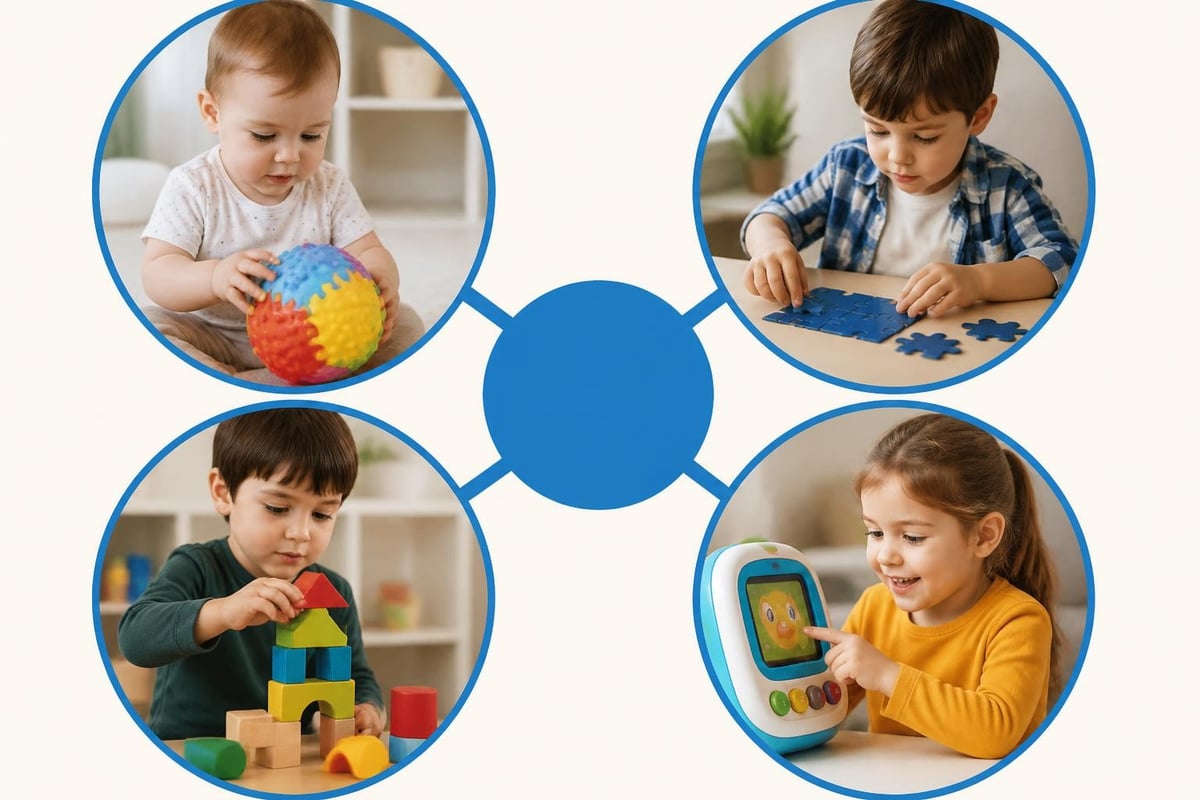
Choosing Toys for Little Minds by Age and Stage
Not all toys suit all ages. Developmental appropriateness matters tremendously when selecting educational playthings. What challenges a two-year-old might bore a four-year-old, while toys designed for older children can frustrate younger ones.
Birth to 12 Months: Sensory Exploration
Babies learn primarily through their senses. They need toys that offer different textures, sounds, and visual stimulation.
- High-contrast visual toys for tracking practice
- Soft rattles and teethers for tactile exploration
- Simple cause-and-effect toys like squeeze toys
- Baby-safe mirrors for self-recognition
- Musical toys with gentle sounds
These early toys for little minds build the sensory foundation for all later learning. Babies who engage with varied sensory experiences develop stronger neural pathways.
12 to 24 Months: Movement and Discovery
Toddlers are mobile explorers. They need toys that support gross motor development while encouraging experimentation.
Ideal toy types for this stage:
| Toy Category | Skills Developed | Example Activities |
|---|---|---|
| Push and pull toys | Balance, coordination | Walking support, cause-effect |
| Simple shape sorters | Problem-solving, fine motor | Matching, fitting, rotating |
| Stacking toys | Spatial awareness | Building, ordering by size |
| Board books | Language, pre-reading | Picture recognition, vocabulary |
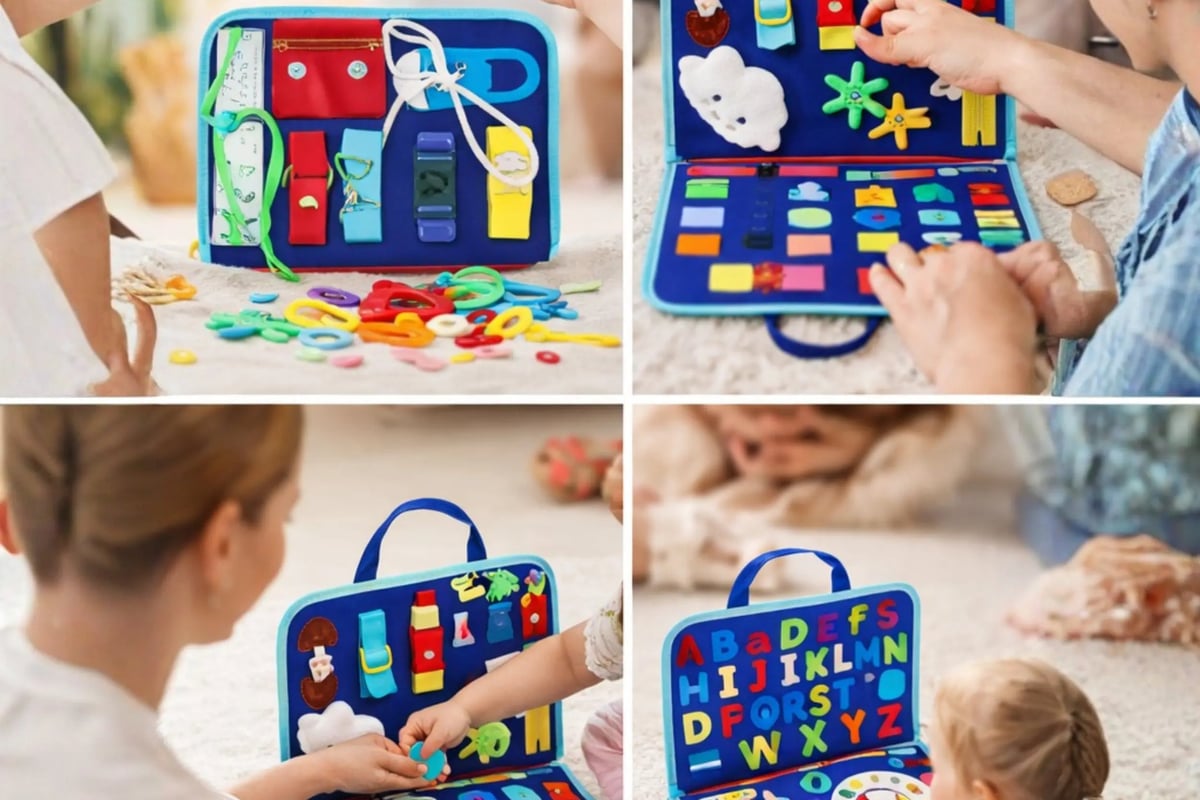
The Montessori Busy Board exemplifies this category perfectly. Featuring interactive switches, buttons, zippers, and buckles, it helps toddlers develop fine motor skills and hand-eye coordination while encouraging independent exploration and problem-solving. This hands-on approach keeps children engaged in meaningful, screen-free learning that builds real-world capabilities.
24 to 36 Months: Imagination Takes Flight
Two-year-olds begin engaging in pretend play. This developmental milestone signals growing cognitive complexity and social understanding.
Toys for little minds at this stage should support imaginative scenarios while building practical skills. Simple building blocks, play kitchens, dress-up items, and toy vehicles all encourage creative storytelling.
These children also benefit from early STEM toys. Simple puzzles, beginner counting games, and basic construction sets introduce mathematical concepts naturally.
3 to 5 Years: Complex Learning
Preschoolers can handle more sophisticated challenges. Their attention spans lengthen, their problem-solving abilities expand, and they begin understanding abstract concepts.
- Advanced building sets with multiple pieces
- Art supplies for creative expression
- Early science kits and nature exploration tools
- More complex puzzles (12-24 pieces)
- Cooperative board games
- Musical instruments
Educational toys for toddlers at this age should balance structure with open-ended possibilities. Children need guidance but also freedom to experiment and discover.
Montessori Principles for Selecting Quality Toys
The Montessori approach emphasizes child-led learning through carefully designed materials. When choosing toys for little minds, Montessori principles offer valuable guidance.
Simplicity Over Stimulation
Montessori toys typically feature simple designs without excessive lights, sounds, or electronic features. This intentional simplicity allows children to focus on the activity itself rather than passive entertainment.
Benefits of simple, purposeful toys:
- Longer attention spans during play
- Deeper engagement with materials
- More creative problem-solving
- Less sensory overload
- Greater independence in play
Many parents find that their children actually play longer with simple wooden toys than with flashy electronic alternatives. The Montessori toy collection at KIDZEEHUB demonstrates this philosophy through thoughtfully designed learning tools.
Real-World Connection
Montessori materials often mimic real-life tools and activities. Toys that allow children to practice practical life skills build confidence and independence.
Consider toys that let children:
- Practice fastening buttons, zippers, and snaps
- Pour and transfer items safely
- Use age-appropriate tools
- Care for plants or animals (toy versions)
- Prepare simple snacks or activities
Self-Correcting Design
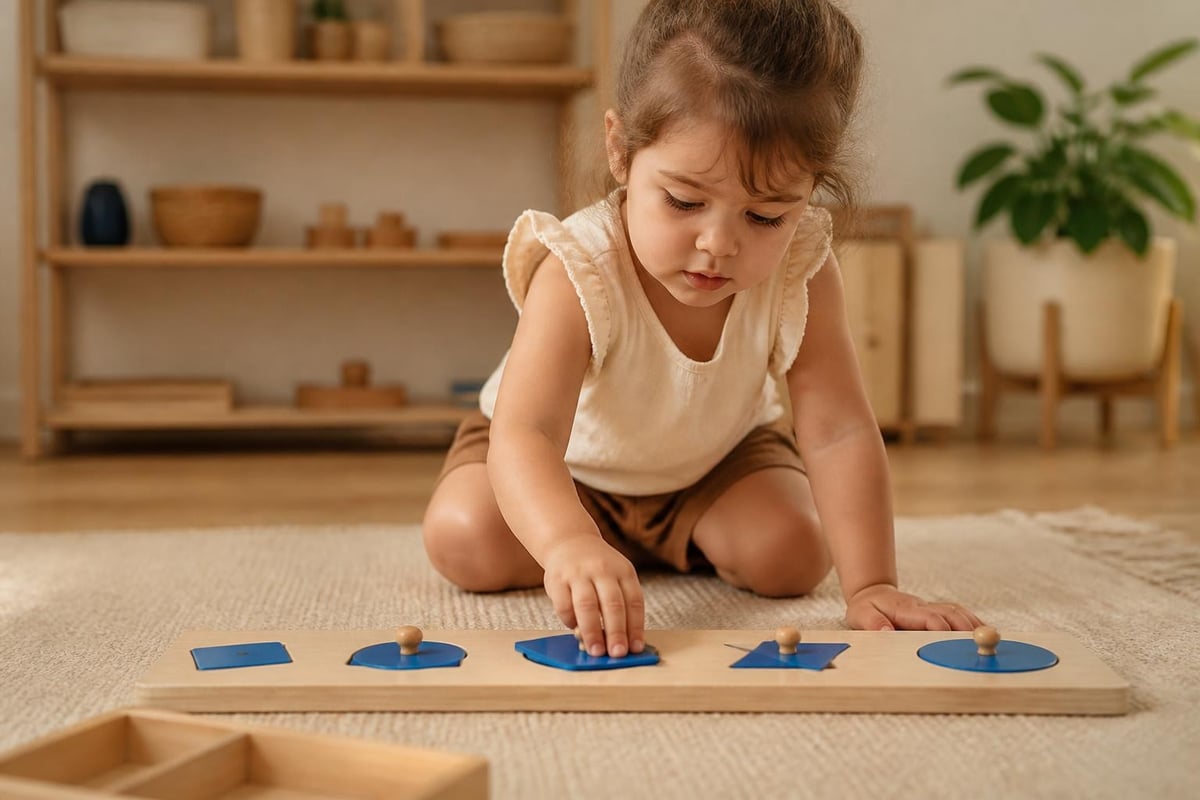
Quality educational toys often include built-in error control. Children can recognize and fix mistakes independently without adult intervention.
Shape sorters exemplify this principle. If a child tries to force a square block through a circular hole, the toy itself provides immediate feedback. This builds problem-solving skills and persistence.
STEM Toys That Build Future-Ready Skills
Science, Technology, Engineering, and Mathematics learning doesn't start in school. The best STEM toys for little minds introduce these concepts through hands-on exploration during early childhood.
Building and Construction Toys
Construction toys rank among the most valuable STEM learning tools. They develop spatial reasoning, engineering thinking, and mathematical understanding.
- Classic wooden blocks in various shapes
- Magnetic building tiles
- Large interlocking bricks
- Simple gear sets
- Stacking and balancing toys
According to research on educational toys, building activities strengthen mathematical concepts like symmetry, patterns, and measurement while encouraging creative problem-solving.
Simple Machines and Cause-Effect Toys
Young children are natural scientists. They love experimenting with cause and effect. Toys that demonstrate basic physics principles satisfy this curiosity while teaching scientific thinking.
Effective cause-effect toy categories:
| Toy Type | Scientific Concept | Age Range |
|---|---|---|
| Ramps and balls | Gravity, motion | 18 months+ |
| Lever and pulley sets | Simple machines | 3 years+ |
| Magnetic toys | Magnetism, attraction | 2 years+ |
| Water play tables | Volume, flow | 18 months+ |
Early Coding and Logic Toys
Even preschoolers can grasp basic coding concepts through appropriate toys. Sequence-based games, directional puzzles, and pattern-matching activities build computational thinking.
These toys for little minds teach children to:
- Follow multi-step instructions
- Recognize patterns and sequences
- Solve problems systematically
- Think logically about outcomes
- Debug when something doesn't work
Screen-Free Alternatives That Captivate Young Minds
In 2026, screen time remains a significant concern for parents. Quality educational toys offer compelling alternatives that engage children without digital devices.
The Benefits of Hands-On Play
Physical manipulation of objects provides sensory input that screens cannot replicate. When children build, sort, create, and explore with real materials, they engage multiple learning pathways simultaneously.
Hands-on toys for little minds support development in ways that apps and videos cannot match. The tactile feedback, three-dimensional spatial awareness, and physical effort all contribute to deeper learning.
Activity Toys That Replace Screen Time
- Art and craft supplies for creative projects
- Building sets with endless possibilities
- Interactive books with textures and flaps
- Musical instruments for sound exploration
- Outdoor exploration kits and nature toys
- Pretend play sets for imaginative scenarios
Parents report that children who engage with physical toys develop better focus, more creative thinking, and stronger problem-solving abilities. The top educational toys guide highlights several screen-free options that consistently captivate young learners.
Language and Literacy Through Play
Language development accelerates dramatically during early childhood. The right toys can significantly boost vocabulary, communication skills, and pre-reading abilities.
Storytelling and Imaginative Play
Toys that encourage storytelling help children develop narrative skills, expand vocabulary, and practice communication.
Toys that build language skills:
- Puppets and character figures
- Play sets with multiple pieces
- Dress-up clothes and props
- Simple board books
- Picture cards and matching games
When children narrate their play, they practice organizing thoughts, using descriptive language, and communicating ideas. Parents can enhance this learning by asking open-ended questions about the stories children create.
Interactive Learning Tools
Modern educational toys incorporate interactive elements that teach letters, sounds, and words. These tools work best when combined with parent involvement and real-world reading experiences.
Quality language toys offer:
- Clear pronunciation and accurate sounds
- Age-appropriate vocabulary
- Engaging activities beyond passive listening
- Multi-sensory learning opportunities
- Progressive difficulty levels
Social-Emotional Learning Through Toys
Emotional intelligence matters as much as cognitive development. Toys for little minds should support both aspects of growth.
Cooperative Play and Sharing
Toys designed for multiple children teach sharing, turn-taking, and cooperation. These social skills form the foundation for positive relationships throughout life.
- Board games with simple rules
- Large building sets for collaborative projects
- Pretend play kitchens and shops
- Art supplies for group activities
- Musical instruments for ensemble play
Emotional Understanding Toys
Some toys specifically help children recognize and express emotions. Dolls, stuffed animals, and character figures allow children to practice empathy and emotional regulation through pretend scenarios.
Parents can guide this learning by:
- Naming emotions during play
- Asking how characters might feel
- Modeling empathetic responses
- Creating scenarios that explore feelings
- Validating children's emotional expressions
Safety Considerations for Educational Toys
Safety must always come first when selecting toys for little minds. Even the most educational toy poses risks if not age-appropriate or properly designed.
Age-Appropriate Sizing
Choking hazards remain the primary safety concern for children under three. Any toy or toy part small enough to fit through a toilet paper tube presents a choking risk.
Safety guidelines by age:
| Age Range | Maximum Safe Piece Size | Key Concerns |
|---|---|---|
| 0-12 months | No small parts | Choking, durability |
| 12-36 months | Parts larger than 1.25 inches | Choking, sharp edges |
| 3-5 years | Age-labeled components | Small batteries, magnets |
Material Safety
Natural materials like wood, organic fabrics, and non-toxic paints make safer choices than cheap plastics with unknown chemical compositions.
Look for:
- Certifications from recognized safety organizations
- Non-toxic, BPA-free materials
- Durable construction that won't break easily
- Smooth edges without sharp points
- Secure attachment of all components
Regular Safety Checks
Even safe toys require periodic inspection. Check regularly for:
- Loose parts that could detach
- Cracks or breaks in plastic
- Splinters in wooden toys
- Worn fabric or stuffing exposure
- Weakened attachment points
Creating a Learning Environment at Home
The toys you choose matter, but so does how you organize and present them. A thoughtfully arranged play space maximizes learning potential.
Rotation Systems Keep Play Fresh
Children often become overwhelmed by too many choices. Toy rotation systems keep playthings interesting while reducing clutter.
- Divide toys into 3-4 groups
- Display only one group at a time
- Store others out of sight
- Rotate every 2-3 weeks
- Watch renewed interest in "rediscovered" toys
This approach also helps you observe which toys for little minds truly engage your child versus which ones get ignored.
Accessible Storage Encourages Independence
When children can independently access and put away toys, they develop organizational skills and take ownership of their space.
Effective storage solutions:
- Low, open shelving at child height
- Clear bins for easy identification
- Picture labels for pre-readers
- Designated spaces for each toy type
- Minimal clutter to reduce overwhelm
The Montessori approach to toy storage emphasizes beauty, order, and accessibility. Children respond positively to attractive, organized environments.
Parent Involvement Multiplies Learning Benefits
Even the best toys for little minds work better with parent participation. Your engagement transforms good toys into exceptional learning tools.
Following Your Child's Lead
Observe what captures your child's attention. Their interests provide clues about developmental needs and learning preferences.
When you notice sustained interest:
- Provide related materials to deepen exploration
- Ask open-ended questions about their discoveries
- Extend play by suggesting new possibilities
- Connect play to real-world experiences
- Document progress and new skills
Balancing Guidance and Freedom
Children need both structure and independence. Too much adult direction stifles creativity. Too little support leads to frustration.
Find the balance by:
- Demonstrating new toys initially
- Stepping back once understanding develops
- Offering help only when requested
- Asking questions rather than giving answers
- Celebrating effort and problem-solving
Budget-Friendly Approaches to Educational Toys
Quality toys for little minds don't require enormous budgets. Smart shopping and creative thinking stretch your toy dollars.
Investment Pieces Worth the Cost
Some toys justify higher prices through longevity, versatility, and educational value.
Worthwhile investment categories:
- High-quality building blocks (used for years)
- Durable ride-on toys for physical development
- Comprehensive art supply sets
- Montessori-quality practical life materials
- Well-made musical instruments
Budget-Friendly Alternatives
Many effective educational toys cost little or nothing:
- Household items for sorting and stacking
- Nature materials for sensory exploration
- Cardboard boxes for creative play
- Homemade playdough and art supplies
- Library books for language development
Making Informed Purchasing Decisions
With countless options available, how do you identify truly valuable toys for little minds?
Reading Beyond Marketing Claims
Packaging often makes bold educational claims. Look deeper to evaluate actual learning potential.
Ask yourself:
- Does this toy allow open-ended play?
- Can my child use it in multiple ways?
- Will it grow with my child's abilities?
- Does it encourage active participation?
- Can my child use it independently?
Seeking Trusted Recommendations
Parent reviews, expert recommendations, and educational toy awards help identify quality options. Resources like toy industry publications and child development specialists provide valuable guidance.
The best educational toys lists compiled by child development experts offer research-backed suggestions rather than marketing hype.
Evaluating Longevity and Versatility
The best toys for little minds serve multiple purposes across several developmental stages. A simple set of wooden blocks might entertain a one-year-old through elementary school, evolving with the child's abilities.
Calculate cost-per-use rather than upfront price. A $50 toy used daily for three years costs pennies per play session. A $10 toy ignored after one week proves the more expensive choice.
Selecting toys for little minds means choosing playthings that educate, engage, and inspire. The right educational toys support cognitive development, build essential skills, and create joyful learning experiences that last a lifetime. When you invest in quality Montessori-inspired, STEM-focused, and developmentally appropriate toys, you're giving your child tools that shape their growing minds and foster a love of learning. KIDZEEHUB offers carefully curated collections of educational toys designed to transform playtime into meaningful learning moments, helping families across the USA embrace screen-free, brain-building play that prepares children for bright futures.


