


Watching your child master new physical skills is one of parenting's greatest joys. From grasping their first toy to pedaling a bike, every movement builds the foundation for lifelong abilities. Motor skills development toys play a crucial role in this journey, transforming everyday play into powerful learning experiences. These specially designed toys help children build strength, coordination, balance, and confidence while having fun. In 2026, parents across the United States are increasingly seeking purposeful playthings that support healthy development without screens or batteries.
Understanding Motor Skills and Why They Matter
Motor skills fall into two essential categories that work together as children grow. Gross motor skills involve large muscle movements like running, jumping, and climbing. Fine motor skills focus on smaller, precise movements such as grasping objects, buttoning shirts, and writing.
Both skill types develop through practice and play. According to Nationwide Children's Hospital, providing children with appropriate opportunities for movement is essential during the first year and beyond. These early experiences shape physical abilities, cognitive development, and even social confidence.
The Connection Between Play and Physical Development
Motor skills development toys offer more than entertainment. They create intentional learning opportunities disguised as play. When a toddler stacks blocks, they're building hand-eye coordination and spatial awareness. When a preschooler rides a balance bike, they're strengthening core muscles and developing balance.
The best toys encourage repeated practice without frustration. Children naturally return to activities that challenge them at just the right level, building skills through joyful repetition.
Choosing the Right Motor Skills Development Toys by Age
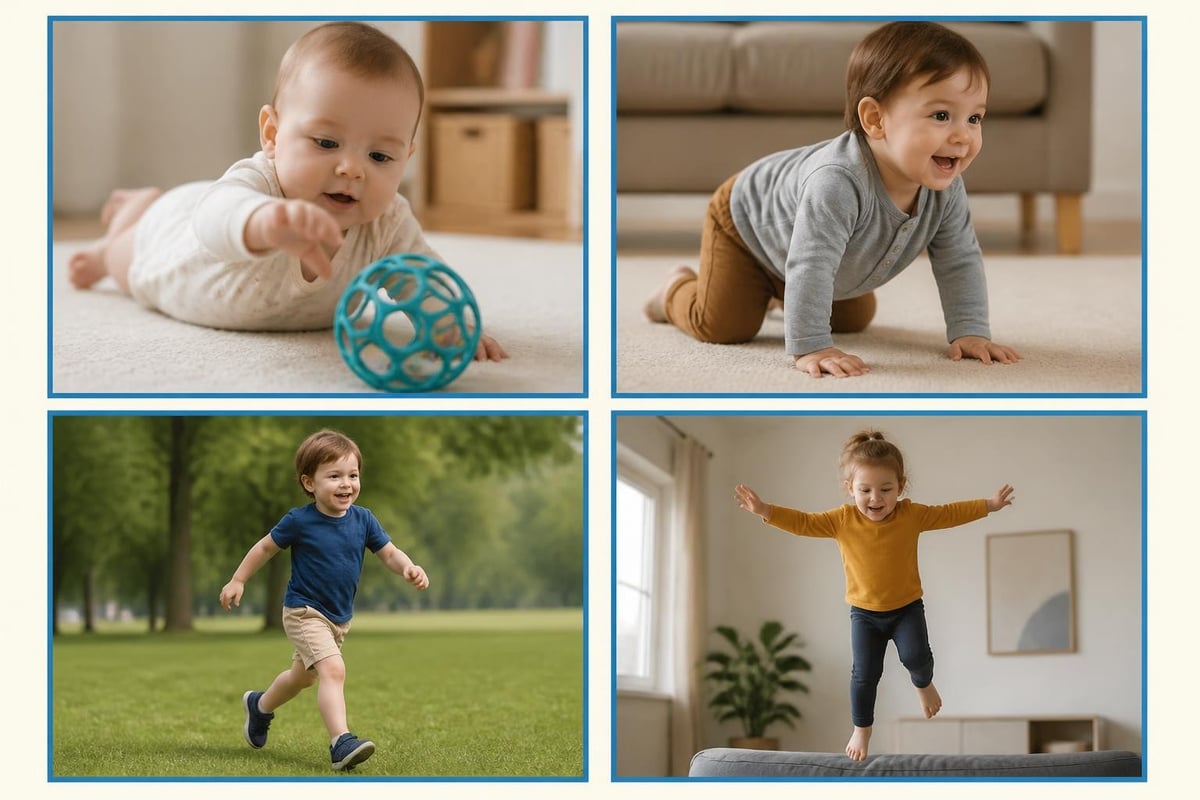
Birth to 12 Months: Building the Foundation
Infants develop motor skills rapidly during their first year. The right toys support this natural progression:
- Soft grasping toys with different textures encourage reaching and holding
- Activity gyms promote tummy time and strengthen neck and shoulder muscles
- Stacking cups introduce size concepts while building coordination
- Push-and-pull toys support early walking attempts
At this stage, simple is better. HealthyChildren.org recommends choosing toys that match developmental milestones rather than rushing ahead. Babies need time to explore basic movements before advancing to complex tasks.
12 to 24 Months: Mastering Movement
Toddlers are constantly on the move. Motor skills development toys for this age support walking, climbing, and improved hand control:
- Ride-on toys build leg strength and coordination
- Shape sorters develop problem-solving alongside fine motor skills
- Large pegboards improve hand-eye coordination and grip strength
- Push walkers provide stability while encouraging independent steps
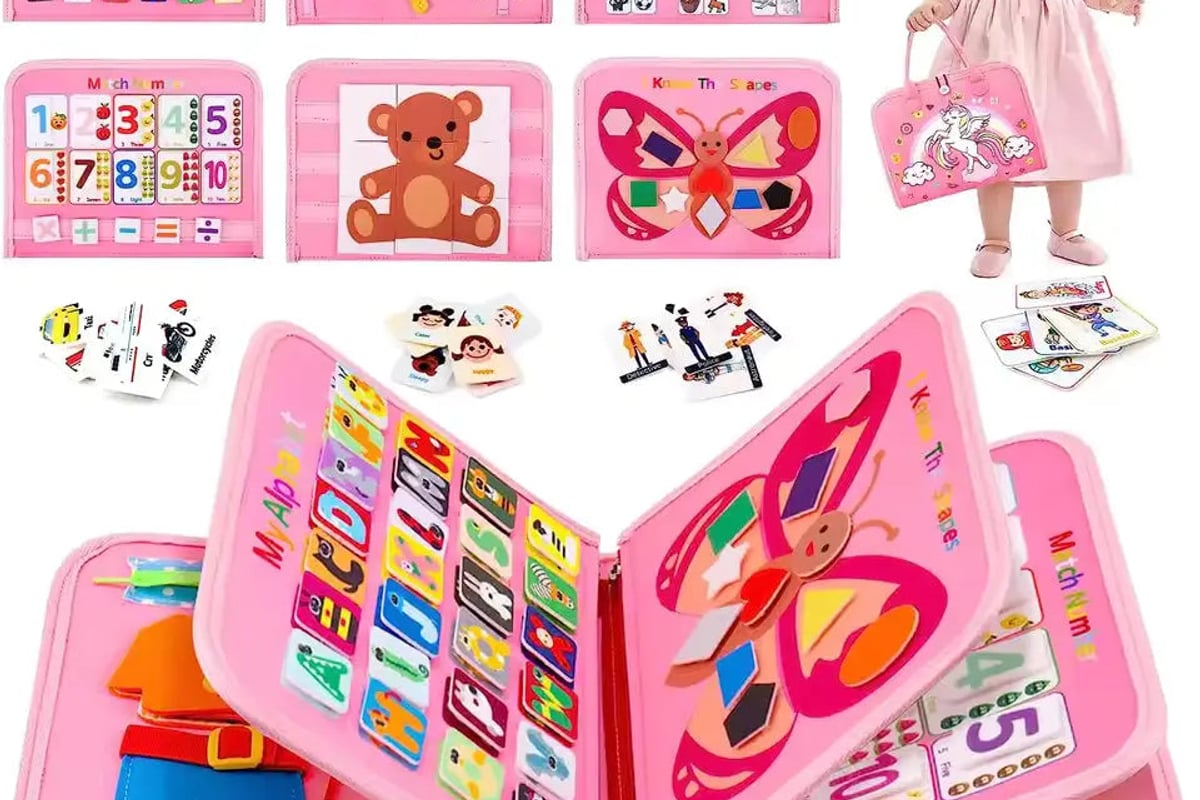
The Montessori Busy Board offers an excellent example of age-appropriate fine motor practice. With zippers, buttons, buckles, and switches, toddlers work on the exact movements they'll need for dressing themselves and other daily tasks.
2 to 3 Years: Refining Skills
Two-year-olds show dramatic improvements in both gross and fine motor abilities. They're ready for toys that challenge growing independence:
- Building blocks of various sizes strengthen fingers and wrists
- Tricycles develop pedaling coordination and balance
- Lacing beads practice threading and pattern-making
- Play dough and clay build hand strength essential for writing
Children this age benefit from hands-on Montessori-inspired activities that let them work at their own pace. Repetition doesn't bore toddlers; it builds mastery and confidence.
3 to 5 Years: Advanced Coordination
Preschoolers are ready for complex motor challenges. Their improved balance and strength open new possibilities:
- Balance bikes prepare children for traditional bicycles without training wheels
- Construction sets with small pieces refine finger dexterity
- Climbing structures build full-body strength and spatial awareness
- Art supplies like scissors and paintbrushes develop precise hand control
The Wooden Balance Bike for Adventure exemplifies how gross motor toys support multiple developmental areas simultaneously. As children learn to balance and steer, they also build confidence, independence, and decision-making skills.
Key Features to Look for in Quality Motor Skills Development Toys
Safety First
Before considering developmental benefits, ensure any toy meets current safety standards. Harvard Health Publishing advises parents to watch for choking hazards, toxic materials, and age-inappropriate features.
Look for these safety markers:
- Age recommendations that match your child's developmental stage
- Non-toxic materials like natural wood, BPA-free plastic, or organic fabric
- Sturdy construction that withstands rough play
- Smooth edges without sharp corners or pinch points
- Size-appropriate pieces that won't pose choking risks
Open-Ended Design
The most valuable motor skills development toys grow with your child. Open-ended toys can be used in multiple ways across developmental stages. Building blocks work differently for a one-year-old than a four-year-old, but both ages benefit.
Benefits of open-ended toys:
- Encourage creativity and imagination
- Support longer play sessions
- Reduce toy clutter and waste
- Offer better value for families
- Adapt to individual interests and abilities
Montessori Principles
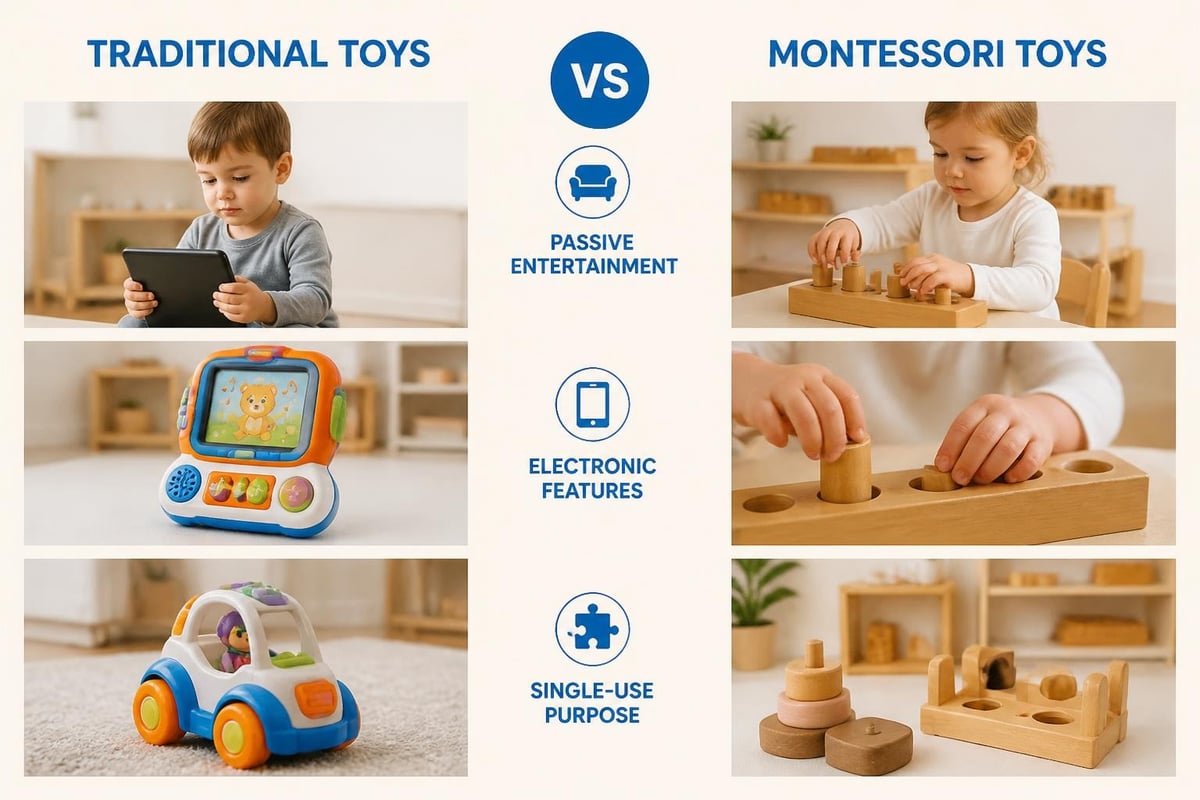
Montessori-inspired motor skills development toys emphasize child-led learning and real-world skills. These toys typically feature:
- Natural materials like wood, metal, and fabric
- Realistic designs rather than cartoon characters
- Self-correcting elements that teach through experience
- Opportunities for independent practice
- Focus on practical life skills
Visit KIDZEEHUB's Montessori collection to explore toys aligned with these principles.
Best Types of Motor Skills Development Toys for Different Skill Areas
Fine Motor Skill Builders
Fine motor control develops gradually through targeted practice. These toy categories excel at building small muscle strength:
| Toy Type | Skills Developed | Best Age Range |
|---|---|---|
| Lacing toys | Hand-eye coordination, threading | 2-4 years |
| Pegboards | Pincer grasp, pattern recognition | 18 months-4 years |
| Puzzles | Problem-solving, spatial awareness | 12 months-5 years |
| Building sets | Finger strength, bilateral coordination | 2-5 years |
| Busy boards | Multiple fine motor skills, independence | 12 months-3 years |
Fine motor skills directly impact a child's ability to write, button clothes, use utensils, and perform countless daily tasks. The Hospital for Special Surgery notes that age-appropriate toys promoting these skills support school readiness and self-care abilities.
Gross Motor Skill Builders
Large muscle development requires space and movement. These toys get children actively engaged:
- Balance bikes strengthen legs and core while teaching balance
- Climbing triangles build full-body strength and confidence
- Ride-on toys develop coordination and spatial awareness
- Ball games improve throwing, catching, and kicking skills
- Jump ropes and hoppers enhance timing and rhythm
Active play also supports healthy physical development beyond motor skills. Children who move regularly develop stronger bones, better cardiovascular health, and improved sleep patterns.
Hand-Eye Coordination Developers
Hand-eye coordination bridges fine and gross motor development. These toys target this crucial skill:
- Stacking toys of all varieties
- Threading beads with different hole sizes
- Hammering benches that require precision strikes
- Sorting games with specific placement requirements
- Simple ball toss games at appropriate distances
Children with strong hand-eye coordination find sports, writing, and many school activities easier to master.
Creating a Motor Skills Development Play Environment at Home
Dedicated Play Spaces
You don't need a playroom to support motor development. A thoughtfully arranged corner works beautifully. Consider these elements:
Floor-level setup:
- Low shelves children can access independently
- Open floor space for movement
- Safe climbing or balancing equipment
- Rotation of 5-7 toys to prevent overwhelm
Table or desk area:
- Child-sized furniture for fine motor activities
- Easy-to-clean surface for messy play
- Organized storage for small manipulatives
- Good lighting for detailed work
Outdoor Motor Skill Opportunities
Nature provides countless motor skill challenges at no cost. Outdoor play complements motor skills development toys beautifully:
- Walking on uneven surfaces builds ankle strength and balance
- Climbing trees develops upper body strength and spatial judgment
- Carrying sticks or rocks practices grip strength
- Running and jumping on grass offers safe gross motor practice
- Playing in sand enhances fine motor control
Research published on PubMed emphasizes selecting activities that challenge without frustrating children. Outdoor play naturally adjusts difficulty as children choose their own challenges.
Rotation and Variety
Even the best motor skills development toys lose appeal with constant availability. Rotating toys every few weeks maintains interest and highlights different skills:
Rotation strategy:
- Keep 25-30% of toys actively available
- Store remaining toys out of sight
- Swap selections every 2-3 weeks
- Observe which toys your child gravitates toward
- Adjust rotation based on emerging interests and skills
This approach also helps you notice when your child has mastered a toy and needs new challenges.
Screen-Free Play and Motor Development
Why Hands-On Play Matters More Than Ever
In 2026, children face unprecedented screen exposure. HealthyChildren.org emphasizes that traditional, hands-on toys foster healthier development than passive screen time. Motor skills development toys require active participation, building physical abilities screens cannot replicate.
What children gain from screen-free motor play:
- Actual physical strength and coordination
- Spatial awareness in three dimensions
- Sensory input from textures, weights, and temperatures
- Cause-and-effect learning through direct experience
- Social skills when playing with others
Balancing Modern Life with Developmental Needs
You don't need to eliminate screens entirely. Instead, prioritize motor-building activities during key play periods:
- Morning energy bursts benefit from gross motor activities
- After-school transitions work well with calming fine motor toys
- Weekend adventures incorporate outdoor motor challenges
- Evening wind-down suits quiet fine motor activities
- Rainy days become opportunities for indoor physical play
The goal is intentional balance, not perfection. Even 30-60 minutes of active motor play daily supports healthy development.
Common Questions Parents Ask About Motor Skills Development Toys
How Do I Know If My Child's Motor Skills Are Developing Normally?
Children develop at individual paces, but certain milestones signal typical progress. Most children walk by 15 months, stack blocks by 18 months, and pedal a tricycle by 3 years. If you notice significant delays or your child seems frustrated by movements peers have mastered, consult your pediatrician.
Motor skills development toys should challenge without overwhelming. If your child shows no interest in age-appropriate toys, they might need simpler options or more demonstration.
Can Toys Really Make a Difference in Development?
Absolutely. While children develop motor skills through various activities, purposeful toys provide focused practice. The right motor skills development toys offer repeated opportunities to build specific abilities in engaging ways.
Think of these toys as tools rather than magic solutions. A balance bike doesn't teach balance instantly, but it creates ideal conditions for learning through practice.
What If My Child Prefers Electronic Toys?
Many children gravitate toward lights and sounds. That's natural, but it's also why curating high-quality, engaging alternatives matters. Motor skills development toys compete best when they're:
- Visually appealing with natural beauty
- Appropriately challenging for the child's level
- Introduced with parent participation initially
- Available during high-energy times
- Limited in quantity to reduce overwhelm
Sometimes reducing electronic toy access helps children rediscover hands-on play.
Should I Choose Toys That Match My Child's Interests?
Yes, when possible. A dinosaur-loving child might engage more with a wooden dinosaur puzzle than generic shapes. Interest-based toys maintain attention longer, providing more practice opportunities.
However, balance interests with developmental needs. If your child loves cars but needs fine motor work, choose car-themed lacing cards or a vehicle construction set rather than just push cars.
Making the Most of Your Motor Skills Development Toy Investment
Quality Over Quantity
Five well-chosen motor skills development toys outperform twenty random options. Quality toys share these characteristics:
- Durability that allows years of use and sibling hand-me-downs
- Timeless design that doesn't depend on trends or characters
- Multiple skill applications across developmental areas
- Safety certifications from recognized testing organizations
- Natural materials that age gracefully
Investing in fewer, better toys also models mindful consumption for your children.
Engaging With Your Child During Motor Play
The most powerful learning happens when caring adults participate. Your involvement transforms good motor skills development toys into exceptional learning tools:
Ways to enhance motor play:
- Demonstrate new ways to use familiar toys
- Celebrate effort and problem-solving, not just success
- Ask open-ended questions about their play
- Create challenges slightly beyond current abilities
- Share in their joy and frustration authentically
Your presence communicates that their play and development matter. This emotional connection motivates continued effort.
Observing Progress and Adjusting Choices
Pay attention to how your child interacts with motor skills development toys. Their play reveals readiness for new challenges:
Signs your child needs more challenge:
- Completes activities quickly without effort
- Shows boredom or disinterest in current toys
- Demonstrates mastery consistently
- Seeks more complex variations independently
Signs activities are too advanced:
- Frequent frustration or giving up quickly
- Avoiding the toy completely
- Unable to complete basic functions
- Requiring constant adult assistance
Adjust your selections based on these observations. Development isn't linear; some skills advance faster than others.

Building a Complete Motor Skills Toy Collection
Essential Starter Set for Toddlers
If you're just beginning to build a motor skills toy collection, start with versatile basics:
| Category | Example | Primary Benefit |
|---|---|---|
| Stacking | Wooden rings or cups | Fine motor, problem-solving |
| Building | Large soft blocks | Gross motor, spatial awareness |
| Sorting | Shape sorter box | Hand-eye coordination, logic |
| Push/Pull | Wooden wagon or cart | Gross motor, balance |
| Manipulative | Busy board | Multiple fine motor skills |
This foundation addresses major developmental areas without overwhelming your space or budget.
Expanding for Preschoolers
As children approach age three and beyond, add these categories:
- Balance equipment like balance bikes or boards
- Construction sets with smaller, interlocking pieces
- Art supplies including scissors, paintbrushes, and playdough
- Climbing structures for indoor or outdoor use
- Wheeled toys requiring steering and coordination
These additions build on earlier skills while introducing new physical challenges.
Seasonal Considerations
Some motor skills development toys work better during specific seasons. Plan purchases around weather and available space:
Winter and rainy day options:
- Indoor climbing triangles
- Fine motor tabletop activities
- Balance boards for limited spaces
- Building sets for extended indoor time
Spring and summer choices:
- Balance bikes for outdoor exploration
- Water tables for sensory motor play
- Outdoor climbing equipment
- Sports equipment sized for little hands
This strategic approach ensures year-round motor development opportunities.
Motor skills development toys transform ordinary playtime into powerful learning experiences that build physical abilities, confidence, and independence. By choosing age-appropriate, high-quality toys that encourage hands-on exploration, you're investing in your child's healthy development. Whether you're looking for Montessori-inspired busy boards, balance bikes, or open-ended building sets, KIDZEEHUB offers carefully curated collections designed to support every stage of your child's motor skill journey with educational, screen-free options families trust.


